Algonquin Power & Utilities (AQN): From merchant renewables to a pure-play regulated utility — what the counterparty moves mean for investors
Algonquin Power & Utilities Corp (AQN) operates as a North American utilities owner and operator that historically blended regulated utility operations with merchant and contracted renewable generation; the company monetizes through regulated rate-base returns, cash distributions and asset sales. A clear strategic pivot completed in 2025–2026 converts AQN into a predominantly regulated utility business, materially reducing merchant generation risk while strengthening the balance sheet via asset monetizations. For a concise customer-relationship view and diligence on counterparties, visit https://nullexposure.com/.
The thesis up front: why the counterparties matter to equity and credit holders
Investors should value AQN today as a regulated utility with predictable cash flow drivers rather than as a diversified renewables platform. Recent transactions transferring non-hydro renewables and a material stake in an infrastructure affiliate to private buyers reshape AQN’s revenue mix, improve leverage metrics through proceeds deployment, and concentrate future earnings on regulated cash flows and retained hydropower. This reorientation reduces commodity exposure and increases sensitivity to rate-case outcomes and regulated capital allocation.
How these deals change AQN’s operating model and counterparty posture
Algonquin’s disposition of merchant/contracted renewable assets transforms its contracting posture from growth-through-project-development and merchant-flip to long-duration regulated relationships. The company’s concentration and criticality profile now shifts toward a smaller set of regulated counterparties and utilities commissions that determine allowed returns, rather than a broad pool of project-level counterparties and merchant power buyers. Maturity of cash flows also increases: regulated returns and hydropower receipts are more predictable than merchant renewables revenues, improving debt-service coverage metrics; management used proceeds to pay down debt and de-risk the balance sheet.
No explicit contractual constraints were provided in the reviewed materials; as a company-level signal, the available reporting contains no excerpted legal or operational covenants tied to specific customer relationships. Investors should therefore treat the sale activity as deliberate portfolio simplification rather than a consequence of disclosed contractual limits.
For more granular counterparty intelligence and follow-up research, see https://nullexposure.com/.
Counterparty snapshots investors need to know
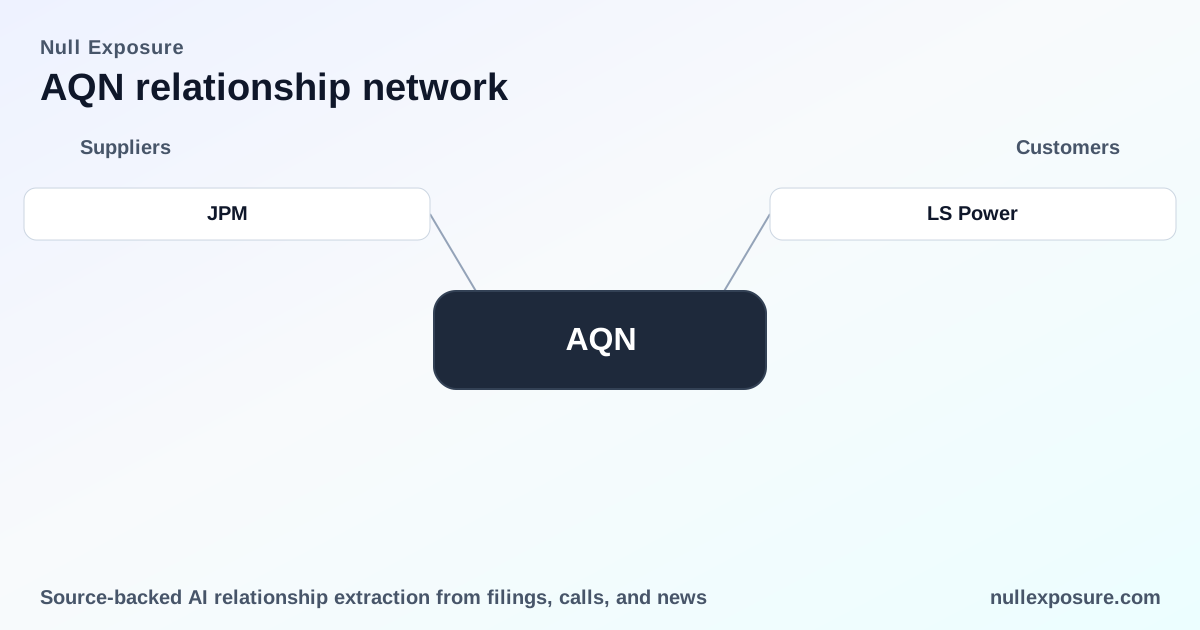
LS Power — buyer of AQN’s non-hydro renewables
Algonquin agreed to sell its renewable energy business, excluding hydropower assets, to a wholly owned subsidiary of LS Power for consideration of up to $2.5 billion, transferring project-level generation assets and associated commercial counterparty exposures to LS Power. That transaction closed the chapter on AQN’s merchant renewables push and generated significant proceeds used in balance-sheet repair. This was announced in a company press release and covered in March–May 2026 reporting by multiple outlets, including Newswire (Mar 2026) and Utility Dive (May 2026).
Energy Capital Partners — purchaser of AQN’s Atlantica stake
A secondary transaction realized in May 2026 involved the sale of Algonquin’s 42.2% stake in Atlantica Sustainable Infrastructure to a private investment vehicle controlled by Energy Capital Partners, further crystallizing proceeds from non-core holdings and removing a listed affiliate position from AQN’s balance sheet. Utility Dive’s May 2026 coverage described this sale as the realization of that specific stake, converting an ownership exposure into cash and simplifying AQN’s corporate footprint.
What each relationship implies for revenue, leverage and governance
- LS Power transaction: By transferring non-hydro renewables to LS Power, AQN removes a higher-volatility revenue stream and associated P&L and merchant counterparty complexity; the deal provided up to $2.5 billion in consideration, of which roughly $1.6 billion in net proceeds was directed toward debt reduction per subsequent reporting, materially improving leverage and interest coverage metrics (reporting consolidated in BayelsaWatch, May 2026).
- Energy Capital Partners transaction: Selling the Atlantica stake converts a minority-equity, market-facing hold into cash, reducing market-exposure volatility and simplifying investor relations and governance obligations tied to an outside listed affiliate (Utility Dive, May 2026).
Financial framing and valuation implications
Algonquin’s pre-transaction financials show a market capitalization near $4.82 billion with reported EBITDA of $919.7 million and trailing revenue around $2.43 billion. Post-transaction, the company’s earnings profile will center on regulated utility returns, pushing investors to revalue AQN on regulated multiples and rate-base growth assumptions rather than merchant project metrics. Analysts’ consensus pricing (where available) and forward multiples will now respond to utility-rate outcomes, capex plans for retained hydropower and the pace of regulated asset growth. Key takeaway: AQN’s risk premium should compress relative to merchant-heavy peers but remain sensitive to regulatory outcomes and capital allocation discipline.
Key risks and operational constraints investors should monitor
- Regulatory concentration: With the shift to regulated revenues, AQN’s cash flow sensitivity now concentrates on utility commissions and rate-case timing; adverse regulatory outcomes would directly affect returns.
- Capital allocation governance: Proceeds were used to pay down debt, but future growth will require disciplined rate-base investments; missteps in capital deployment would negate the balance-sheet benefits of these sales.
- Residual commodity exposure: Hydropower remains on AQN’s books; while lower volatility than merchant wind or solar, hydropower generation and pricing still introduce seasonal and weather-related variability.
- Counterparty simplification vs. single-point risk: Reducing the number of counterparties increases operational simplicity but raises governance reliance on a narrower set of counterparties and regulatory relationships.
Bottom line for investors
Algonquin has executed a decisive strategic pivot out of non-hydro renewables into a concentrated, regulated utility profile, funding deleveraging and simplifying its corporate structure through sales to LS Power and a fund controlled by Energy Capital Partners. The company now trades and should be modeled as a regulated utility with improved leverage and lower merchant risk, but with increased sensitivity to regulatory decisions and capital allocation execution. For focused intelligence on AQN counterparty exposures and comparable transaction analysis, visit https://nullexposure.com/.
Sources referenced in this note include Algonquin’s press release and market reporting: a Newswire release announcing the sale to LS Power (March 2026), Utility Dive coverage of the LS Power transaction and the Atlantica stake sale (May 2026), and subsequent reporting summarizing proceeds deployment (BayelsaWatch, May 2026).