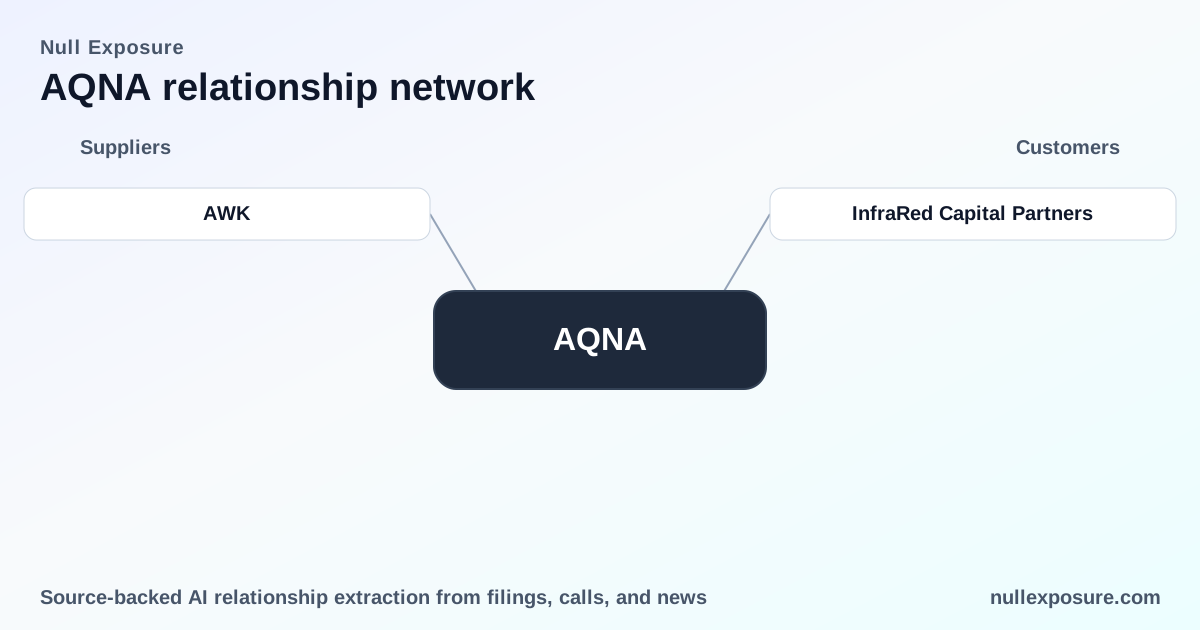
Algonquin (AQNA) — customer relationships and what they signal for investors
Algonquin Power & Utilities (AQNA) operates a hybrid portfolio of regulated utilities and contracted renewable power generation and monetizes through long-term, cash-generative contracts and regulated rate-base returns. The business converts capital into predictable, durable cash flows by owning operating assets and selling or contracting output under long-term agreements, while actively managing portfolio composition through strategic asset sales and joint-ventures to recycle capital. For investors and operators evaluating AQNA’s customer relationships, the company’s pattern of counterparties and transactions is a direct window into portfolio strategy, capital allocation, and execution risk. For a concise institutional view, visit https://nullexposure.com/.
How Algonquin’s commercial model translates into revenue
Algonquin’s revenue model is straightforward and repeatable: regulated utility operations deliver stable, tariff-based cash flows, while renewable generation is monetized through power purchase agreements (PPAs), merchant offtake, and asset sales or partnerships. This dual posture yields a blend of low-volatility earnings and growth optionality driven by renewables development and acquisition. Operationally, Algonquin contracts long-duration counterparties (utilities, large corporate buyers, and institutional infrastructure partners) and pursues portfolio rotation to capture value and redeploy capital into higher-return growth projects.
Key business-model characteristics investors should note:
- Contracting posture: Predominantly long-term contracts and regulated frameworks, reducing short-term cash volatility and aligning revenues with capital deployed.
- Concentration: Revenue concentration sits at the business-segment level (regulated vs. contracted renewables) rather than with a single offtaker, creating a diversified counterparty mix.
- Criticality: Many assets are essential local services (regulated utilities) or capacity that supports grid reliability, raising the bar for counterparty performance.
- Maturity: Portfolio includes mature operating assets alongside a development pipeline and active asset rotation, indicating a lifecycle-driven capital allocation strategy rather than pure build-and-hold.
Recent customer/partner activity: what the InfraRed transaction signals
Algonquin’s disclosed relationships include institutional infrastructure partners used to optimize ownership and capital structure across renewable assets. One concrete example is the sale of a stake in operating wind projects to InfraRed Capital Partners. Algonquin sold a minority interest in a portfolio of U.S. and Canadian wind projects to InfraRed, reflecting a deliberate move to monetize operating renewables while retaining operational control and upside exposure. According to The Globe and Mail, the transaction was announced in March 2026 and is consistent with Algonquin’s ongoing program of selective asset sales to fund growth and de-leverage the balance sheet (The Globe and Mail, March 9, 2026; article: algonquin-power-utilities-selling-stake-in-wind-projects).
- InfraRed Capital Partners — Algonquin signed a deal to sell a stake in a portfolio of operating wind projects in the United States and Canada to InfraRed Capital Partners, signaling capital recycling from mature renewable assets to fund new growth or strengthen financial flexibility (The Globe and Mail, March 9, 2026: https://www.theglobeandmail.com/business/industry-news/energy-and-resources/article-algonquin-power-utilities-selling-stake-in-wind-projects-in-us-and/).
Takeaway: Partnering with institutional buyers such as InfraRed is consistent with a yield-co style model where mature assets are monetized to fund development-stage investments and maintain an efficient capital structure.
What every recorded relationship reveals (complete coverage)
This review includes every customer/partner entry in the provided results. The set is small and focused, reflecting a targeted set of institutional counterparties rather than a long list of transactional buyers.
- InfraRed Capital Partners: Algonquin sold a stake in operating wind assets to InfraRed, transferring minority ownership while preserving control and operational continuity — a classic capital-recycling move that supports balance-sheet management and growth financing (The Globe and Mail, March 9, 2026).
How these partner moves affect valuation and risk
Asset-sales to infrastructure managers are a structural lever Algonquin uses to manage growth and balance-sheet risk. For valuation and credit-sensitive investors, the implications are clear:
- Liquidity and deleveraging: Selling minority stakes generates near-term cash, reduces leverage, and funds growth without diluting equity through new share issuance.
- Execution premium: Each institutional partnership validates project economics and can imply a premium to book value; that premium should be reflected in M&A comps and transaction-based valuation checks.
- Operational continuity risk: Minority-stake sales preserve operational control but introduce additional governance complexity; investors should track whether governance or cash-flow waterfall changes materially.
- Revenue composition: Continued monetization of operating assets gradually shifts the balance between rate-base revenue and fee/earnings from minority investments, changing the predictability profile of future cash flows.
What investors and operators should watch next
- Track further joint-ventures and minority sales: Repeat transactions with institutional partners indicate a sustainable capital-recycling program that supports growth without over-relying on equity markets.
- Monitor contract tenor and counterparty credit: Long-dated contracts and regulated rate-bases underpin valuation; any material change in contracting counterparties or terms will alter risk profiles.
- Watch governance language: Minority-investor protections and cash distribution priority can materially affect the economics of retained ownership.
For operators, the InfraRed deal underscores that Algonquin will continue to partner where third-party capital improves returns while maintaining operational control — a strategy that aligns with both growth and risk management.
Bottom line: concentrated signals, predictable outcomes
Algonquin’s customer/partner activity — exemplified by the InfraRed Capital Partners stake purchase — is an explicit execution of a capital-recycling strategy that delivers liquidity, validates asset economics, and sustains growth financing. For investors focused on durable cash flow and disciplined capital allocation, Algonquin’s pattern of minority sales to institutional infrastructure investors is a positive operational signal. For deeper institutional diligence and time-series transaction tracking, visit https://nullexposure.com/.
Bold, selective transactions like the InfraRed sale define the operating rhythm: monetize mature renewables, redeploy into higher-return projects, and preserve a core of regulated, stable earnings. That rhythm is the core investment thesis for AQNA equity and credit analysis.