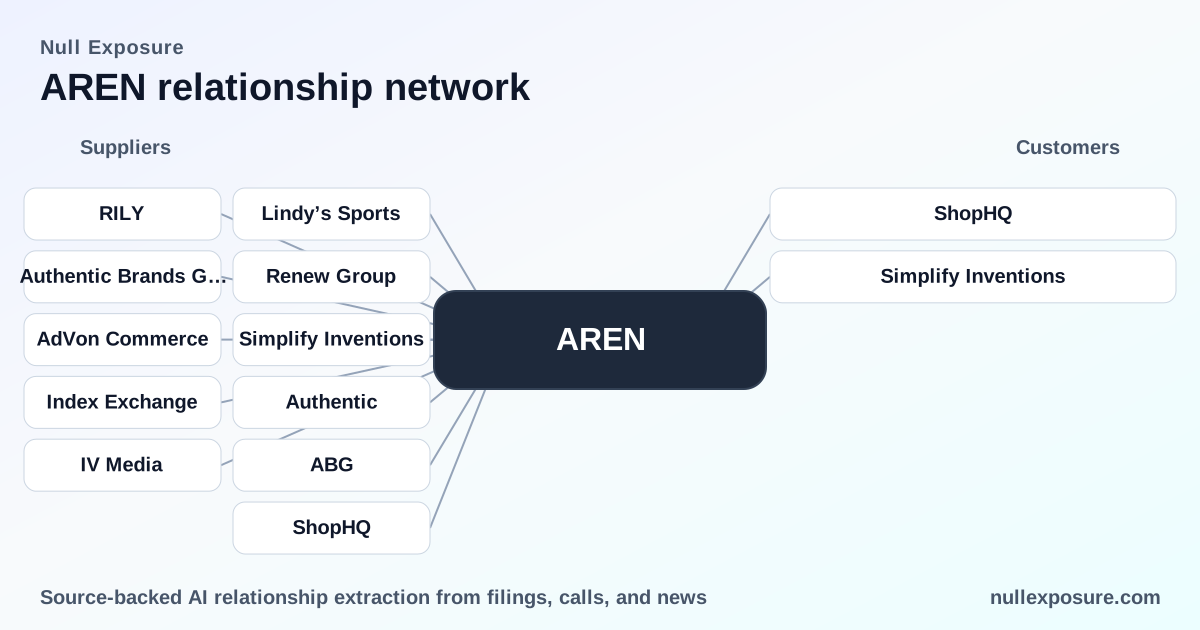
Arena Group (AREN) — Customer relationships and what they reveal about the operating model
Arena Group operates a content and advertising platform that monetizes primarily through digital advertising, subscriptions and content licensing. The company sells ad inventory and performance marketing services, licenses content to third‑party publishers and collects recurring subscription revenue for premium editorial access — a mixed revenue model where usage‑based advertising is the critical top line driver and subscriptions provide predictable recurring cash flow. For more background on coverage and signals, visit https://nullexposure.com/.
High‑level view: how Arena makes money and why customer relationships matter
Arena’s economics are driven by two complementary dynamics: scale and engagement (which convert page views and video impressions into advertising revenue) and direct monetization (subscriptions and licensing that create recurring revenue). Public filings show that digital advertising is the company’s largest revenue source, recognized at the point an ad is viewed or when a performance outcome occurs, while subscription contracts are typically billed in advance and recognized over time.
Financial context reinforces the model: Arena reports roughly $135 million in trailing twelve‑month revenue with strong gross profit and a low trailing P/E, signaling a business that converts engagement into cash efficiently. Ownership is highly concentrated — insiders control roughly 72% of shares outstanding — which affects strategic decisions and partnership dynamics.
The relationships on record (what each counterparty means for investors)
ShopHQ — a committed advertising purchaser tied to Simplify holdings
ShopHQ — the home shopping network owned by Simplify entities — is tied to a five‑year guaranteed advertising commitment totaling $60 million, according to a New York Post report that cites a definitive agreement executed on November 6 (reported January 3, 2024). This commitment converts a portion of Arena’s variable advertising revenue into predictable, multi‑year sell‑through from a known corporate owner. (Source: New York Post, Jan 3, 2024.)
Simplify Inventions / Manoj Bhargava — ultimate owner and strategic ad partner
Simplify Inventions and its principal Manoj Bhargava are documented as increasing their stake in Arena and providing a corporate advertising commitment tied to brands they control; the New York Post article notes Bhargava owned roughly 44% through a holding company as of a Dec. 11 public filing and agreed to raise that stake to about 80% at prevailing prices while arranging the five‑year ad commitment referenced above. This relationship is both an ownership alignment and a commercial inflow, effectively linking Arena’s ad sales pipeline to Simplify’s brand portfolio. (Source: New York Post, Jan 3, 2024, citing a Dec. 11 filing.)
What the documented constraints say about Arena’s operating model
Arena’s public disclosures and the relationship evidence create a coherent picture of the company’s contracting posture, concentration, criticality and maturity:
-
Contracting posture — mixed, with a bias toward recurring and usage pricing. Arena uses fixed‑price subscription contracts billed monthly, quarterly or annually alongside usage‑based advertising agreements that pay per impression, view or performance outcome. Licensing agreements for content republishing carry monthly fees and can include minimum guarantees; Arena therefore operates both as a predictable subscription seller and a variable‑revenue vendor dependent on traffic outcomes. (Company filings, FY2024.)
-
Revenue concentration — structurally diversified but operationally reliant on advertising. Filings state no single customer accounted for a significant share of revenue in the latest reported years, yet the company also identifies digital advertising as the key operating metric and the largest revenue stream. The Simplify/ShopHQ commitment introduces a sizable, concentrated buyer relationship that reduces short‑term ad revenue volatility but increases counterparty concentration risk. (Company filings, FY2024.)
-
Criticality — advertising is mission‑critical; subscriptions and licensing are stabilizers. Arena classifies digital advertising as its most significant revenue stream; subscriptions and content licensing add recurring and licensing fees, respectively, but do not replace ad revenue as the core growth engine. (Company filings, FY2024.)
-
Geographic and customer focus — predominantly U.S. exposure. Reported revenue breakdown is heavily U.S.‑centric, with the United States representing the vast majority of reported sales, which concentrates Arena’s demand and regulatory exposure in the North American market. (Company filings, FY2024.)
-
Relationship roles and maturity — Arena is principal seller, licensor and service provider. The company generally accounts for revenue on a gross basis, acting as principal for most advertising and monetization transactions, while also serving as licensor to publisher partners and as a service provider for membership/subscription offerings. Contract types and recognition policies reflect an established, mature revenue framework for digital publishers. (Company filings, FY2024.)
What the Simplify / ShopHQ deals imply for growth and risk
The disclosed five‑year ad commitment from brands controlled by Simplify converts previously variable inventory into multi‑year contracted revenue, improving near‑term cash flow visibility. That same arrangement concentrates Arena’s ad book: the company shifts from a broad advertiser base to a scenario where a significant proportion of guaranteed spend is tied to a single ownership ecosystem.
- Positive: Reduced short‑term volatility in ad revenue and a clearer monetization runway, which supports tighter budgeting and potential reinvestment in content or audience growth.
- Negative: Concentration risk and strategic dependency on the Simplify ownership group for a material portion of contracted ad spend — a single counterparty dynamic that investors must monitor.
Investor takeaways and risks to monitor
- Core thesis: Arena converts audience engagement into cash via advertising, supplemented by subscriptions and licensing; the Simplify/ShopHQ commitments materially increase contracted advertising revenue while simultaneously increasing counterparty concentration.
- Key risks: concentration of ad commitments under Simplify, U.S. market concentration, and sensitivity of usage‑based revenues to audience engagement trends.
- Operational indicators to watch: ad fill rates, subscription retention and ARPU, monthly page‑view trends, and any changes to the Simplify commitment terms or ownership stake disclosures.
For investors and operators evaluating AREN customer relationships, these dynamics make the company an advertising‑led content operator with improving short‑term revenue visibility but elevated counterparty concentration risk.
If you want ongoing monitoring of these commercial signals and how they affect Arena’s valuation and risk profile, see our coverage hub at https://nullexposure.com/.
Bold final point: Arena’s model combines predictable subscription revenue with high‑leverage, usage‑based advertising, and the Simplify/ShopHQ relationship is the single most consequential customer development for the stock in the reported period.