Apollo Commercial Real Estate Finance (ARI): A counterparty reset after a $9 billion divestiture
Thesis: Apollo Commercial Real Estate Finance (ARI) originates and manages commercial mortgage loans and related real-estate debt and monetizes primarily through interest income and portfolio exits; in 2026 ARI executed a strategic sale of its entire commercial loan portfolio that materially alters its counterparty risk profile and transforms near-term cash flow into liquidity and potential fee-based opportunities. For a concise playbook on how to parse these counterparty shifts, see NullExposure’s research hub: https://nullexposure.com/.
The transaction that rewrites ARI’s customer map
ARI agreed to sell, and completed the sale of, its approximately $9 billion commercial real estate loan portfolio to Athene Holding Ltd. for a purchase price equal to 99.7% of total loan commitments, net of asset-specific CECL reserves. The deal was announced in late January 2026 and closed on April 24, 2026, converting a book of performing and non-performing loans into immediate proceeds. That sale is documented in company press materials and multiple market reports (company press release via GlobeNewswire / The Globe and Mail, March–May 2026).
- Key commercial effect: ARI converted recurring interest income into cash proceeds and removed a concentrated loan book from its balance sheet; that substantially reduces ARI’s direct borrower exposure while concentrating a single counterparty relationship with the buyer (Athene/Apollo affiliates).
Who actually owns the loans now: Athene, Apollo, and assignment mechanics
Under the purchase agreement, Athene Holding Ltd. is the buyer, but Athene retains the right to assign the acquisition to affiliates and funds managed by Apollo Global Management, Inc. Legal notices and counsel disclosures confirm that Apollo-managed vehicles and Athene co-investment affiliates are in the transaction architecture (legal filings and trade press, March 2026).
- Strategic implication: The buyer group includes both an insurance-oriented balance-sheet acquirer (Athene) and private-fund employers of Apollo’s platform, so economic ownership and servicing arrangements could sit with entities affiliated with Apollo Global Management; this places Apollo-related buyers squarely at the center of the new counterparty map (LegalDesire and company disclosures, March–May 2026).
Asset-level counterparties and legacy credits still relevant to covenant and reputational risk
ARI’s history of originations and asset sales connects it to a set of borrowers, developers and tenants whose disputes and credit events have influenced recoveries and reputational outcomes. The most salient names in public coverage are summarized below with source notes.
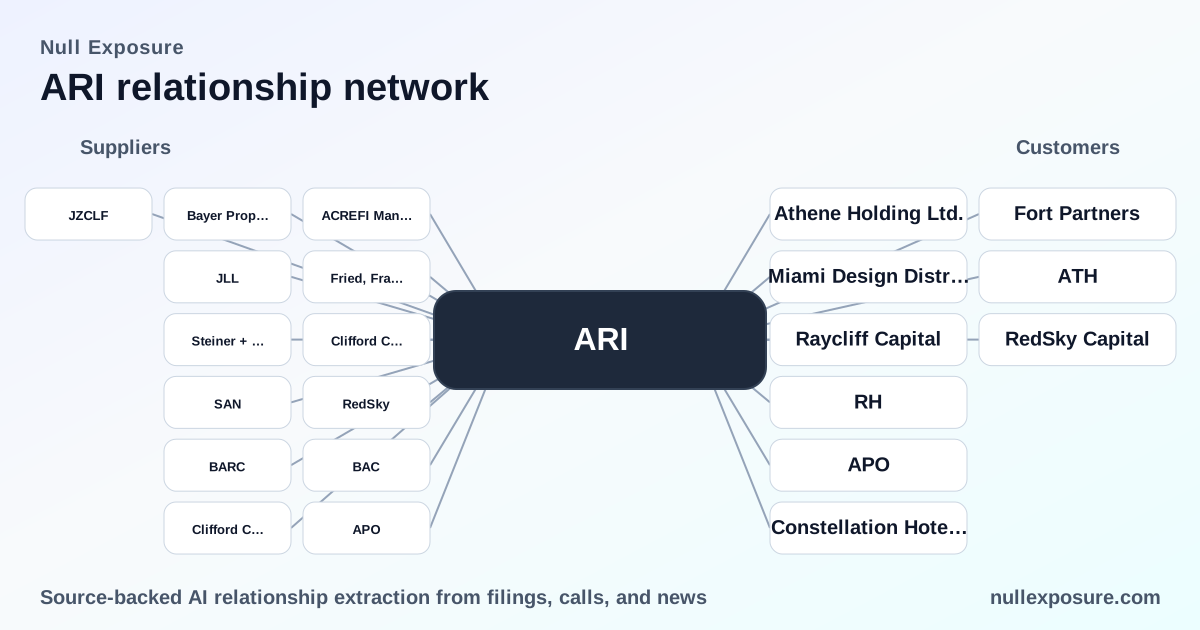
Relationship roster: every named counterparty in public reporting
- Athene Holding Ltd. (ATH) — Athene agreed to acquire ARI’s ~$9 billion loan portfolio and completed the purchase on April 24, 2026, paying roughly 99.7% of loan commitments net of reserves; Athene’s role is central to ARI’s de-risking (Globe and Mail / GlobeNewswire, March–May 2026; MarketScreener, May 2026).
- Apollo Global Management, Inc. (APO) — The purchase agreement gives Athene the right to assign acquisition rights to Apollo-managed funds and affiliates, making Apollo an economic participant in the transaction structure (company press material and legal notices, March 2026).
- Constellation Hotels Holding — Part of a purchasing partnership that acquired an Apollo-owned Miami site in late 2022; this buyer group illustrates ARI/Apollo’s prior disposition channels into international hospitality capital (The Real Deal, December 2022).
- Fort Partners — Developer Nadim Ashi’s Fort Partners participated in the Miami assemblage purchase, representing a developer counterparty in ARI-related property dispositions (The Real Deal, December 2022).
- Miami Design District Associates — Local partner in the Miami site transaction that involved Apollo-originated assets; this entity factors into the chain of title and local redevelopment plans (The Real Deal, December 2022).
- Raycliff Capital — Raycliff Capital joined the purchaser group for the Miami assemblage, exemplifying the private equity buyers that transact in former ARI-originated real estate (The Real Deal, December 2022).
- Restoration Hardware (RH) — RH was a plaintiff in litigation tied to a lease dispute involving Apollo and related landlords for a Miami development assemblage, underlining tenant-level legal and reputational exposures in ARI-originated deals (The Real Deal, December 2022).
- RedSky Capital — A prior credit in ARI’s history associated with loan distress and default reporting (coverage in 2020 referenced by real-estate press), demonstrating ARI’s exposure to sponsor-level distress events before the 2026 portfolio sale (The Real Deal / Crain’s reporting, 2020).
Each of these relationships is referenced in contemporary and historical press reporting; the Athene sale in 2026 is the dominant, value-transforming event in the set (The Real Deal; Globe and Mail; Investing.com; LegalDesire).
What the constraints and operating signals tell investors
Public excerpts and financial disclosures provide actionable signals about ARI’s operating model following the sale.
- Geography and concentration: ARI has material EMEA exposure historically, with the United Kingdom and Other Europe reported as meaningful book segments (UK ~29.5%, Other Europe ~13.4% in disclosed figures). That geographic mix historically influenced credit mix and recovery assumptions and is a company-level signal of regional concentration risk.
- Relationship maturity and staging: Public commentary and loan notes show ARI has active, modified loans that are performing under new contractual terms and carrying a mid-tier risk rating (the company reported that a modified loan was rated 3 and performing as of Dec 31, 2025). This is a company-level indicator of workout activity and portfolio seasoning.
- Contracting posture and criticality: The sale demonstrates a decisive contracting posture—ARI converted long-duration loan assets into a concentrated counterparty relationship and cash. That reduces ARI’s borrower-level criticality but increases the strategic importance of the buyer group (Athene/Apollo affiliates) for execution, indemnities and any retained servicing or legacy claims.
- Maturity and strategic direction: The April 2026 completion is a maturity event for ARI’s original business cycle of loan acquisition; the company’s trajectory shifts toward liquidity management, shareholder returns and potential fee income from asset wind-down or servicing agreements.
Risks, takeaways and what to watch next
- Counterparty concentration: The single large buyer transaction concentrates counterparty risk on Athene and Apollo-managed entities; investors should monitor assignments, servicing arrangements, and any residual retained liabilities disclosed in SEC materials.
- Transition to fee/return profile: With interest-bearing loans off the balance sheet, ARI’s near-term income profile will reflect realized gains/losses, reduced net interest income, and potential changes to dividend capacity—track subsequent filings for redeployment plans.
- Legacy credit and litigation exposure: Tenant disputes (e.g., RH) and prior workout histories (e.g., RedSky) persist as contingent exposures even after portfolio sale; these are execution and reputational risks during wind-down and transfer.
For a deeper, transaction-level mapping of ARI’s post-sale counterparty structure and legal notices, consult the firm’s SEC filings and the transaction press releases aggregated at NullExposure: https://nullexposure.com/.
Bold takeaway: The Athene/Apollo acquisition closes a prior risk cycle for ARI and replaces a diversified but balance-sheet-intensive loan book with concentrated buyer exposure and immediate liquidity—an operational reset that investors must revalue across earnings, dividend and capital allocation expectations.