Arvinas (ARVN): Partner-driven commercialization shifts revenue from licensing to co‑development profits
Arvinas discovers and develops targeted protein degraders and monetizes through structured collaborations, license agreements, milestone and royalty payments, and now co‑development/co‑commercialization arrangements. The company’s revenue profile is partner‑dependent: large pharmaceutical collaborators fund development, trigger milestones, and absorb commercialization risk, while Arvinas retains upside through shared profits and milestone receipts. For a concise view of relationship-driven revenue and risk, visit https://nullexposure.com/.
Quick investor thesis — concentrated partner cashflows with a commercial inflection
- Revenue is concentrated and lumpy. Large swings in reported revenue in FY2026 reflect both milestone recognition and the completion of technology transfers.
- Partnerships are operationally critical. Co‑development with Pfizer converts R&D investments into potential recurring commercial profits; license exits to Novartis convert programs into near‑term cash but reduce future upstream royalties.
- Maturation is underway. Regulatory approval and program transfers indicate a shift from pure clinical‑stage science to commercialization and asset monetization.
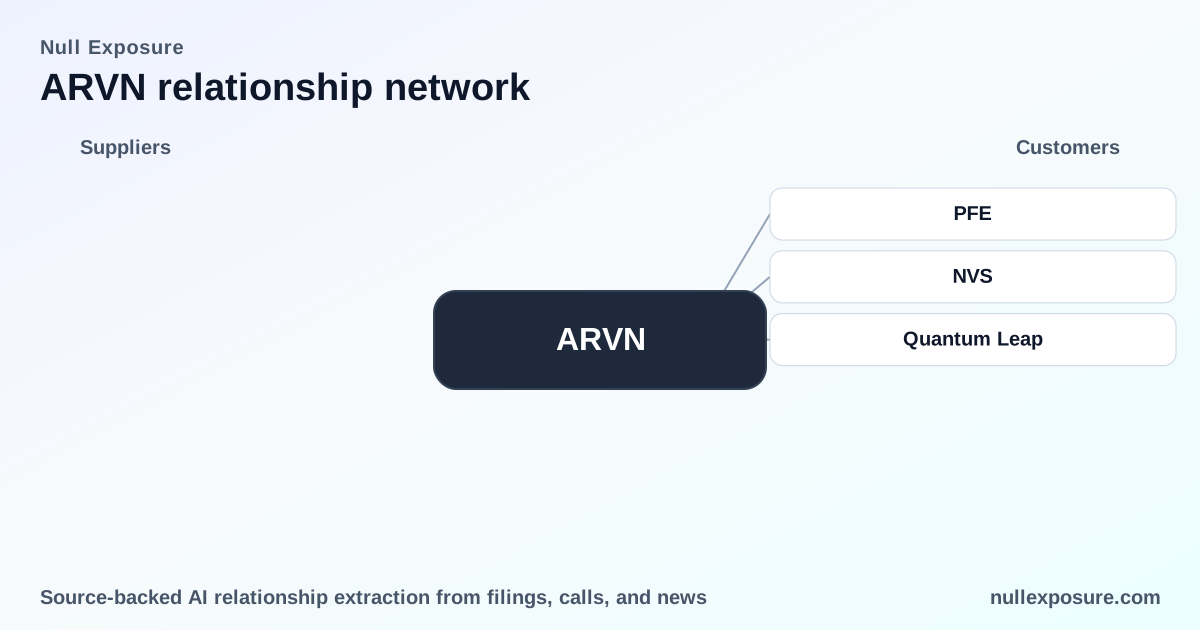
Relationship map: the counterparties that drive ARVN’s economics
Pfizer — co‑development and co‑commercialization partner
Arvinas has a global collaboration with Pfizer to co‑develop and co‑commercialize vepdegestrant (ARV‑471 / VEPPANU), under which the two companies share development costs, commercialization expenses, and profits; this structure positions Arvinas to earn profit share once the product commercializes. According to Arvinas’ FY2025/2026 financial update (GlobeNewswire, Feb 24, 2026), the Vepdegestrant collaboration produced a $150.5 million increase in revenue in FY2026 driven by changes in program cost estimates and trial plan adjustments, and a separate Pfizer research agreement produced a $5.1 million decrease tied to updated research timelines. A subsequent GlobeNewswire release (May 1, 2026) confirmed that VEPPANU received FDA approval, and Arvinas is listed as the discoverer and co‑developer, cementing the commercial inflection. (Sources: Arvinas FY2025/2026 release, GlobeNewswire Feb 24, 2026; GlobeNewswire May 1, 2026 press release.)
Novartis — license and asset agreements; technology transfer
Arvinas completed the technology transfer of clinical programs for luxdegalutamide (ARV‑766) to Novartis, which drove a $162.4 million decrease in revenue for FY2026 as development responsibilities transferred to Novartis; however, Arvinas also recognized a $20.0 million development milestone under the Novartis License Agreement. These impacts were disclosed in Arvinas’ year‑end financial results and subsequent press summaries (StockTitan and GlobeNewswire, Feb–Mar 2026), and signal a deliberate monetization of that program via licensing and asset transfers. (Sources: Arvinas FY2025/2026 release, GlobeNewswire Feb 24, 2026; StockTitan financial summary, Mar 2026.)
Quantum Leap — trial sponsorship relationship in adaptive trial platform
Arvinas cited Quantum Leap as the sponsor for the I‑SPY2 EOP trial relevant to ARV‑471 data submissions, indicating participation in adaptive, externally sponsored clinical infrastructure that accelerates evidence generation for their lead oncology program. This sponsorship detail is documented in Arvinas’ SABCS abstracts and company announcements (GlobeNewswire, Nov 24, 2025). (Source: Arvinas SABCS announcement, GlobeNewswire Nov 24, 2025.)
What these relationships tell investors about ARVN’s operating model
- Contracting posture: collaborative and milestone‑driven. Arvinas structures deals that transfer development burden to larger partners (Novartis) or split costs and profits (Pfizer), creating predictable milestone and profit‑share levers rather than standalone product risk. This is a strategic posture focused on de‑risking development and capturing upside.
- Concentration: high counterparty concentration. A small number of large pharmaceutical partners account for the majority of partner‑related revenue and milestones, which creates earnings volatility when program transfers or trial plan changes occur. The FY2026 revenue swings reflect that concentration.
- Criticality: partnerships are revenue and commercialization critical. The Pfizer co‑development is the primary pathway to commercialization and ongoing profit participation; license transactions such as the Novartis transfer convert programs to cash but remove future upstream revenue streams.
- Maturity: transitioning from clinical to commercial phase. FDA approval of VEPPANU and large milestone recognition indicate movement from discovery/early clinical monetization into revenue profiles that include commercial profit sharing, altering long‑term revenue composition and margin dynamics.
Investment implications — upside levers and material risks
- Upside levers: The Pfizer co‑commercial program provides a direct path to recurring commercial revenue and profit sharing; additional milestones and label expansions would materially improve cash flows. The transition of programs to partners such as Novartis also accelerates near‑term cash receipts.
- Key risks: Revenue remains lumpy and partner‑dependent; the company has limited direct commercial scale and relies on partner execution for market access and sales. Technology transfers reduce ARVN’s future exposure to a given asset’s upside. Regulatory and trial design changes can materially re‑profile program costs and revenue recognition, as evidenced by FY2026 adjustments.
- Operational priorities for management: execute on the Pfizer commercialization plan, preserve optionality on remaining pipeline assets, and smooth revenue volatility through additional partnerships or diversified commercial capabilities.
Practical next steps for analysts and operators
- Review Arvinas’ FY2025/FY2026 financial release for the full accounting of collaboration revenue and milestone recognition, and the FDA announcement for VEPPANU to model commercial rollout assumptions. For a centralized relationship and revenue overview, visit https://nullexposure.com/.
- For underwriting or partner‑risk assessment, focus modeling on scenario outcomes for the Pfizer collaboration (launch share, pricing, and uptake) and the erosion of future royalty potential from licensed/transferred assets.
Final takeaway
Arvinas’ business model is partner‑centric and now commercially oriented: recent financials show large, partner‑driven revenue swings as the company converts R&D into milestones, transfers assets, and steps into co‑commercialization. Investors should value ARVN based on partner execution and milestone cadence rather than steady organic sales, and monitor Pfizer and Novartis activity as the primary determiners of near‑term cash flow and long‑term upside.