Arrow Electronics (ARW): Customer Relationships and Operational Implications for Investors
Arrow Electronics monetizes by distributing electronic components and enterprise computing solutions while layering value-added services—logistics, financing, analytics and partner management—across a global customer base. Revenue derives from high-volume, order-by-order hardware distribution and an increasingly service- and software-led enterprise solutions business, with contractual relationships that shift Arrow from simple reseller to outsourced channel manager for major software vendors. For a deeper look at relationship-level signals, visit https://nullexposure.com/.
Executive thesis — why customer relationships matter to ARW valuation
Arrow’s customer relationships are not simple buyer-seller contracts; they are strategic conduits for margin expansion and recurring fee income. When Arrow becomes the principal manager of a vendor’s partner ecosystem, the company captures transaction flow, pricing control, incentive economics and related service fees—a structural revenue lever that upgrades its distribution economics and raises operating leverage. Conversely, scale partnerships concentrate operational responsibility and create counterparty and execution risk that investors must price into multiple and cash-flow expectations.
How Arrow wins business and the limits to that model
Arrow’s operating model is optimized for breadth and transactional throughput: global geographic coverage across the Americas, EMEA and Asia/Pacific; a hardware-dominant components segment supplemented by enterprise software and services; and a commercial posture grounded in order-by-order contracting rather than long locked-in subscriptions. This combination delivers high revenue per share but also constrains margin durability and increases sensitivity to vendor channel decisions and foreign-currency flows.
- Contracting posture: Substantially all sales are executed on an order-by-order basis rather than long-term sales contracts, which keeps working capital intensive flows but preserves pricing flexibility.
- Geographic diversification: Operations span NA, EMEA, APAC and LATAM, creating scale but exposing Arrow to FX and cross-border receivable dynamics.
- Role breadth: Arrow acts as both a seller of inventory and a service provider (logistics, financing, channel management), which amplifies revenue diversity but centralizes customer operational risk.
Customer relationships: the current map and what each means for investors
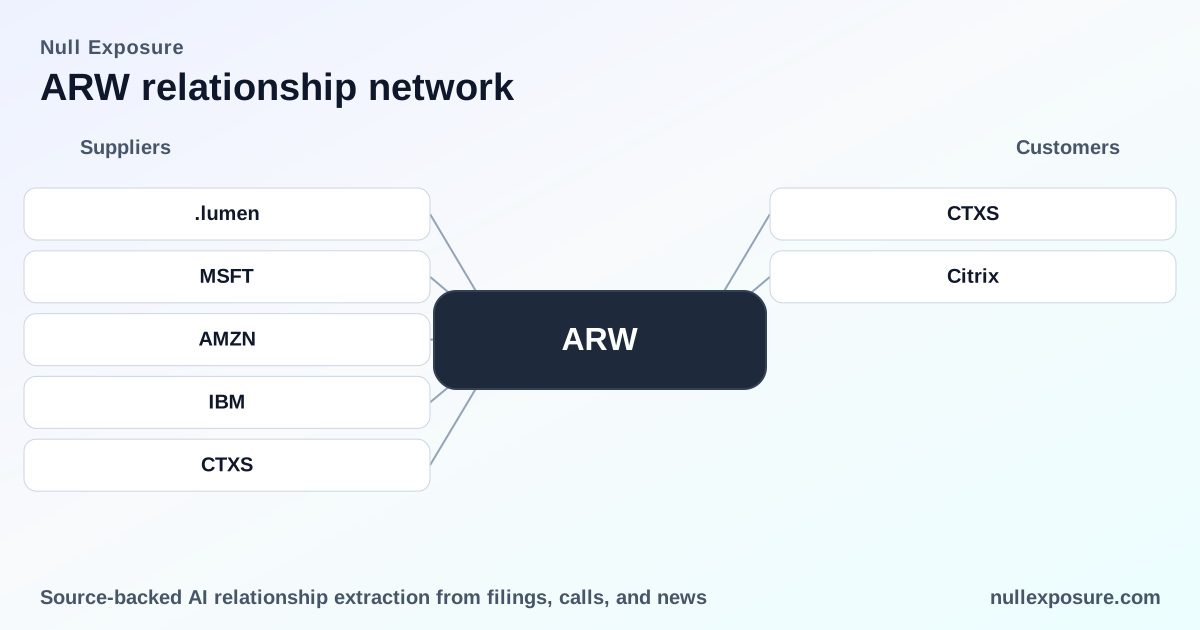
Below are every customer relationship cited in recent coverage and the plain-English implications for Arrow’s business.
Citrix — Arrow takes over partner management across NA and EMEA
Arrow was contracted to manage Citrix’s entire Citrix Service Provider channel across North America and Europe effective March 1, 2026, taking responsibility for partner transactions, pricing, incentives and partner engagement while Citrix retains product development and support. This elevates Arrow from distributor to outsourced channel manager, creating recurring transaction flow and potential service margin uplift. (Sources: CRN, March 2026; SimplyWall.St and SahmCapital coverage, February–March 2026.)
SAVART Motors — Arrow supplies a material share of electronic content
Coverage notes that a substantial portion of the electronic content in SAVART Motors’ latest model has been sourced through Arrow, indicating Arrow’s role as a preferred components supplier for mobility OEMs and a pathway into higher-content automotive programs. This underscores Arrow’s hardware distribution strength and its ability to win content in capital-intensive end markets. (Source: EE Times Asia, May 2026.)
VMware / Broadcom relationship — Arrow as cloud commerce manager
Industry reporting records Arrow’s selection by Broadcom as cloud commerce manager for VMware (reported August 2024), positioning Arrow to handle channel commerce functions for a major enterprise software franchise. This assignment signals Arrow’s strategy of capturing software transaction economics through third-party vendor agreements and strengthens its ECS services franchise. (Source: PCR-online reporting with reference to Broadcom/VMware arrangement, August 2024.)
What the relationship map implies for revenue, margins and risk
- Revenue composition: The relationships demonstrate Arrow’s dual revenue engines: high-volume hardware distribution (SAVART/OEM channels) and higher-value services/partner management (Citrix, VMware). Services and channel-management roles increase gross margin and create recurring flows but represent a smaller share of total revenue today.
- Concentration and criticality: Landing partner-management roles for marquee vendors concentrates execution risk—Arrow becomes operationally critical to partner ecosystems, and vendor decisions or contract non-renewals would create meaningful revenue swings.
- Counterparty mix and contracting: Arrow’s clientele includes government agencies and global enterprise accounts, which imposes compliance obligations and distinct contracting patterns. Most customer interactions remain spot/order-by-order, limiting revenue visibility but retaining pricing flexibility.
- Geographic FX and receivable complexity: Global operations generate currency mismatch exposures when customer receipts use different currencies than supplier purchases, pressuring receivable management and hedging programs.
Company-level constraints and operational signals investors should price
These are firm-level characteristics drawn from Arrow’s disclosures and reporting that define the operating envelope investors should evaluate:
- Spot contracting is the norm. Substantially all sales are executed on an order-by-order basis, which increases revenue volatility and working capital requirements relative to long-term contract models.
- Government customers are material. Inclusion of U.S. government agencies in the customer base creates compliance and contractor-specific obligations that affect cost structures and oversight.
- Global footprint drives complexity. Presence across NA, EMEA, APAC and LATAM gives Arrow breadth of addressable markets but also exposes the company to FX and region-specific receivable dynamics.
- Dual role: seller and service provider. Arrow often acts as the principal on transactions—negotiating pricing, managing supplier payments, and carrying risk of loss—while also servicing customers through logistics, warehousing and financial programs.
- Segment mix balances hardware and software. The global components segment remains hardware-heavy (semiconductors dominate), while the ECS segment drives software, storage, security and services revenue—giving Arrow asymmetric margin upside if software/services share increases.
Investment implications and risks to monitor
- Upside: Expansion of partner-management contracts (Citrix, VMware) re-rates Arrow’s distribution model toward recurring, service-based economics and can lift operating margins if scaled.
- Downside: The spot-heavy contracting posture and concentrated operational responsibility for a few vendor channels create execution and counterparty risk; currency mismatches and receivable sales programs influence cash conversion cycles.
- Event triggers: Renewal or expansion of channel-management agreements, quarterly guidance on ECS growth, and changes in inventory/receivable financing are actionable signals for investors.
If you are evaluating Arrow’s trajectory from distributor to channel manager, examine contract scopes, incentive economics and receivables programs on a deal-by-deal basis. For more structured coverage and relationship analytics, visit https://nullexposure.com/ to see how these vendor assignments change Arrow’s cash-flow profile and risk posture.
Bold relationships, strategic role changes, and cross-border exposure define Arrow’s present investment story: a large-scale distributor leveraging services to lift margins, but one whose valuation depends on execution of concentrated, high-responsibility partner arrangements.