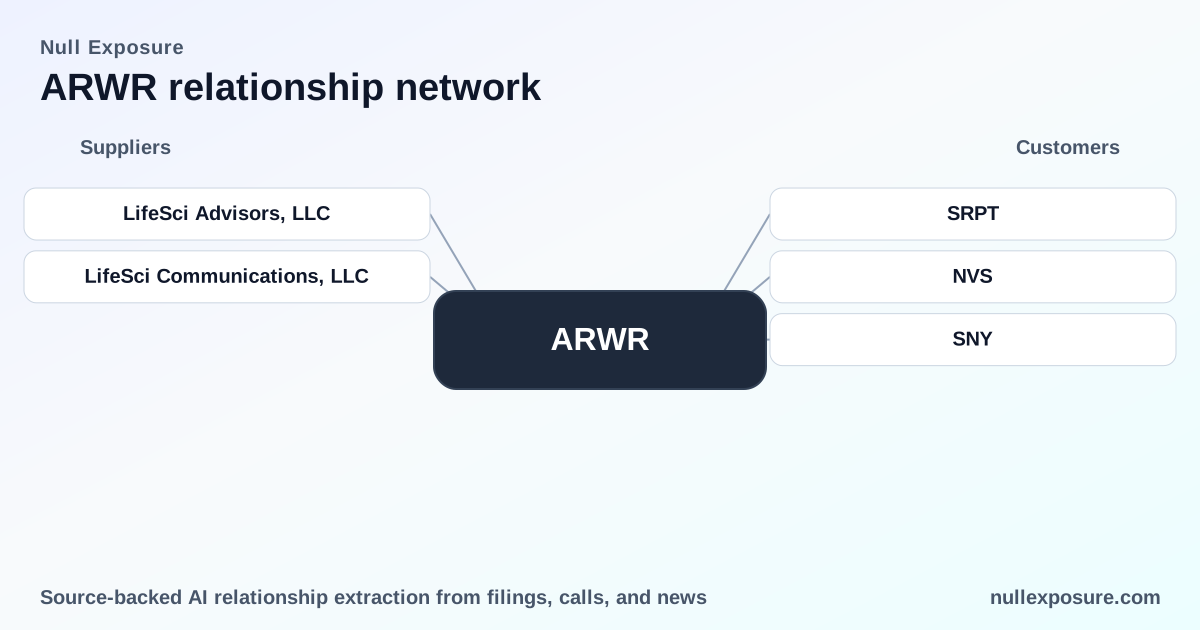
Arrowhead Pharmaceuticals: Partner-Driven Revenue, Concentrated Counterparty Risk
Arrowhead Pharmaceuticals develops and licenses RNAi therapeutics using its Targeted RNAi Molecule (TRiM) platform and monetizes primarily through collaboration, licensing and regional commercialization agreements. The company converts R&D assets into near-term cash via upfront payments and milestone triggers, while offloading late‑stage commercialization and geographic distribution to large pharma partners — a model that produces volatile, partner-driven revenue. For a concise map of these relationships for investor due diligence, see https://nullexposure.com/.
Why investors should read the partner map first
Arrowhead’s financial profile is not a traditional product-sales story: revenue spikes are correlated with partner milestones and one-off deals, and the balance between recurring royalties and transaction-based cash matters materially to valuation and risk. Below I walk through each named customer relationship surfaced in public reporting and press, then synthesize what those ties imply for contracting posture, concentration and strategic risk.
Key takeaway: Arrowhead is a platform company that deliberately leverages partner capital and commercialization networks; that structure accelerates monetization but concentrates execution and cash flow on a small number of counterparties.
The partner roll call: who pays Arrowhead and why
Sarepta Therapeutics (SRPT)
Arrowhead’s largest single customer contribution in FY2026 came from its license and collaboration with Sarepta, which accounted for $229.5 million of reported revenue in the company’s FY2026 disclosures. According to coverage of Arrowhead’s SEC filings in March 2026, Sarepta’s agreement generated the largest share of collaboration revenue for the period (TradingView, SEC 10‑Q, March 2026).
Earlier reporting also shows Sarepta paid a substantial upfront in 2024 — roughly $500 million upfront for rights to multiple programs — and subsequently made major milestone payments, including a $200 million milestone earned November 20, 2025, tied to a clinical enrollment and dose-escalation trigger (Fierce Biotech, March–May 2026; BioSpace press release on FY2026 Q1 results).
Novartis (NVS)
Arrowhead closed a global licensing and collaboration agreement with Novartis that closed on October 17, 2025, focused initially on ARO‑SNCA (a preclinical siRNA program targeting alpha‑synuclein) and additional targets using the TRiM™ platform. That arrangement contributed $34.2 million to FY2026 collaboration revenue, according to Arrowhead’s FY2026 filing coverage (TradingView, SEC 10‑Q, March 2026; BioSpace press release, March 2026). This is a classic platform‑to‑big‑pharma alliance: early‑stage program licensing coupled with future milestones rather than current product sales.
Sanofi (SNY)
Sanofi is Arrowhead’s regional commercialization and co‑development partner for Redemplo (plozasiran): China’s National Medical Products Administration approved Redemplo for adults with familial chylomicronemia syndrome and Sanofi will lead commercialization in Greater China, per Arrowhead’s FY2026 results and market coverage (BioSpace press release, March 2026; SimplyWallSt / sahmcapital coverage, Q1 2026). Public reporting and analyst notes also emphasize upfront and milestone receipts tied to Sanofi-related agreements that have materially offset Arrowhead’s R&D spend (Finviz / Piper Sandler commentary, March 2026).
Constraints and what they reveal about Arrowhead’s operating model
The public evidence points to a partnership model characterized by transaction-driven inflows and mixed contract types:
- A documented asset‑sale excerpt shows Visirna Therapeutics HK Limited sold investigational plozasiran assets to Sanofi and received a $130 million upfront payment (August 1, 2025). The presence of that asset sale in filings is reported as evidence of a one‑time, spot-style transaction and a seller role in at least one deal; within Arrowhead’s signals this supports the view that some revenues are non‑recurring, large‑ticket transfers rather than long-term royalties. (Evidence excerpt from company reporting summarized in constraints, August 2025.)
- At the company level, the evidence set signals high concentration and milestone dependence: a handful of counterparties generate outsized revenue in a given year (Sarepta and Sanofi examples above), and cash flow is lumpy because it depends on discrete milestone events and approvals.
- Contracting posture is mixed: longer-term license and collaboration agreements (Sarepta, Novartis) coexist with regional commercialization deals and asset transfers (Sanofi/Visirna evidence), producing a hybrid of recurring future‑looking payments and immediate upfront cash.
Investment implication: this operating posture magnifies both upside (large, rapid monetization when milestones are hit) and downside (single‑partner setbacks or trial delays can compress near‑term cash).
You can read more structured partner intelligence and historical collaterals at https://nullexposure.com/.
How partner maturity and criticality vary across relationships
- Sarepta represents the most mature and financially material commercial relationship in the recent period: large upfronts and milestone receipts have translated into significant reported revenue and are central to FY2026 cash inflows (TradingView / Company filings, March 2026). That elevates counterparty execution risk — Sarepta’s development decisions directly impact Arrowhead’s revenue recognition cadence.
- Sanofi’s role is commercialization‑centric in Greater China for Redemplo, shifting post‑approval commercial execution risk to a large global player and implying revenue sharing and market access dependency rather than Arrowhead‑led launches (BioSpace; SimplyWallSt, Q1 2026).
- Novartis is an example of a platform license to a major pharma for preclinical assets; early revenues are smaller today but the relationship preserves large future milestone potential if programs advance (BioSpace press release, March 2026).
Risks investors should weight now
- Concentration risk: materially lumpy revenue from a small set of counterparties (notably Sarepta and Sanofi) elevates headline volatility. FY2026 revenue demonstrates that reality.
- Milestone dependency: cash flow and valuation re‑rating hinge on trial enrollment, regulatory approval and the timing of partner milestone triggers. The November 2025 $200M milestone illustrates both the upside and the cliff‑edge nature of this model.
- Partner execution & strategic shift risk: partners can re‑prioritize pipelines (Sarepta’s strategic refocus on siRNA programs after LGMD pipeline setbacks was publicly discussed), which changes revenue timing and program focus (BioSpace / Zacks, May 2026).
- Regulatory & commercialization transfer risk: approvals like Redemplo in China transfer commercial execution risk to partners (Sanofi) but also create dependencies on partner commercialization capability and terms.
Bottom line for investors
Arrowhead’s business model successfully converts platform R&D into near‑term cash through large partner transactions, but that conversion is transactional and concentrated. For investors and operators evaluating ARWR customer relationships, the critical questions are counterparty credit and execution, milestone probability and the timing of expected receipts. If partners advance programs and hit triggers, upside is direct and meaningful; failure or delay in any major partner program creates pronounced downside in reported revenue and cash flow.
For deeper partner-level intelligence and comparable company relationship maps, visit https://nullexposure.com/ — the partner landscape drives Arrowhead’s valuation more than a typical product‑sales profile.