Associated Banc‑Corp (ASB‑P‑E): Customer relationships that matter to preferred shareholders
Associated Banc‑Corp issues the Series E depositary preferred shares to deliver fixed, senior dividend cashflows while the bank’s operating business generates earnings through commercial and consumer lending, deposit spreads, and fee income tied to its Midwest footprint and real‑estate assets. For investors evaluating ASB‑P‑E, the key signal is how Associated’s client and property relationships support deposit retention, noninterest income, and the bank’s balance‑sheet stability—factors that underpin the preferred’s payment capacity. For deeper relationship intelligence, visit https://nullexposure.com/.
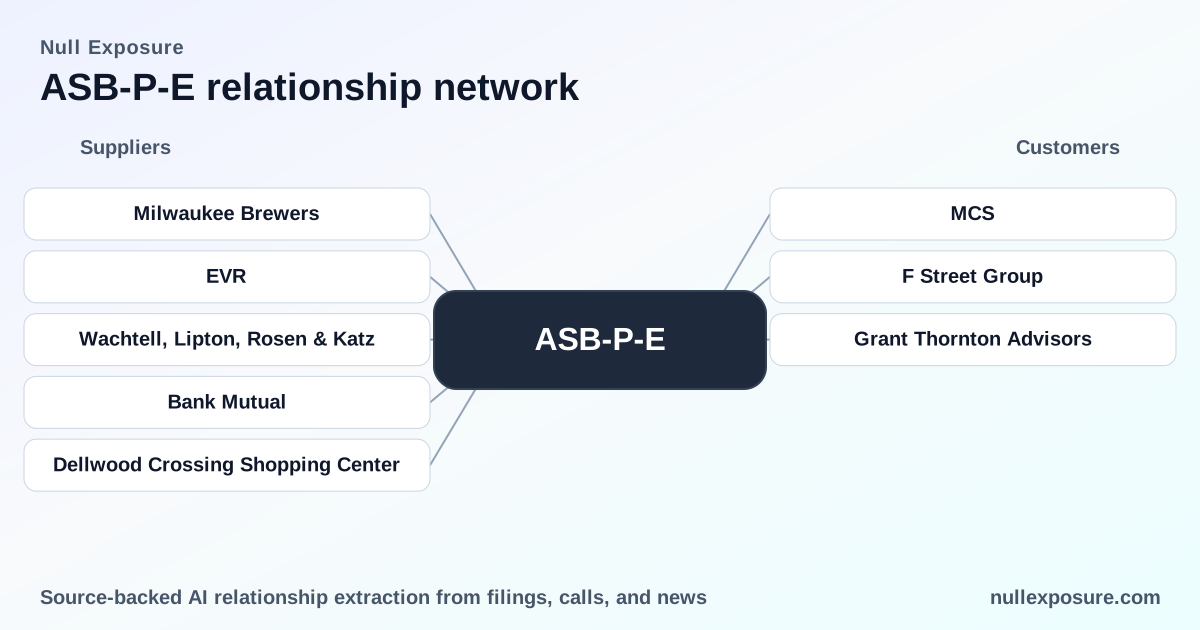
The recent news stream shows three customer/property relationships with direct implications for Associated’s commercial banking and real‑estate exposure: two corporate tenants moving into the Associated Bank River Center and a previously owned bank headquarters sold into development. Each relationship is summarized below with source context.
River Center tenant wins: why office leases matter to a regional bank
Associated Bank owns and operates downtown office assets such as the Associated Bank River Center that serve both as banking hubs and commercial real‑estate investments. Winning reputable tenants preserves rental cashflow, supports local deposit relationships, and reduces vacancy risk—all relevant to assessing the bank’s capacity to sustain preferred dividend coverage through operating volatility. A BizTimes article on March 9, 2026 reported multiple tenant moves into the River Center (https://biztimes.com/100-east-tenant-chooses-associated-bank-river-center-for-new-office/).
The Marcus Corp. / MCS — large tenant relocation into River Center
The Marcus Corp. (ticker MCS) is relocating operations to the Associated Bank River Center and will occupy roughly 52,000 square feet, a move that anchors the building with a high‑profile regional tenant and supports Associated’s commercial rent roll and deposit nexus (BizTimes, March 9, 2026: https://biztimes.com/100-east-tenant-chooses-associated-bank-river-center-for-new-office/).
MCS (as separately indexed result)
The same transaction appears in data indexed under the symbol MCS with identical details: a significant tenant commitment into the River Center that consolidates Associated’s position as landlord to major regional employers and enhances the building’s tenant mix (BizTimes, March 9, 2026: https://biztimes.com/100-east-tenant-chooses-associated-bank-river-center-for-new-office/).
Grant Thornton Advisors moves local office
Chicago‑based Grant Thornton Advisors is relocating its local office into the River Center as another anchor tenant, a shift that both diversifies the building’s tenant roster and signals corporate demand for downtown office space tied to Associated’s property strategy (BizTimes, March 9, 2026: https://biztimes.com/100-east-tenant-chooses-associated-bank-river-center-for-new-office/).
Asset sale in Brown Deer: capital recycling and community development
F Street Group — purchaser of former Bank Mutual site
F Street Group purchased Bank Mutual’s former headquarters along with adjacent parcels from Associated and is planning residential development on the 16‑acre site; this transaction converts bank‑owned real estate into liquid capital and removes a noncore property from the balance sheet while signaling the bank’s active asset disposition posture (JSOnline, Jan 13, 2023: https://www.jsonline.com/story/money/real-estate/commercial/2023/01/13/16-acre-brown-deer-site-sold-for-planned-residential-development/69806214007/).
What the relationship set collectively signals about Associated’s operating model
The relationships above illustrate several company‑level operating and business model characteristics that matter to preferred shareholders and credit analysts. These are company signals rather than attributes of any single tenant:
- Contracting posture: Associated operates as both a lender and property owner, contracting with commercial tenants under lease terms that produce recurring rental income and sustain deposit linkages when tenants are local corporate customers.
- Concentration and diversification: Associated’s footprint across the Midwest and multiple tenant types—corporate offices and professional services—reduces single‑tenant concentration risk at the portfolio level, although large leases like the Marcus Corp. commitment are material to a single asset’s cashflow profile.
- Criticality of relationships: Corporate tenants anchored in downtown properties are strategically critical to rent stability and local deposit flows; tenant turnover or significant vacancy in key buildings would have disproportionate near‑term effects on property cashflow and related bank services revenue.
- Maturity and capital management: Disposition of legacy properties (for example, the Brown Deer sale) reflects a mature capital‑management stance—recycling real estate holdings into liquidity or redeployed capital rather than long‑term property ownership for all assets.
- Revenue mix implications: Rental and fee income from property operations supplements net interest income, creating a hybrid revenue stream that supports preferred dividend coverage during interest‑rate cycles.
These company‑level signals stand even though the constraints dataset returned no explicit contractual constraints or counterparty caveats in the customer results.
Operational and investor implications — priorities to monitor
- Occupancy and tenant credit quality. Large tenants such as The Marcus Corp. materially affect building cashflows; investors should track lease terms, rent escalations, and tenant credit as proxies for sustained noninterest income.
- Asset dispositions and capital redeployment. Sales like the Brown Deer transaction demonstrate an active approach to balance‑sheet optimization that improves liquidity and reduces noncore asset risk.
- Deposit linkage from corporate tenants. Tenant moves into bank‑owned properties strengthen local business relationships that drive deposit inflows and cross‑sell opportunities for lending and treasury services.
- Real‑estate market dynamics in the Midwest. Office‑market conversions and downtown demand shifts directly affect Associated’s property cashflow and, by extension, the reliability of payments to Series E holders.
Bottom line for ASB‑P‑E investors and operators
Associated’s customer and property relationships show a pragmatic mix of tenant‑anchored commercial banking and selective asset recycling that supports stable cashflow generation. For preferred shareholders, the combination of diversified regional business, active property management, and tenant wins in downtown assets is constructive for the bank’s capacity to sustain fixed dividend obligations, provided office occupancy remains stable and asset dispositions continue to be executed prudently.
For a structured view of relationship exposures and how they affect capital and dividend risk, consult our platform at https://nullexposure.com/ for further analysis and monitoring tools.