ASPC (A SPAC III Acquisition Corp.): Customer relationships and what they signal for investors
Thesis: A SPAC shell listed as ASPC monetizes by sourcing and completing a business combination, capturing post-merger equity upside and sponsor economics rather than by generating operating revenue; its current value drivers are transaction execution, sponsor alignment, and capital market arbitrage rather than customer contracts. For investors evaluating ASPC’s customer footprint, the record is functionally empty—this is a sponsor/transaction play, not a revenue-operating enterprise. For more diligence on counterparties and disclosures, visit https://nullexposure.com/.
Why this matters: customers are not the business model here
ASPC is a classic SPAC vehicle: no operating revenue (RevenueTTM = 0), a small public float and a concentrated insider base. The company’s economics hinge on completing a qualifying business combination and converting public cash and sponsor equity into a growth-stage enterprise. That structural reality shapes contracting posture, counterparty criticality, and concentration risk:
- Contracting posture — short-term and opportunistic: ASPC’s engagements are transactional and primarily with sponsors, placement agents, and target acquisition parties rather than long-term customers.
- Concentration — shareholder and governance concentrated: Insiders control roughly 76% of shares, while institutional ownership is minimal (~1.24%), concentrating decision authority and amplifying sponsor influence on deal selection and terms.
- Criticality — low operational dependence on external customers today: With no operating revenues, external commercial relationships are not material to current cash flow; the company’s critical counterparties are financial and legal advisors, not product customers.
- Maturity — pre-combination stage: ASPC shows typical SPAC maturity signals: negligible revenue, small market capitalization (~$27 million), and balance-sheet posture oriented to a single strategic transaction and trust mechanics.
These company-level signals define investor priorities: governance, sponsor incentives, deal pipeline quality, and dilution mechanics are the primary value levers, not customer retention or revenue growth.
The universe of customer relationships we found — short and specific
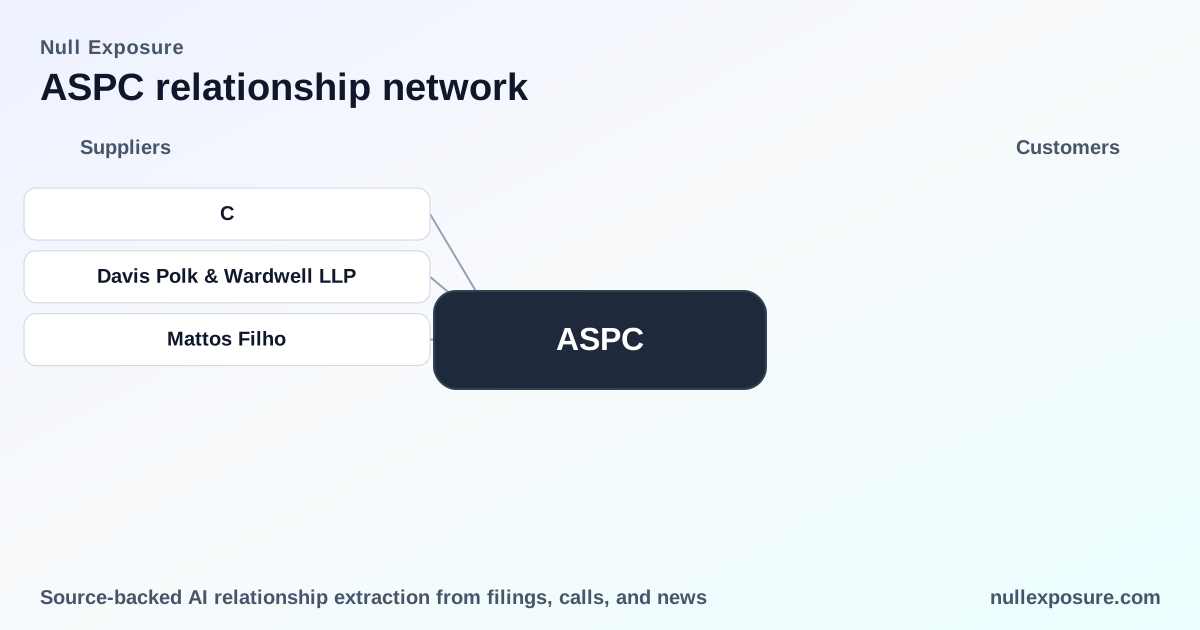
The search of ASPC customer relationships returned one entity. I cover it below in full.
Saga (SGA) — a single mention in an external earnings call
SGA was referenced in the context of radio music licensing: a mid‑August announcement from the Radio Music License Committee—of which Saga is a member—described separate rate‑setting settlements with ASCAP and BMI. The source is Saga’s Q3 2025 earnings call that was indexed in March 2026; there is no direct contract text tying SGA to ASPC in the record. According to Saga’s 2025 Q3 earnings call (documented March 2026), the mention concerns industry licensing settlements rather than a commercial customer relationship with ASPC.
Source: Saga Q3 2025 earnings call (indexed March 7, 2026).
What the single mention implies about ASPC’s customer profile
This result reinforces the dominant conclusion: there is effectively no operating customer base associated with ASPC. The appearance of SGA is an external cross-reference in a third‑party earnings call and does not constitute evidence of an operating commercial contract or recurring revenue stream for the SPAC. Investors should therefore treat any customer‑related signals as immaterial to ASPC’s present valuation—deal execution and sponsor alignment are the actionable vectors.
Investment implications and the lens investors should use
For investors evaluating ASPC as a potential position, prioritize the following items over customer due diligence:
- Sponsor alignment and economics. With insiders controlling a large majority of shares, evaluate sponsor rollover, founder shares, and potential post‑deal dilution. Insider concentration is a primary governance risk.
- Deal pipeline quality and synergies. The SPAC must identify a target where management can credibly create post‑combination value; the absence of customers today means success rests on the target’s operating metrics, not ASPC’s current contracts.
- Liquidity and marketability. Market cap (~$27M), small shares outstanding, and a limited float (shares float ~557,580) create liquidity risk and potential volatility for public investors.
- Regulatory and trust mechanics. Confirm the structure of escrowed trust funds, redemption economics, and regulatory filings tied to any announced transaction.
Key risk factors spelled out
- No operating revenue: RevenueTTM = 0; the company’s valuation is contingent on executing a combination that creates operating cash flow.
- Concentrated insider control: PercentInsiders ~76% concentrates decision-making and increases the importance of sponsor incentives and track records.
- Thin institutional interest: PercentInstitutions ~1.24% limits third‑party oversight and may depress secondary market liquidity.
- Valuation quirks: A reported PE (Trailing PE = 60.79) is a misleading metric here given the lack of revenue and the SPAC structure; treat standard corporate multiples with skepticism.
Practical next steps for analysts and operators
- Review ASPC’s S-1/424 and proxy filings for detailed sponsor economics and trust mechanics; these documents will define redemption risk and sponsor dilution.
- Track any announced letter of intent or definitive agreement closely; the target’s customer base and revenue profile will fully determine ASPC’s post‑deal value.
- Monitor insider transactions and schedules—given the high insider concentration, insider actions will materially affect market sentiment and control.
If you want a deeper, relationship‑level diligence package or ongoing monitoring for SPAC counterparty mentions, explore our research gateway at https://nullexposure.com/.
Bottom line
ASPC is a transaction vehicle, not a customer‑centric operating company. The single relationship mention (SGA) is peripheral and non‑contractual in nature; it does not change the investment thesis that ASPC’s value is driven by deal execution, sponsor incentives, and post‑combination economics. Investors should calibrate diligence accordingly—focus on sponsor quality, deal pipeline, and governance over traditional customer metrics.