Altisource Portfolio Solutions (ASPS): How customer dynamics shape the investment case
Altisource Portfolio Solutions S.A. operates as an integrated service provider and marketplace for the residential real estate and mortgage ecosystem, monetizing through fee-based services (REO asset management, foreclosure/trustee/title and field services), SaaS (the Equator platform), and marketplace/auction revenue (Hubzu and related channels). The business is highly concentrated: a small number of large servicers drive a material share of service revenue, while new SaaS wins and origination pipeline activity provide offsetting growth opportunities. For a data-driven read on customer concentration and contractual posture, visit https://nullexposure.com/.
Why customer relationships are the primary valuation lever
Altisource’s revenue model depends on long-running service contracts with large servicers and institutional counterparties, and recurring referrals from those relationships drive a steady stream of fee income. The company discloses that its client base is dominated by large financial institutions, GSEs, banks and non-bank servicers — a counterparty universe that is deep but top-heavy, concentrating revenue and operational leverage in a few names (company 10‑K disclosure). Its services are provided predominantly in North America, which concentrates geographic risk in the U.S. mortgage market (10‑K).
- Contracting posture: Altisource presents as a traditional outsourcer/SaaS operator: multi-year service agreements and platform licenses underpin recurring revenue. The Onity Services Agreements extend through August 2030, representing an explicit long-term contractual anchor (10‑K).
- Concentration and criticality: Onity was the single largest customer in 2024, accounting for 44% of total revenue, and Altisource acknowledges that revenue is generated from two dominant customers — a structural constraint on growth predictability (10‑K).
- Maturity and optionality: While legacy referral streams are concentrated, Altisource is actively growing SaaS subscriptions (Equator) and origination-related revenue (Lenders One), which diversify the top line and reduce dependence over time (earnings calls, Q4 2025 / Q1 2026 commentary).
If you want a concise, investor-focused packet on Altisource’s customer risks and opportunities, see the company overview at https://nullexposure.com/.
Recent contractual shifts: Rithm, Onity and the pipeline story
The cooperative brokerage agreement (CBA) with Rithm expired on August 31, 2025, changing the referral cadence and contractual status of certain REO portfolios. Management reports that, despite the CBA’s expiration, Altisource continues to manage CBA REO assets at Rithm’s discretion and still receives referrals with limited exceptions, but the structural terms have moved from contractual entitlement toward discretionary referrals (Q4 2025 earnings call transcript). Concurrently, Rithm provided notice terminating servicing agreements with Onity, and as those servicing transfers occur, Altisource expects a reduction in foreclosure/trustee/title and field-service referrals previously tied to those portfolios (earnings call).
Management has guided service revenue between $165 million and $185 million for 2026 and is explicit that management expects new sales wins and a healthy pipeline to offset reduced volumes from Onity and Rithm (earnings commentary and market summaries). This positions the company at a crossroads where execution on the sales pipeline and SaaS adoption will determine whether concentration risk is truly de‑risked.
Customer relationships — line by line
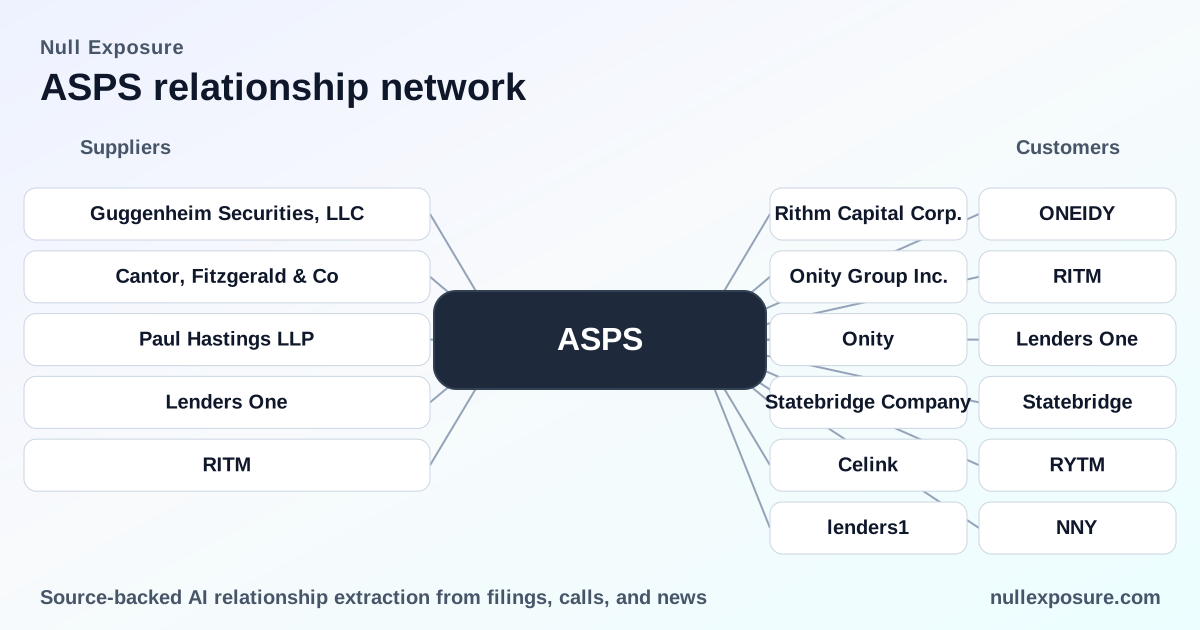
Below are concise, source‑backed summaries of every customer relationship mentioned in the collected results.
-
Onity Group Inc. / Onity (also referenced as NNY) — Onity has been Altisource’s largest customer and accounted for roughly 42–44% of revenue in recent reporting periods; the Onity Services Agreements extend through August 2030, but management expects referrals tied to certain portfolios to decline as servicing transfers occur. Source: Altisource 2024 10‑K and Q4 2025 earnings call transcripts (FY2024, Q4 2025).
-
Rithm Capital Corp. / Rithm / RITM / Rhythm / RYTM — Rithm was the counterparty to the CBA that expired August 31, 2025; Altisource continues to manage some former CBA REO assets and receive referrals at Rithm’s discretion while the company works through service transfers. Source: Q4 2025 earnings call and company filings (CBA expiration note; FY2025–FY2026 commentary).
-
lenders1 / Lenders One — Lenders One is a mortgage cooperative managed by an Altisource subsidiary; management reported significant origination sales momentum and secured multi‑million dollar wins primarily in Lenders One, driving strong service revenue growth in Origination. Source: Globenewswire (Dec 2025) and Q1 2026 earnings commentary.
-
Statebridge Company / Statebridge — Statebridge selected Altisource’s Equator SaaS platform to manage growing REO operations, representing a strategic SaaS customer win and validation for Equator’s market positioning. Source: GlobeNewswire press release (Feb 9, 2026) and related news items.
-
Celink — Celink retained Altisource as REO asset manager for a portion of its HECM portfolio, a client win that was expected to generate meaningful annual revenue when announced. Source: HousingWire coverage (Sep 2023 announcement referenced in reporting).
-
ONEIDY — Management noted that as service transfers occur, Altisource expects reductions in foreclosure, trustee title and field service referrals from ONEIDY‑tied portfolios, reflecting portfolio movement between servicers. Source: Q4 2025 earnings call transcript excerpts (FY2026 commentary).
-
Other variants and references (NNY, RITM, RYTM, Rhythm) — These entries reflect alternative ticker or name spellings captured in transcribed sources and news items; they point to the same underlying relationships described above (Onity and Rithm) and should be read as duplicate mentions across filings and earnings transcripts. Source: Earnings call transcripts and news aggregators (Q4 2025 / Q1 2026).
Investment implications: concentrated cash flows but visible re‑rate paths
- Risk: A single customer historically generating ~44% of revenue is a large idiosyncratic risk that compresses valuation multiples when referrals decline; Onity’s prominence is a binding constraint on predictability (10‑K).
- Offsetting opportunities: The company reports a meaningful sales pipeline and concrete wins in Lenders One and Equator SaaS (Statebridge), which convert concentration exposure into diversified, recurring revenue if execution continues (earnings call, Feb–Mar 2026 press coverage).
- Operational posture: Altisource is a service provider with long-term contract exposure in select instances (Onity agreements through 2030) and a go‑forward mix that increasingly includes SaaS platform revenue — a strategically important diversification to track.
Bottom line
Altisource’s valuation is driven by two levers: how quickly new SaaS and origination wins offset legacy referral declines, and the stability of its remaining large servicer relationships. The company’s disclosures and recent call commentary provide clear, actionable inputs for modeling scenarios where pipeline wins either fully offset or only partially replace Onity/Rithm referral revenue. For a focused investor summary and customer-risk dashboard, visit https://nullexposure.com/.