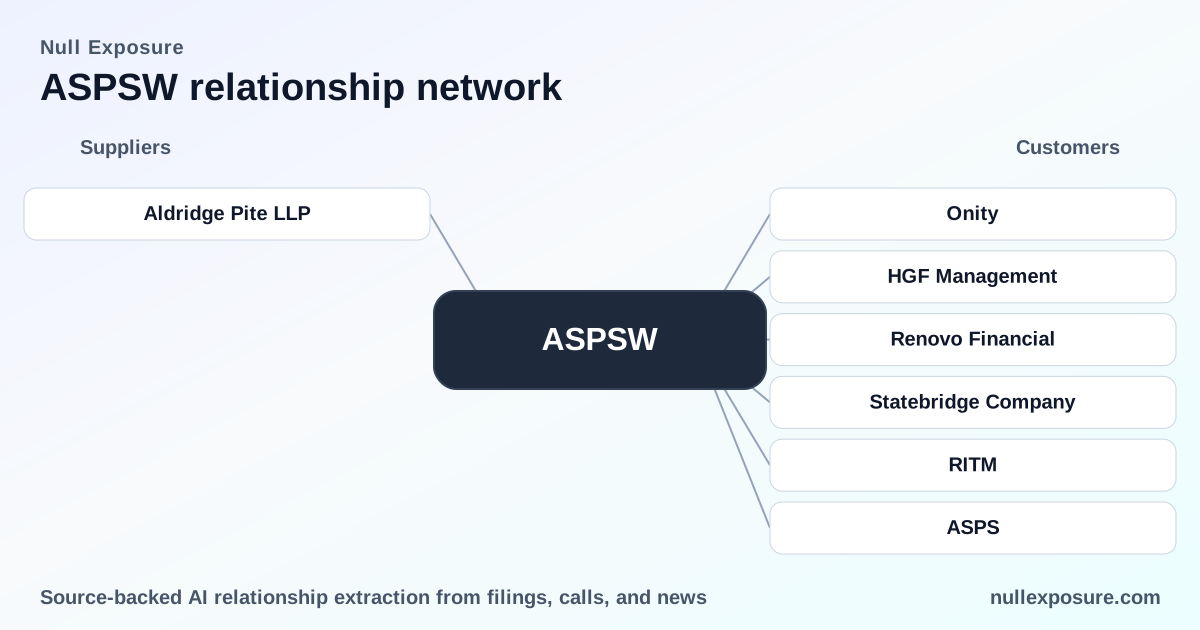
Altisource Portfolio Solutions (ASPSW): Customer Map, Concentration Risks, and Contract Quality
Altisource Portfolio Solutions operates an integrated services and marketplace business for real estate and mortgage servicing in the United States, monetizing through recurring services fees, brokerage commissions, and SaaS platform subscriptions tied to loan servicing and REO management. The company’s revenue profile is heavily concentrated in a few large buying relationships, structured by multi‑year service agreements and supplemented by its Equator SaaS platform and brokerage channels. For a quick view of customer exposures and contract detail, visit https://nullexposure.com/.
Thesis in one paragraph
Altisource converts scale in mortgage operations into predictable revenue by selling services (brokerage, REO disposition, servicing support) and platform subscriptions to large servicers, investors and lenders; that operating model generates high gross margins on services but creates acute single‑counterparty concentration, with one customer accounting for nearly half the revenue in FY2024. Investors should evaluate not only top‑line concentration but contract tenor, exclusivity clauses, and the downstream criticality of Altisource services to clients’ operational workflows.
What the headline numbers say about risk and runway
- Critical concentration: Onity accounted for 44% of consolidated revenue in 2024, which is material to solvency and valuation. (Altisource FY2024 Form 10‑K.)
- Contract maturity supports revenue visibility: Certain large customers are under multi‑year agreements—helping near‑term visibility but creating long tail operational dependency. (10‑K contract disclosures.)
- Service mix and geography: Revenue is earned predominantly from U.S. servicers, investor and lender customers across services and platform segments; the business is sector‑specific and regionally concentrated. (10‑K company overview.)
Contracts, counterparty types, and operating constraints
Altisource’s public disclosures frame several firm‑level operating characteristics that matter to investors:
- Long‑term contracting posture: The 10‑K details multi‑year service agreements that extend revenue visibility—Onity’s services agreements run through August 2030, and the Rithm brokerage agreement extends through August 2025, both explicitly named in filings. These tenors provide medium‑term revenue stability for the referenced relationships. (Altisource FY2024 Form 10‑K.)
- Customer mix skewed to large institutions and GSEs: The company identifies customers as large financial institutions and government‑sponsored enterprises among others, signaling enterprise counterparty complexity and credit considerations for receivables. (10‑K.)
- U.S. centric operations: Services are delivered predominantly to customers located in the United States, concentrating geographic risk. (10‑K.)
- Service segment orientation: Revenues are recognized in “Servicer and Real Estate / Services” lines, indicating the firm earns primarily from operational services rather than diversified product revenue. (10‑K.)
- Active, high‑criticality relationships: Disclosures classify top relationships as active and material; losing a top buyer would materially impair financial results. (10‑K.)
For transaction‑level customer and revenue detail, see the relationship summaries below.
The customer list — what each relationship means for investors
Onity
Onity is Altisource’s largest customer, responsible for 44% of consolidated revenue in 2024, with revenue recognized of $70.4 million in 2024 and $63.2 million in 2023; Onity buys mortgage services under service agreements that extend through August 2030, making this an explicitly long‑term, high‑spend buyer. According to Altisource’s FY2024 Form 10‑K, the company warns that losing Onity or a reduction in volumes would materially and adversely affect results. (Altisource FY2024 Form 10‑K.)
Rithm (RITM)
Rithm (ticker referenced as RITM in filings) purchases brokerage services for REO exclusively from Altisource for specified MSRs under a brokerage agreement that runs through August 2025, with revenue recognized of approximately $2.3 million in 2024 and $2.8 million in 2023. The 10‑K identifies this as an active, contracted buyer relationship with exclusivity language for brokerage services. (Altisource FY2024 Form 10‑K.)
Renovo Financial
Renovo Financial was named as a new customer added to Equator, Altisource’s SaaS real estate transaction management platform, in a press/news posting referencing Equator’s customer additions. This relationship signals incremental SaaS adoption and diversification of the customer base beyond legacy services. (StockTitan news post referencing Equator additions, March 2026.)
HGF Management
HGF Management was also listed among new Equator platform customers in the same industry report announcing client additions to Altisource’s SaaS platform, representing further adoption of its transaction management software by real estate managers. (StockTitan news post referencing Equator additions, March 2026.)
Statebridge Company
Statebridge Company selected Equator to manage residential and business‑purpose REO inventory, a public win that underscores Equator’s positioning for REO workflow management and the company’s ability to sell platform services to institutional REO managers. (StockTitan news post referencing Equator selection, March 2026.)
Altisource / ASPS (self‑disclosure)
Altisource’s own FY2024 10‑K contains forward‑looking risk language acknowledging that loss of Onity or a significant volume reduction could materially reduce revenue and trigger asset impairments, reflecting explicit company recognition of customer concentration as a core strategic risk. This self‑disclosure should be read as management’s official risk signal. (Altisource FY2024 Form 10‑K.)
RITM vs Rithm duplicate entries
The filings include both “RITM” and “Rithm” mentions referring to the same servicing client relationship; both entries in the 10‑K confirm the exclusivity and contracted nature of their brokerage arrangement with Altisource. Investors should treat these records as a single counterparty exposure reflected under slightly different name formats in public documents. (Altisource FY2024 Form 10‑K.)
What this configuration means for valuation and operational due diligence
- Revenue visibility is concentrated but contractual. Long‑dated agreements with Onity and Rithm give Altisource visibility, but the balance of power lies with the buyer—a termination or volume reduction can quickly impair revenue given the 44% concentration. (10‑K.)
- SaaS momentum is a partial de‑risking vector. Equator wins (Renovo, HGF, Statebridge) broaden customer types and revenue sources, but these relationships are smaller and do not yet offset the top‑customer risk quantitatively. (StockTitan coverage of Equator additions.)
- Counterparty credit and receivable risk matters. Large enterprise and GSE counterparty mix places emphasis on contract enforceability and collection performance; Altisource’s receivables exposure tied to a few counterparties warrants close review of AR aging and collateral. (10‑K company customer description.)
Final takeaways for investors
- Primary risk: single‑counterparty concentration (Onity) with significant revenue at stake. The company’s own filing labels the event of losing Onity as potentially materially damaging.
- Contract structure reduces short‑term uncertainty but increases medium‑term concentration risk because contracts lock in revenue to a small number of large buyers.
- Growth vector: Equator SaaS sales to companies like Renovo, HGF, and Statebridge provide diversification optionality but are currently modest relative to Onity revenue.
For a transaction‑level view of Altisource customer commitments and contract tenors, and to monitor exposure changes quarter‑to‑quarter, visit https://nullexposure.com/ for structured customer intelligence and updates.