ASR: Airport concessions, stable cash flow, and airline concentration risk
Grupo Aeroportuario del Sureste SAB de CV (ASR) operates airport concessions and monetizes through regulated aeronautical charges, commercial concessions (retail, parking), and terminal development across its portfolio in Mexico and select international assets. The company delivers infrastructure-like cash flows and trading multiples consistent with utility-style earnings, but airline stability in regional markets is a material operating risk. Explore relationship-level exposure and implications at https://nullexposure.com/.
Business model in one line: concession-backed airport operator earning recurring fees from airlines and passengers while capturing non-aeronautical revenue streams that scale with traffic.
Why the concession model generates durable cash flows — and where it is vulnerable
ASR’s contractual posture is concession-based and long-dated, which creates predictable core revenue from aeronautical fees and terminal services. The company also benefits from high-margin non-aeronautical income (retail, parking, real estate) that amplifies earnings as passenger volumes recover. Financials support that positioning: Revenue TTM of 37.3 billion MXN and EBITDA of 19.997 billion MXN reflect strong operating leverage; valuation multiples (EV/EBITDA ~9.31) price the business as a stable infrastructure name.
At the same time, airports are operationally concentrated around specific geographies and routes. Airline clients constitute the demand side; airline exits or insolvencies translate directly into passenger declines and revenue loss. The company’s low beta and solid margins indicate stability, but short-term sensitivity to airline network changes is non-trivial.
Company-level operating signals investors should treat as facts
- Contracting posture: ASR operates under concessions and regulated fee schedules that anchor a large portion of cash flow to contractual terms, reducing volumetric revenue volatility relative to pure travel services.
- Concentration: Traffic and revenue are geographically concentrated; Mexican operations dominate, with material exposure to Colombian airports where third-party airline health drives volumes.
- Criticality: ASR’s airports are critical regional infrastructure, giving the company pricing and negotiating leverage with concessionaires and governments, yet airline customers remain critical to throughput.
- Maturity: This is a mature infrastructure operator with stable margins and a dividend profile; investors should view the business as late-cycle, cash-generative infrastructure rather than high-growth.
Customer relationships that moved the needle: airline exits in Colombia
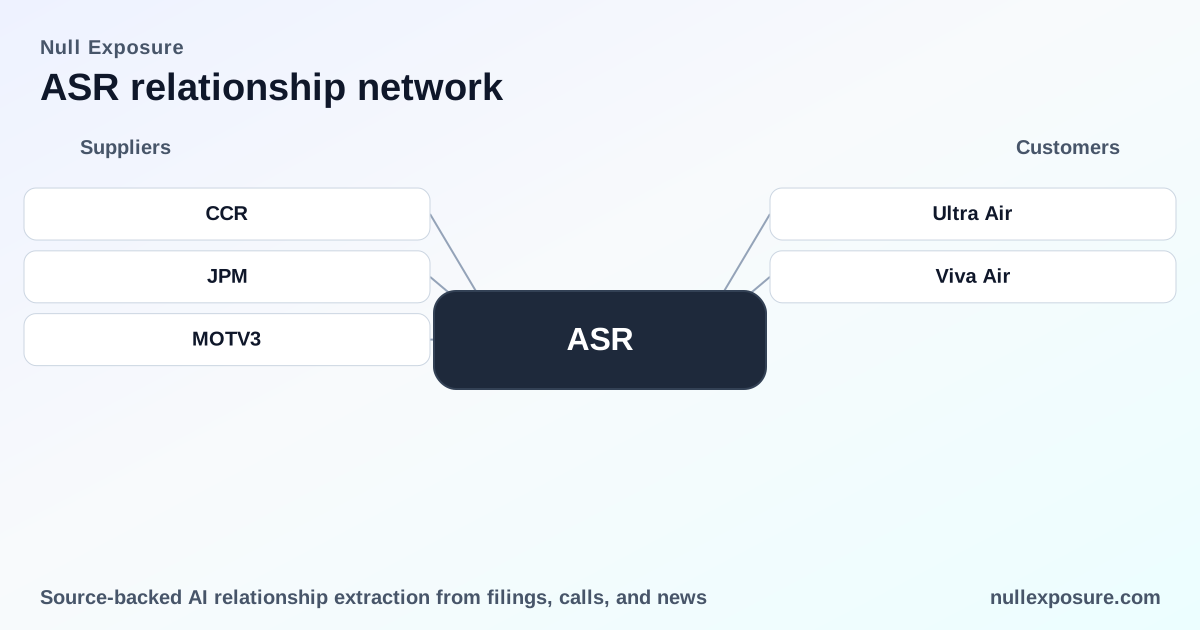
ASR’s customer list includes airlines whose operational health directly impacts passenger throughput at ASR-managed Colombian airports. Recent history highlights the real-world consequence of airline failures.
Viva Air
The disappearance of Viva Air reduced passenger flows across ASR’s Colombian airports and contributed to several months of traffic declines. According to Expansion (July 10, 2023), ASR recorded four consecutive months of passenger losses in the six Colombian airports it operates following the exit of Viva Air (https://expansion.mx/empresas/2023/07/10/asur-afectado-colombia-por-desaparicion-viva-air-y-ultra-air).
Ultra Air
Ultra Air’s exit compounded the passenger shortfall, amplifying sensitivity in the Colombian portfolio and pressuring non-aeronautical revenues tied to footfall. Expansion’s July 2023 coverage cites the disappearance of Ultra Air as a co-driver of multi-month passenger declines at ASR’s Colombian airports (https://expansion.mx/empresas/2023/07/10/asur-afectado-colombia-por-desaparicion-viva-air-y-ultra-air).
What these relationship events mean for investors
The airline exits underline a few hard takeaways for anyone evaluating ASR exposure:
- Traffic concentration risk is real and measurable. Airline collapses translate to immediate volume declines that hit both aeronautical and high-margin non-aeronautical revenue.
- Recovery is feasible but not instantaneous. New carriers, frequency restorations, or route reallocation by surviving airlines can re-fill capacity, but market reallocation depends on airline economics and competitive dynamics in Colombia.
- Valuation embeds steady-state traffic assumptions. ASR’s multiples and margins reflect a stabilized traffic baseline; persistent underperformance in markets like Colombia would pressure those metrics.
Risks, catalysts, and what to watch next
Investors and operators should monitor the following items closely:
- Passenger traffic by country and terminal (monthly reports), with particular attention to Colombia versus Mexico.
- Airline capacity and route announcements into ASR airports; airline solvency and market entry/exits are primary short-term drivers.
- Concession re-negotiations, regulatory fee adjustments, and government policy in key jurisdictions.
- Non-aeronautical revenue trends (retail, parking); these amplify upside as footfall returns.
- Macro variables: exchange rate and tourism flows that affect international passengers and spending.
For a consolidated view of counterparty exposures and relationship dynamics, review company relationship mapping at https://nullexposure.com/.
Bottom line for investors
ASR is a concession-driven airport operator with resilient, infrastructure-like cash flows but identifiable short-term demand risk stemming from airline concentration in certain markets. The July 2023 airline exits in Colombia (Viva Air and Ultra Air) provide a clear example: airport revenues are stable in contract terms yet volatile in practice when carriers disappear from a market. Investors should treat ASR as a high-quality infrastructure business whose near-term performance hinges on airline network stability and the pace of traffic recovery across its international footprint.