Algoma Steel Group (ASTL): Defense deals reshape revenue mix while margins stay under pressure
Algoma Steel is a Canadian steel producer that monetizes through the sale of plate and hot-rolled sheet products to industrial customers, with recent strategic moves to secure long-term, higher-value contracts in shipbuilding and defense. Recent binding memoranda and a joint venture position Algoma to capture structural mill investment and specialty ballistic-steel demand, but the company still operates with negative EBITDA and significant margin pressure that investors must weigh against potential contract upside. For a deeper dive into customer relationships and where value will flow, see more at https://nullexposure.com/.
How Algoma makes money today and why customer deals matter
Algoma operates as a merchant steel mill that sells commodity and specialty plate and sheet products to shipbuilders, defense contractors, and industrial OEMs. The company’s reported RevenueTTM is roughly USD 2.09 billion, while profitability metrics show negative EBITDA and wide operating losses, signalling that top-line wins must convert efficiently to margin recovery to move the valuation needle. Algoma is actively shifting commercial posture from short-cycle commodity sales toward longer-duration strategic arrangements that bring capital deployment and purchase commitments—an operating pivot that changes both concentration and counterparty risk profiles.
- Commercial posture: Algoma has executed binding MOUs and formed a joint venture, indicating a deliberate move into longer-term strategic contracts rather than purely spot sales.
- Concentration and criticality: Defense and shipbuilding customers represent fewer, larger-ticket buyers whose procurement cycles increase revenue volatility but also create higher-margin speciality opportunities.
- Maturity and operations: Corporate communications reference a transition in production technology and product focus that affects cost structure and capital intensity.
Customer relationships: the deals investors need on their radar
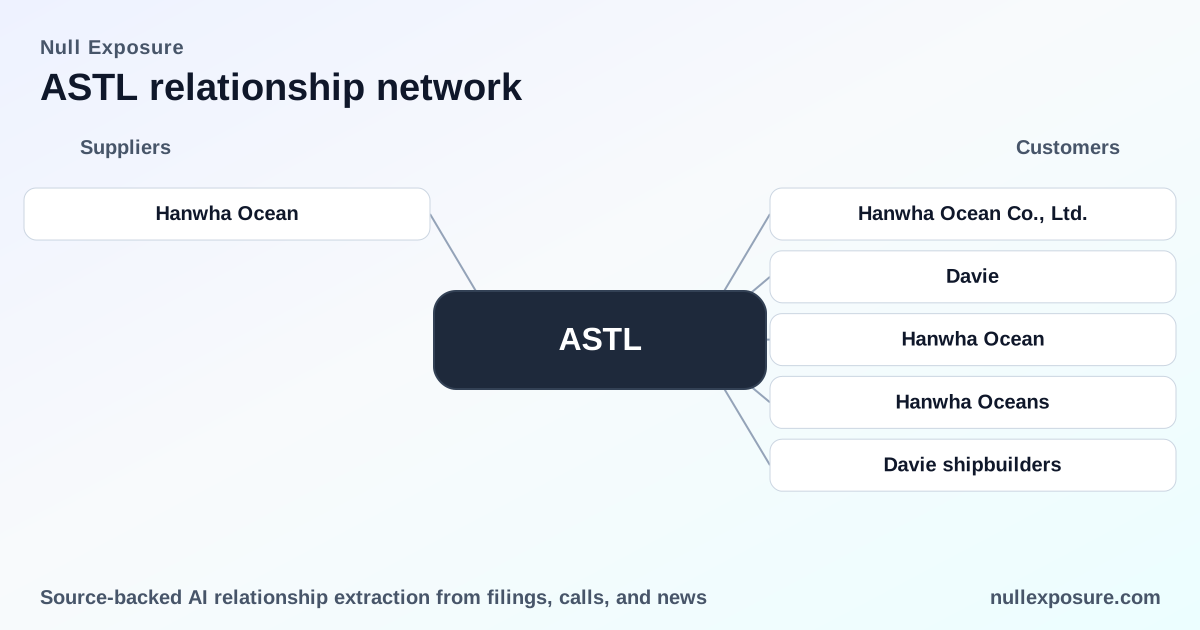
Hanwha Ocean — strategic MOU with material investment and purchase commitments
Algoma signed a binding Memorandum of Understanding with Hanwha Ocean in January 2026 that outlines an aggregate potential value of US$250 million, including a US$200 million cash contribution toward a proposed structural steel beam mill in Sault Ste. Marie and up to US$50 million of anticipated Algoma product purchases tied to Canada’s Patrol Submarine Project (CPSP). This MOU is documented in company releases and broad press coverage in January–March 2026, including Algoma’s own financial release and GlobeNewswire press materials from January 2026.
Source: Algoma press release and GlobeNewswire coverage (January–March 2026) describing the US$250M strategic arrangement and CPSP purchase commitments.
Davie Shipbuilding — active supplier for Polar Max program
Algoma has begun shipping steel plate to Davie’s Lévis shipyard for the Polar Max program and is listed as a supplier for ship construction work. These deliveries represent immediate revenue from Canadian shipbuilding programs and validate Algoma’s ability to serve marine-grade plate requirements.
Source: SteelMarketUpdate reporting (January–February 2026) and Canadian Manufacturing coverage noting initial shipments to Davie.
Roshel Inc. — joint venture to produce Canadian ballistic steel
Algoma and Roshel formed the Roshel Algoma Defence joint venture to establish a Canadian Centre of Excellence for ballistic steel production, targeting domestic defence procurement such as Light Utility Vehicle programs. The JV positions Algoma to capture certified ballistic-steel demand and to supply armored-vehicle manufacturers for Canadian Armed Forces procurement.
Source: Globe and Mail and local Sault Ste. Marie reporting (April–May 2026) on the Roshel Algoma Defence partnership and its focus on ballistic steel for domestic defence programs.
Ford Motor Company — indirect linkage through strengthened domestic supply chains
Public commentary on the Roshel partnership highlighted that strengthening Canadian ballistic and structural steel capacity will have spillover benefits for broader domestic supply chains, including automotive manufacturing lines such as Ford’s F-Series production in Oakville. This reference signals that Algoma’s investments could support cross-sector demand beyond defence.
Source: SahmCapital and related coverage (April 2026) noting the Roshel partnership’s reinforcement of automotive supply chains including Ford in Oakville.
What these relationships imply about Algoma’s operating model
Algoma’s customer activity shows a clear strategic tilt: from spot-market commodity sales toward higher-value, contracted defence and shipbuilding work. That shift produces a set of operating characteristics investors must price:
- Contracting posture: Binding MOUs and a JV demonstrate willingness to enter multi-year strategic agreements and accept capital partners, moving Algoma away from exclusively transactional sales.
- Concentration risk: Large counterparty arrangements increase revenue concentration; a small number of customers could account for a disproportionate share of near-term revenue tied to project execution.
- Criticality of product: Supplying plate for naval and armored-vehicle programs elevates product criticality—Algoma’s material quality and delivery performance will be assessed as part of national procurement chains.
- Maturity of opportunity: The opportunities are project-driven and contingent on program awards, capital deployment, and certification timelines; transformation of margins depends on converting MOUs and JV output into sustained contracted sales.
These are company-level signals derived from Algoma’s public disclosures and press coverage; there are no explicit external constraints listed in the company’s relationship data that impose contractual restrictions or regulatory limits.
Risk/reward for investors
Algoma’s transactional wins and strategic alignments create binary outcomes for valuation:
- Upside: US$200M+ capital contributions and defense purchase commitments could materially de-risk capital spending for a new structural mill and create a higher-margin revenue base if executed and scaled.
- Downside: Algoma reports negative EBITDA and large operating losses, meaning that execution slippage, contract delays, or cost overruns will pressure cash flow and equity value.
Key watch-points:
- Conversion of the Hanwha MOU into definitive agreements and the timing of the structural mill build.
- Scale and timing of shipments to the Davie Polar Max program and certification milestones for ballistic steel from the Roshel JV.
- Cash-flow improvement and progress toward profitable EAF-era operations.
Tactical signals and next catalysts
Investors should track a short list of tangible catalysts over the next 12–24 months: Hanwha definitive contracts, capital draw mechanics tied to the proposed mill, delivery schedules and invoicing for Davie work, Roshel JV production and procurement wins, and sequential margin improvement in corporate earnings. For a structured monitoring playbook and access to ongoing relationship updates, visit https://nullexposure.com/.
In sum, Algoma has secured strategic customer relationships that shift the company’s revenue mix toward defence and shipbuilding, creating a path to higher-value sales but leaving execution and margin recovery as the principal near-term investment risks. Investors should price the possibility of contract conversion and improved margins against the company’s current negative profitability and project execution complexity.