ATH-P-A: How Athene’s customer footprint drives value for preferred holders
Athene Holding Ltd. (ATH-P-A) generates economic value by originating and underwriting fixed and fixed-indexed annuities, executing large pension risk transfers (PRTs), and reinsuring blocks of life and annuity liabilities—activities that monetize long-duration insurance risk while freeing sponsor balance sheets. Revenue is driven by annuity premium flows, the economics of reinsurance/PRT transactions, and investment spread on long-duration assets backing those liabilities, making customer relationships with large corporate sponsors and insurance peers a primary determinant of cash flow stability and capital deployment options. For focused research and relationship intelligence, visit the NullExposure home page: https://nullexposure.com/.
Why customer relationships matter to a preferred investor
Athene’s commercial model is transaction-driven and relationship-led. Large, discrete deals like corporate pension risk transfers and quota-share reinsurance create lumpy but material earnings and capital impacts, increasing short-term concentration risk but enhancing long-term margin visibility through locked-in liabilities. Contracting posture is typically counterparty-specific and negotiated—Athene operates as an active counterparty to corporate plan sponsors and other insurers rather than a passive marketplace participant. Maturity of these relationships ranges from single-event PRTs to multi-year reinsurance treaties; therefore investors should prioritize counterparty credit, deal cadence, and legal exposure when assessing ATH preferred securities.
No external constraint excerpts were included in the results feed; this absence itself is a company-level signal that the supplied relationship extract focuses on reported transactions and legal coverage rather than explicit contractual constraints or third-party operational limits.
Relationship-by-relationship: what moves the ledger
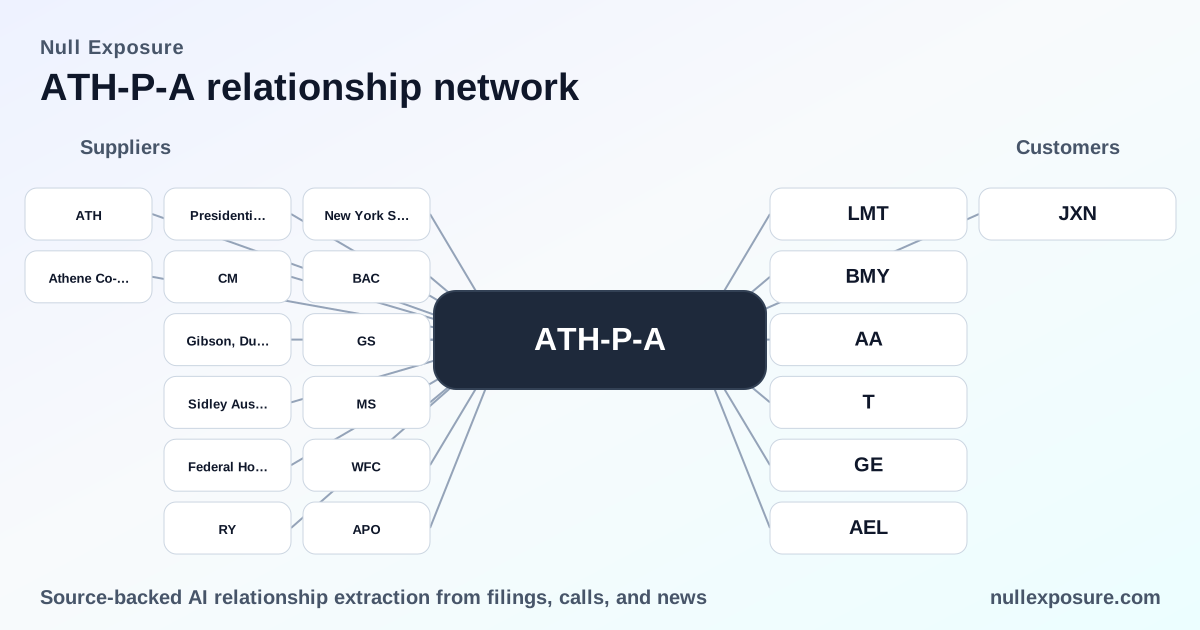
Below are the customer relationships surfaced in the results, each followed by a concise investor-oriented takeaway and the reporting source.
Lockheed Martin (LMT)
Athene closed a pension risk transfer with Lockheed Martin that represented Athene’s largest single PRT transaction to date, highlighting the company’s capability to underwrite very large corporate pension liabilities. According to Bermuda Reinsurance Magazine (reported March 9, 2026), this transaction underscores Athene’s appetite and capacity for large-scale PRT execution. Source: https://www.bermudareinsurancemagazine.com/am-best-affirms-athene-group-s-financial-rating-of-a-7694
Bristol‑Myers Squibb (BMY)
Bristol‑Myers transferred pension obligations through group annuity contracts purchased from Athene units (Athene Annuity and Life Company and Athene Annuity & Life Assurance Co of New York) in a 2019 deal that is now the subject of litigation. Insurance Business Magazine (March 2026) reported the suit and the underlying 2019 transfer, an example of how legacy PRTs can become a source of reputational and legal risk. Source: https://www.insurancebusinessmag.com/us/news/legal-insights/bristolmyers-faces-lawsuit-over-2-billion-pension-risk-transfer-to-athene-505763.aspx
General Electric (GE)
General Electric was listed among plan sponsors involved in plaintiff class actions alleging that annuities chosen for pension transfers were not the safest option; these filings illustrate litigation exposure tied to plan sponsor selections. PlanAdviser coverage (March 2026) identifies GE as a named company in complaints led by Schlichter Bogard LLP. Source: https://www.planadviser.com/apollo-athene-targeting-plan-dc-annuity-market/
AT&T Inc. (T)
AT&T is another plan sponsor named in litigation alleging concerns about annuity safety in pension transfers involving Athene products, reinforcing sector-wide legal themes for annuity buyers and providers. PlanAdviser’s reporting (March 2026) grouped AT&T with other large employers targeted in these claims. Source: https://www.planadviser.com/apollo-athene-targeting-plan-dc-annuity-market/
Alcoa Corp. (AA)
Alcoa appears in the same set of class action complaints alleging that annuities used in plan transfers were not the safest option, highlighting that Athene’s transaction counterparties span diverse industrial sectors. This was reported in PlanAdviser (March 2026) as part of litigation coverage. Source: https://www.planadviser.com/apollo-athene-targeting-plan-dc-annuity-market/
American Equity Investment Life Holding Company (AEL)
As part of a proposed transaction, Athene was reported to reinsure 80% of the in-force policyholder liabilities if MassMutual acquired American Equity’s insurance operations—an arrangement that signals Athene’s strategy of using reinsurance to acquire scale and duration. Reinsurance News (March 2026) described the Athene reinsurance role in the acquisition construct. Source: https://www.reinsurancene.ws/athene-massmutual-move-to-acquire-american-equity-for-3bn/
Jackson National Life Insurance Company (JXN)
Athene executed a fixed annuity reinsurance agreement with Jackson National that was described as accretive to earnings, demonstrating Athene’s recurring use of retrocession and reinsurance to manage capital and expand earnings. The Royal Gazette (April 2022 report cited in March 2026 data) noted the accretive nature of the Jackson deal. Source: https://www.royalgazette.com/re-insurance/business/article/20220421/athene-a-rating-affirmed-by-am-best/
Patterns that matter for valuation and risk
- Concentration in large, discrete transactions. Athene’s economics are heavily influenced by a small number of large PRTs and reinsurance treaties; a single large win or legal loss can swing capital ratios and preferred dividend coverage.
- Counterparty profile is critical. The roster includes major corporate sponsors and insurance peers; counterparty credit and litigation exposure (as with Bristol‑Myers and the PlanAdviser‑listed suits) directly affect cash flow certainty.
- Reinsurance as a growth tool. Deals like the proposed American Equity reinsurance and Jackson National treaty show Athene leverages reinsurance to scale liabilities while targeting accretion—this is a deliberate capital-management lever.
- Legal and reputational tail risk exists. Multiple class actions and lawsuits tied to PRT selections create a recurring legal overhang that investors should incorporate into preferred valuation models as a contingent liability factor.
What investors should watch next
- Deal cadence and size: continued large PRTs (Lockheed‑scale) will support higher spread capture but increase short-term concentration.
- Litigation outcomes: resolution or escalation of suits involving Bristol‑Myers and other plan sponsors will change capital and reputation dynamics.
- Reinsurance strategies: large quota-share and retrocession arrangements materially shift Athene’s risk transfer economics and are the fastest lever for near-term earnings accretion.
Key takeaway: Athene’s customer relationships are the mechanism through which it sources long-duration liabilities and earns spread; these relationships provide both the primary upside (annuity premiums, PRT fees, reinsurance income) and the principal risks (concentration, counterparty litigation, and reputational exposure) that drive valuation for ATH preferred holders.
For ongoing tracking of Athene’s transactional footprint and relationship-level reporting, visit our research portal at https://nullexposure.com/.