Atlanticus (ATLCL) — Customer Relationships and What They Signal for Investors
Atlanticus monetizes through fee-based consumer finance services provided primarily to U.S. lenders and by structuring credit products for underserved consumers; its 6.125% Senior Notes due 2026 reflect capital-market funding for those operations and working capital needs. The company's filings emphasize a U.S.-centric intermediary model — fees from lender partners and cost-recovery arrangements with hosted/leased employees — rather than concentrated retail revenue lines, which shapes where counterparty risk and operational leverage live. For a deeper look at documented customer ties and company-level constraints, visit https://nullexposure.com/.
How Atlanticus runs its customer business and the practical constraints investors should track
Atlanticus operates as a service and fee provider to other financial institutions: it designs or supports consumer credit products and collects fees from those lender partners. This is a partner-driven model where operational continuity depends on a relatively broad set of lender relationships and on tightly managed service-cost pass-throughs. The available filings in the FY2024 10‑K show several company-level signals that matter for creditors and operators:
- U.S. geographic concentration. The company explicitly states it serves lenders in the United States, making domestic policy, regulatory shifts, and U.S. credit cycles primary drivers of revenue and operational stress. According to the FY2024 10‑K, "We are principally engaged in providing products and services to lenders in the U.S. for which these lenders pay us a fee."
- Short-term contractual exposure. The 10‑K documents short-dated sublease obligations (for example, aggregate sublease payments of $41,000 from January 1, 2025 to expiration in May 2025), indicating pockets of near-term fixed commitments that require active cash management.
- Embedded service-provider economics with specific counterparties. The filing documents a recurring arrangement with an entity named HBR in which Atlanticus leased employees to HBR and recovered costs; HBR reimbursed approximately $0.8 million in 2024 (and $0.6 million in 2023) and also paid $0.1 million under a sublease in both 2023 and 2024. These disclosures show recurring, mid-sized cost-recovery revenues that are visible and contractually defined in the filing (FY2024 10‑K).
These constraints — geographic concentration, short-term fixed obligations, and cost-recovery service relationships — define where operational and cash-flow risk will surface: domestic lender credit trends, short-term lease and payroll obligations, and the stability of service-recovery counterparties such as HBR.
Documented customer (or referenced counterparty) relationships in the FY2024 10‑K
The company's FY2024 10‑K references third parties in a litigation context that are recorded here as customer-scope relationships. Each entry below is drawn from that filing (atlcl‑2024‑12‑31).
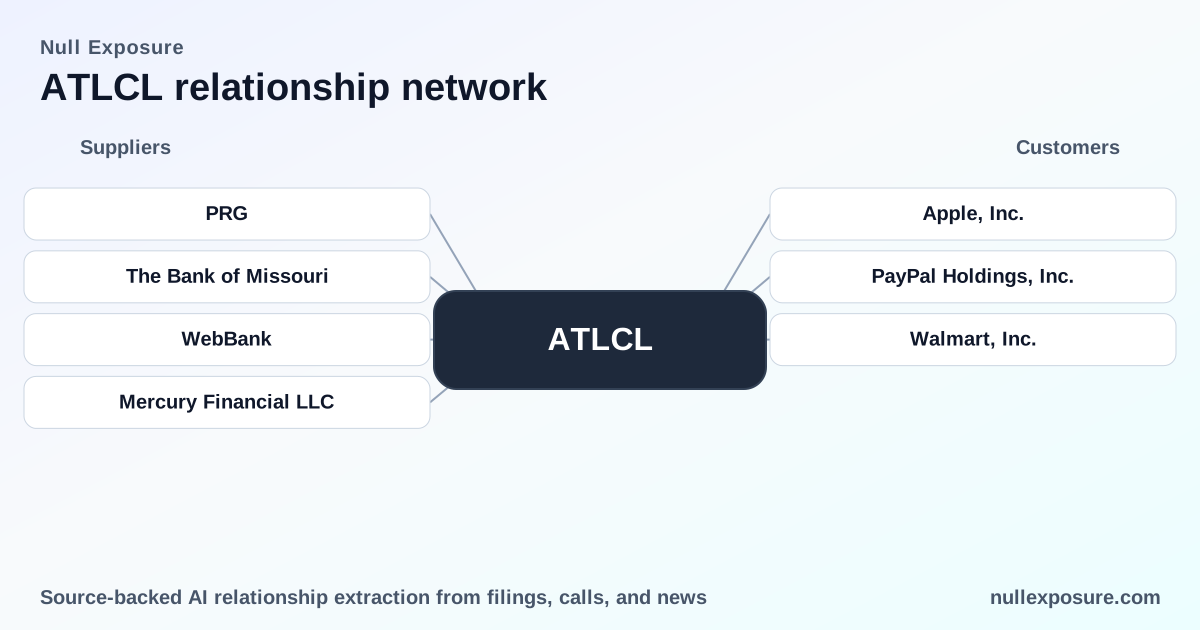
Apple, Inc.
Atlanticus' FY2024 filing records that Fintiv Inc. has sued Apple, Inc. for patent infringement; the mention is presented in the company's discussion of legal matters and third-party litigation. According to the FY2024 10‑K, the filing cites Fintiv's suit naming Apple (FY2024 10‑K).
PayPal Holdings, Inc.
The same 10‑K notes that Fintiv Inc.'s litigation also names PayPal Holdings, Inc. for patent infringement, referenced within Atlanticus' overview of third-party legal developments. The FY2024 10‑K explicitly lists PayPal among the defendants in that suit (FY2024 10‑K).
Walmart, Inc.
The FY2024 10‑K likewise records Walmart, Inc. as a defendant in the Fintiv patent suit referenced by Atlanticus, again included in the legal matters section of the filing. The company’s filing names Walmart alongside Apple and PayPal in the cited litigation (FY2024 10‑K).
These three relationships are cited in Atlanticus' regulatory filing as part of a third‑party litigation narrative; the references do not, in the disclosed excerpts, describe commercial purchasing or sourcing relationships with Atlanticus.
What the relationship mix and constraints imply for investors and operators
- Legal mentions do not equal revenue concentration. The Apple/PayPal/Walmart references stem from third‑party litigation cited in the 10‑K and should not be interpreted automatically as material revenue relationships or customers of Atlanticus. Investors must separate litigation mentions from supplier/customer contracts when modeling credit exposure.
- Service-recovery and modest counterparty concentrations matter. The disclosed HBR arrangement — employee leasing and cost reimbursement totaling $0.8 million in 2024 — is a clearly documented recurring cash inflow and illustrates how Atlanticus recovers operating costs through third-party arrangements. That line item is small relative to large-scale lending flows but is meaningful for operating cash and margin dynamics in the absence of other disclosed revenues in the provided overview.
- Near-term cash commitments exist. The sublease obligations through May 2025 and the reported sublease receipts of $0.1 million in 2023–2024 highlight short-lived rental and staffing cash flows that require active working-capital discipline.
Key takeaways for investors evaluating ATLCL exposure
- U.S.-centric lender-facing model: Concentration in the U.S. market makes macroeconomic and regulatory shifts domestic to Atlanticus primary drivers of credit risk.
- Low direct evidence of large retail or platform customers in the filing excerpts: The 10‑K excerpts link large-name defendants to third-party litigation rather than to contractual revenue relationships with Atlanticus.
- Visible mid-sized cost-recovery with HBR: Reimbursements of $0.8 million in 2024 and repeated sublease receipts show a predictable but not dominant revenue stream; monitor continuation of these arrangements in future filings.
- Short-term fixed commitments require cash management: Sublease obligations through mid-2025 suggest the company will need to manage short-duration liabilities during the note’s remaining life.
If you are tracking counterparty risk or operational continuity for ATLCL, prioritize monitoring subsequent SEC filings for (1) clarification on the nature of the Apple/PayPal/Walmart mentions, (2) updates to HBR cost-recovery and sublease arrangements, and (3) any expanded disclosure on lender partners and fee structures. For ongoing access to these relationship insights and filing-level context, visit https://nullexposure.com/.
Conclusion
Atlanticus presents as a fee-driven, U.S.-focused financial services intermediary with operational exposures concentrated in short-term contractual obligations and specific service-recovery arrangements. The FY2024 10‑K flags third-party litigation that names major technology and retail companies, but those mentions do not currently replace concrete evidence of recurring large customer revenue in the company’s public disclosures. Investors should prioritize future filing developments that clarify revenue counterparties, the persistence of HBR-style arrangements, and any material shifts in U.S. lender demand.