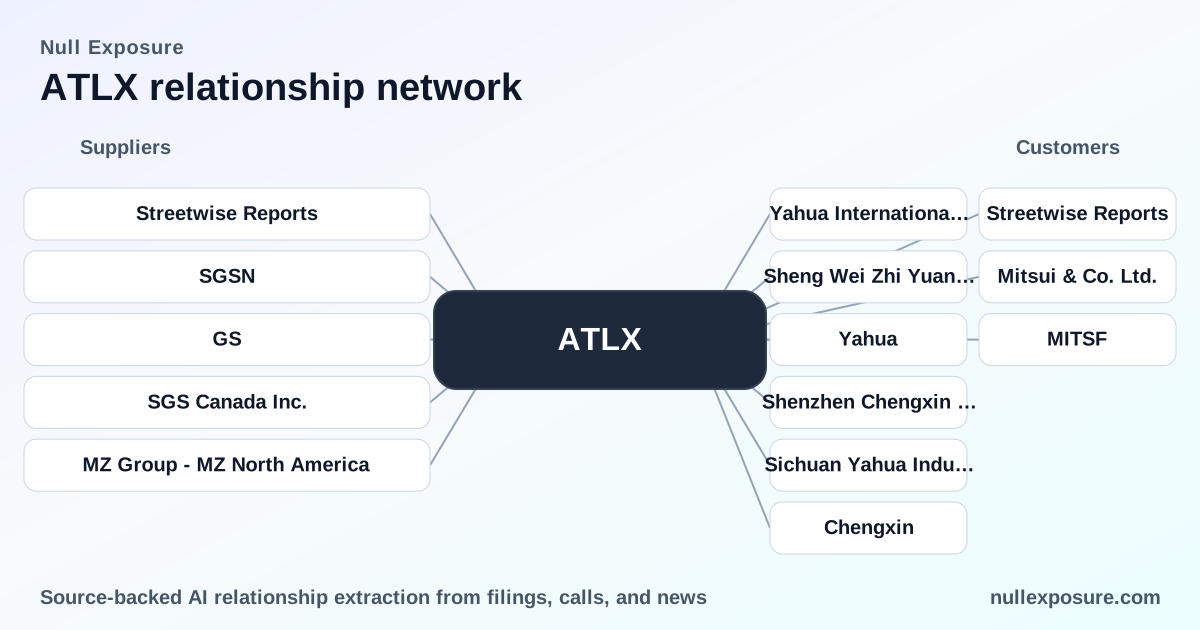
Atlas Lithium (ATLX): Strategic offtakes, prepayments and a path to monetization
Atlas Lithium develops the Neves hard-rock lithium project in Brazil and will monetize primarily by producing and selling spodumene (lithium) concentrate to large industrial buyers under a mix of long‑term offtake agreements, spot deliveries and non‑dilutive prepayments, supplemented by targeted equity investments and a royalty sale. The company’s near‑term cash profile is driven by prepayment and strategic partner commitments (Chengxin, Yahua, Mitsui) while longer‑term revenue depends on scaling DMS concentrator output to the global EV and energy‑storage markets. For a consolidated view of Atlas’s customer relationships and contractual posture, see Null Exposure’s project hub: https://nullexposure.com/.
Quick operating and financial snapshot investors need
Atlas Lithium is an early‑stage miner with material negative operating margins and EBITDA while ramping capital projects: market cap roughly $147m, TTM revenue under $100k, and negative EBITDA (~$31.5m) as of the latest fiscal period. The business model is capital‑intensive and customer cash commitments are critical to de‑risking construction and commissioning of the Neves DMS plant intended to deliver concentrate to a global buyer base.
How Atlas contracts and why it matters for valuation
Atlas’s public disclosures and press reporting reveal a multi‑layer contracting posture:
- Long‑term cornerstone offtakes: five‑year offtake agreements with major lithium buyers that secure baseline volumes and underpin project financeability. These contracts reduce price exposure and provide predictable volumes.
- Spot and conditional supplies: certain agreements include a spot tranche and conditional volume ramps tied to operational milestones — these introduce short‑term price variability but enable access to additional buyers.
- Usage‑based monetization via royalty: Atlas monetized part of its asset base through a royalty sale that converts future gross revenue into immediate cash.
- Geographic concentration toward APAC industrial buyers but with a stated global market target: customers are primarily Asia‑based trading and processing companies, consistent with global EV supply chain demand.
- Relationship maturity: several relationships are active and already tied to equity or cash prepayments, signaling a transition from development risk toward near‑term commercial operations.
These characteristics together imply reduced execution risk versus a pure spot seller, but also exposure to large buyer concentration and commodity pricing dynamics that will drive ultimate project economics.
Counterparty map — key customer relationships and what they mean for Atlas
Sichuan Yahua Industrial Group Co., Ltd. (Yahua group)
Atlas executed an Offtake and Sales Agreement on November 29, 2023 with Yahua International (part of the Yahua group) to buy 60,000 dry metric tonnes per year for five years, providing a multi‑year anchor for Phase 1 production. This contractual commitment is documented in Atlas’s 2024 Form 10‑K and referenced in company press reporting on strategic buyers (FY2024–FY2025).
Yahua International Investment and Development Co., Ltd.
Yahua International is the specific counterparty named in Atlas’s 2024 Form 10‑K—an offtake counterparty under the November 29, 2023 agreement that audibly anchors volumes for the Neves Project (FY2024 10‑K disclosure).
Sheng Wei Zhi Yuan International Limited
Sheng Wei Zhi Yuan International Limited, identified in Atlas’s 2024 Form 10‑K, is the named buyer under a five‑year offtake and sales agreement that parallels the Yahua arrangement and ties a committed annual volume to Atlas’s output (FY2024 10‑K disclosure).
Shenzhen Chengxin Lithium Group Co., Ltd. (Chengxin)
Chengxin is a strategic buyer and investor: Streetwise Reports and company communications document a combined US$50 million commitment from Chengxin and Yahua, including US$40 million in non‑dilutive prepayments that secure 80% of Phase 1 concentrate production and US$10 million in equity support—a material near‑term liquidity and offtake arrangement (news coverage in FY2025).
Mitsui & Co., Ltd. (Mitsui) — strategic investor and offtaker
Mitsui made a US$30 million strategic investment in March 2024 and signed an offtake agreement that secured a 15,000‑ton spot tranche plus, subject to conditions, up to 60,000 dmt per year for multiple years (aggregate up to 300,000 dmt under certain conditions). Mitsui’s combination of equity and offtake aligns Japan’s industrial demand with Atlas production and materially contributes to project funding (Newsfile and mining.com coverage, FY2026 reporting and FY2025 press).
Streetwise Reports
Atlas is a compensated sponsor of Streetwise Reports and pays a regular sponsorship fee (reported between US$4,000–US$5,000 per month), indicating an ongoing marketing and investor‑relations relationship rather than a commercial offtake (Streetwise Reports articles, FY2025).
Each of the above counterparty summaries is drawn from Atlas’s SEC filing (10‑K FY2024) and subsequent press coverage and analyst notes through FY2025–FY2026.
Contract‑level constraints and company‑level signals
Public excerpts and company filings produce several actionable constraints investors should fold into modeling and due diligence:
- Long‑term fixed‑volume contracts: Atlas disclosed five‑year offtake agreements with commitments of 60,000 dmt/year per buyer, with +/-10% annual flexibility — a structural driver of predictable mid‑cycle volumes (company 10‑K, FY2024). This reduces volume execution risk relative to pure spot exposure.
- Spot tranches embedded in deals: The Mitsui agreement explicitly contains a 15,000 dmt spot delivery and conditional larger annual volumes, creating a hybrid cashflow profile (Mitsui Registered Offering terms, March 2024).
- Usage‑based royalty monetization: Atlas sold a 3% gross‑revenue royalty on specific mineral rights to Lithium Royalty Corp. for US$20m cash (Royalty Purchase Agreement, closed May 2, 2023). This transaction is an explicit company‑level conversion of future production value to working capital.
- Geographic concentration with global stated market: Contract language and corporate disclosures position the Neves plant for global EV/ESS markets, while counterparties are predominantly APAC industrial groups—important for pricing and offtake negotiation dynamics.
- Active relationship stage and meaningful spend band: Public statements and prepayment amounts place Atlas in the $10m–$100m spend/prepayment band for strategic partner commitments, improving near‑term funding but increasing dependence on a small set of counterparties.
Where a constraint explicitly names a counterparty (for example, Lithium Royalty Corp. in the royalty sale), the relationship is attributable; other signals should be treated as company‑level operating characteristics.
Investment implications — read the relationships before you size exposure
Atlas’s contract mix transforms capital needs into partner‑backed forward cashflows, materially de‑risking the commissioning pathway compared with unsecured developers. Key valuation drivers are (1) successful ramp of DMS concentrate quality/volume, (2) enforcement and fulfillment of prepayment/offtake commitments, and (3) prevailing spodumene pricing in APAC markets where counterparties operate. Concentration risk is real: a small number of large buyers and a royalty purchaser materially influence cash timing and downside protection.
For a consolidated dossier of Atlas customer linkages and to track further document disclosures, visit Null Exposure’s project hub: https://nullexposure.com/.
Bold exposures are where operational delivery intersects with counterparty credit and commodity cycles; investors should model downside outcomes where one or more anchor buyers reduce offtake or where price realization deviates from current forecasts.