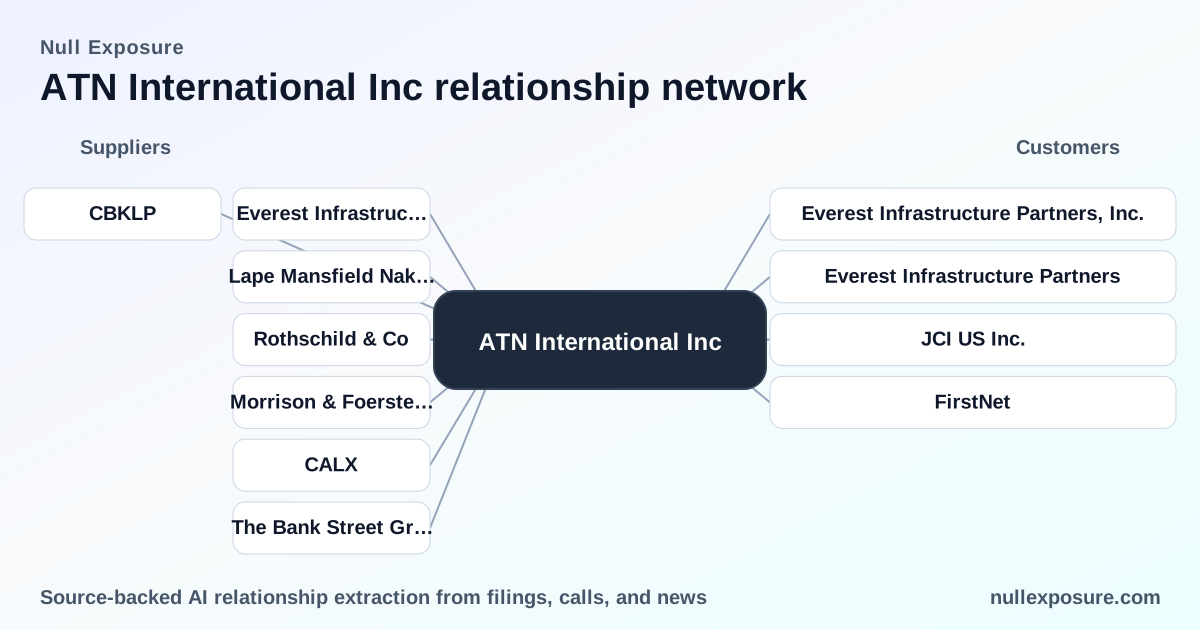
ATN International (ATNI): Customer Relationships, Contracts, and Strategic Footprint
ATN International operates and monetizes a hybrid telecommunications platform: it owns and operates digital infrastructure (towers, backhaul, edge assets) and sells connectivity and managed IT services to consumer, large-enterprise and government customers across the United States, the Caribbean and Bermuda. Revenue streams come from mobility and fixed subscriptions, wholesale carrier services (tower leases, transport and roaming), and managed services, with periodic balance-sheet actions (asset disposals) used to optimize capital structure and redeploy cash. For deeper coverage and comparable customer intelligence visit https://nullexposure.com/.
What changed: a material tower divestiture that alters the asset base
ATN agreed to sell a portfolio of 214 Southwestern U.S. towers and related operations to an affiliate of Everest Infrastructure Partners for up to $297 million in cash, shifting a portion of its tower ownership into a cash-heavy outcome and converting infrastructure into liquidity. According to ATN’s February 11, 2026 press release distributed via GlobeNewswire, the transaction covers most of Commnet’s Southwestern tower portfolio and was announced as part of the company’s strategic priorities for FY2026. This is a clear tactical move to de-risk capital-intensive tower ownership and bolster free-cash resources for operations or deleveraging.
Services and private-network customers to watch
ATN’s Geoverse business is being sold as network capability to enterprise customers, with recent market activity showing JCI US Inc. launching a private LTE service that leverages Geoverse’s Network-as-a-Service and edge-enhanced packet core offerings. A March 2026 industry write-up noted JCI US Inc.’s new service using Geoverse infrastructure, highlighting ATN’s position as a vendor to large-enterprise private-network deployments. This underscores recurring managed-services revenue potential and higher-margin enterprise engagement versus raw tower cash flows.
Public-safety scope and longer-term government work
ATN participates in government-funded programs and public-safety deployments—historically including FirstNet construction revenues—and operates contracts that include longer-duration equipment, site maintenance and transport obligations that run through multi-year terms (ATN disclosed an initial term ending in 2031 for FirstNet-related site services). A Royal Gazette report from 2021 captured ATN’s FirstNet construction activity and its contribution to consolidated revenue at that time, showing the company’s established role in government and public-safety projects. These contracts provide structural revenue stability distinct from short-term roaming or wholesale volatility.
Company-level operating signals investors should weigh
ATN’s customer relationships and contract mix produce a set of predictable operating characteristics:
- Contracting posture: A dual posture exists. ATN operates short-term, terminable roaming/wholesale agreements (standard roaming often terminable within 90 days) while also holding multi-year government and backbone-service contracts (including FirstNet-related site maintenance through 2031). This creates a revenue profile with both cyclical and sticky components.
- Counterparty mix and criticality: ATN sells to individual consumers, large-enterprise customers and government programs; government and carrier contracts are more critical and lower churn, while consumer and wholesale roaming revenue are more elastic.
- Geographic concentration: North America is the core market, with material operations in the western U.S., Alaska and the Navajo Nation; ATN also reports Latin America exposure (notably Guyana) and other foreign countries—giving it geographic diversification but with a North American bias.
- Customer concentration: For FY2024 and FY2023 no single customer exceeded 10% of consolidated revenue, a corporate disclosure that signals low single-customer concentration risk.
- Segment mix and role: ATN operates across infrastructure ownership and managed services, and functions principally as a seller of connectivity and managed IT/network solutions.
- Maturity and strategic posture: The sale of tower assets indicates a portfolio rebalancing from capital ownership toward cash realization or service-focused growth, which alters future recurring revenue composition.
These are company-level signals derived from public disclosures and recent transaction announcements, and they should guide diligence on revenue sustainability and capital allocation.
Risk and opportunity checklist for investors
- Opportunity: The Everest transaction converts asset value into cash—improving liquidity and giving management optionality for investment, debt reduction, or shareholder returns.
- Risk: Divesting towers reduces ownership-based recurring tower-lease income; business will rely more on managed services, transport and wholesale relationships to preserve margins.
- Revenue stability: Government contracts and managed services provide durable revenue, offsetting the short-term volatility inherent in roaming and retail mobility.
- Geographic/operational complexity: International operations (Caribbean, Bermuda, Guyana) expose ATN to regulatory and market variance but also diversify demand sources.
- Concentration upside: The absence of any >10% customer concentration reduces counterparty risk but increases the operational importance of executing on many small-to-medium contracts.
For a concise vendor and counterparty snapshot, see https://nullexposure.com/ for related coverage and comparable customer analyses.
Quick reference — every public relationship discovered
-
Everest Infrastructure Partners, Inc. — ATN’s Commnet subsidiaries signed a Purchase and Sale Agreement to divest approximately 214 Southwestern U.S. towers and related operations for up to $297 million in cash, a transaction announced February 11, 2026 via ATN’s press release on GlobeNewswire. This is the most material customer/asset counterparty interaction in FY2026 and changes the company’s infrastructure footprint. (Source: ATN press release, GlobeNewswire, Feb 11, 2026)
-
JCI US Inc. — Market reporting in March 2026 noted JCI US Inc. launched a private LTE service that leverages Geoverse’s Network-as-a-Service and Edge Enhanced Packet Core, positioning ATN as the supplier of dedicated enterprise network infrastructure and managed services. This relationship represents ATN’s push into higher-value enterprise connectivity. (Source: StockTitan news summary, March 2026)
-
FirstNet (public-safety program / AT&T-related infrastructure) — Historical reporting and company disclosures show ATN generated FirstNet construction and related revenues and continues to provide equipment, site maintenance and transport services to FirstNet cell sites under a multi-year arrangement (initial term through 2031), supplying critical public-safety connectivity. That long-term contract component anchors a portion of ATN’s service revenues. (Source: Royal Gazette local business reporting, Aug 2021; company contract disclosures through FY2025–FY2026)
Final assessment
ATN balances capital-intensive infrastructure ownership with service-led and government-backed contracts; the Everest tower sale crystallizes value and reduces ownership risk, while enterprise and FirstNet work underpin recurring revenue. Investors should track how proceeds from asset sales are deployed and whether management pivots capital into margin-enhancing managed services or further deleveraging. For ongoing customer-relationship intelligence and comparable counterparty analyses, visit https://nullexposure.com/.