aTyr Pharma and Kyorin: Commercial Partnership Shapes aTyr’s Near-Term Commercial Path
aTyr Pharma develops biologics that target novel immunological pathways and monetizes primarily through out‑licensing and collaboration arrangements rather than product sales to end patients. The company advances clinical programs internally to inflection points (clinic readouts, regulatory filings) and transfers regional development and commercialization responsibilities to partners — a model that generates modest near‑term collaboration revenue and preserves upside through milestone and royalty economics. For an investor lens on commercial relationships, begin with the partner landscape and the economics around efzofitimod in Japan. For a consolidated view of partner relationships, visit https://nullexposure.com/.
Why the Kyorin relationship is central to valuation today
aTyr’s balance sheet and revenue base are small — Revenue TTM: $190k, Market Cap roughly $82.6M — making any commercial partner outcomes disproportionately important. The Kyorin Pharmaceutical agreement represents the company’s primary commercial channel in APAC for efzofitimod, with Kyorin holding exclusive development and commercialization rights for interstitial lung disease (ILD) in Japan. That structure shifts funding obligations, regulatory risk, and commercialization cost to the partner, while leaving aTyr with manufacturing revenue and potential downstream milestones and royalties.
According to company disclosures, aTyr recognized $0.2M and $0.4M in collaboration revenue in 2024 and 2023 respectively for drug product sold to Kyorin for the Japan portion of the EFZO‑FIT study, underscoring that current cash inflows from the relationship are modest but strategically significant for future upside.
Contracting posture, geographic reach, and maturity signals
The Kyorin arrangement is a licensed, exclusive regional partnership. In January 2020 aTyr entered into a collaboration and license agreement that granted Kyorin exclusive rights to develop and commercialize efzofitimod for ILD in Japan; Kyorin is contractually obligated to fund all R&D, regulatory, marketing and commercialization activities in Japan. That contracting posture reduces aTyr’s capital burden while amplifying the commercial importance of Kyorin’s execution.
Regulatory and operational maturity is established: Kyorin received PMDA approval to commence the EFZO‑FIT study in Japan in December 2022 and is actively participating in the Phase 3 program, according to recent reporting. These milestones convert the relationship from theoretical right‑granting to operational development participation.
Commercial economics in practice: small current revenue, asymmetric upside
The relationship currently generates low single‑hundred‑thousand dollar sales tied to drug product supply for trials — the public filings show the $0.2M/$0.4M figures for 2024/2023 — placing the current spend band in the $100k–$1M range. That level is consistent with a licensing model focused on clinical supply and early collaboration revenue rather than commercial launch receipts.
However, the license structure establishes clear commercial optionality: if EFZO‑FIT advances to approval and Kyorin executes commercialization, aTyr stands to receive milestone payments and royalties that could materially change revenue mix. Conversely, dependence on a single regional licensee creates concentration risk until additional partners or direct commercialization pathways develop.
Relationship log: the customer instances in our results
Kyorin Pharmaceutical (listed as Kyorin Pharmaceutical)
Kyorin is aTyr’s partner for developing and commercializing efzofitimod for pulmonary sarcoidosis and certain other lung diseases in Japan; Kyorin funded and obtained PMDA approval to run the EFZO‑FIT study in Japan and buys drug product material for the Japanese cohort. A Sarcoidosis News article (March 2026) reports the EFZO‑FIT study’s last‑visit completion and notes Kyorin’s role in Japan. Source: Sarcoidosis News, March 9, 2026.
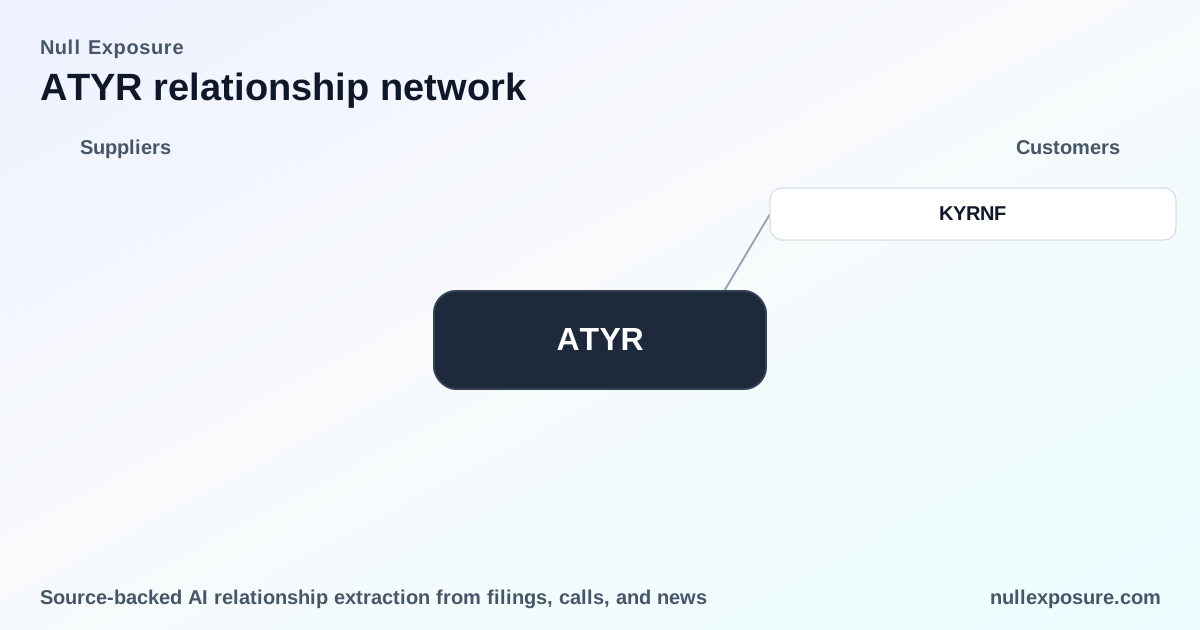
KYRNF (inferred ticker for Kyorin)
The KYRNF entry in our results is a duplicate reference to Kyorin’s licensing and development role for efzofitimod in Japan; the underlying reporting is the same March 2026 Sarcoidosis News piece documenting trial progress. Treat this as a redundant data instance that corroborates the single Kyorin engagement. Source: Sarcoidosis News, March 9, 2026.
Constraints and what they reveal about the operating model
The extracted constraint signals converge on a coherent operating model:
- Contract type — Licensing. The company’s commercial approach for Japan is contractual licensing rather than co‑promotion or direct sales, consistent with capital efficiency and risk transfer to local partners (evidence: January 2020 Kyorin Agreement language).
- Geography — APAC (Japan). Revenue recognized specifically for the Japanese portion of EFZO‑FIT demonstrates targeted regional monetization rather than broad international sales today.
- Relationship role — Licensee. Kyorin is explicitly the licensee responsible for funding development and commercial activities in Japan, which positions aTyr as the IP/licensor and manufacturing supplier.
- Relationship stage — Active. Kyorin is actively executing clinical trials in Japan (PMDA approval to proceed dating to December 2022), moving the program beyond preclinical/negotiation stages.
- Spend band — $100k–$1M. Near‑term cash flow from this partner is currently limited to clinical supply and collaboration revenue in that band, per 2023–2024 recognized amounts.
These constraints signal aTyr’s capital‑light commercialization posture and concentration on a small number of high‑impact partnerships, which is attractive for conserving cash but increases sensitivity to partner execution.
Risk profile and what investors should watch
- Concentration risk: aTyr’s near‑term commercial fortunes hinge on a small number of licensing partners; Kyorin is the material ongoing relationship in Japan. This amplifies downside if partner trials or regulatory interactions falter.
- Low current revenue, high binary upside: current revenues are immaterial to valuation but the license establishes mechanisms for significant future payments if approval and commercial launches occur.
- Regulatory cadence: PMDA interactions, EFZO‑FIT study readouts, and milestone triggers form the primary value inflection points. Monitor trial completion, safety/readout announcements, and any regulatory filing timelines tied to Kyorin’s activities.
- Execution risk at partner level: aTyr’s financial exposure is limited by contract, but commercial realization depends on Kyorin’s execution in market access, pricing, and launch.
Clear investment checklist — what to track next
- Monitor EFZO‑FIT milestones and completion notices from Kyorin and aTyr.
- Watch for any announced milestone payments or updated royalty terms disclosed in aTyr filings.
- Track additional licensing or partnership announcements that would diversify geographic concentration.
- Review aTyr’s cash runway and degree to which future R&D depends on new partner funding or capital raises.
For a structured feed of partner relationships and contract signals that matter to valuation, see our coverage hub at https://nullexposure.com/.
Bottom line
aTyr’s commercial model is partner‑centric: it sells drug supply today and relies on ex‑Japan licensing (notably with Kyorin) to carry development and commercialization risk in important markets. That trades current revenue for asymmetric potential through milestones and royalties — a strategy that preserves cash but concentrates execution risk in the hands of partners. Investors should value the Kyorin agreement as the principal near‑term commercial lever and focus diligence on clinical progress and contractual milestone economics.