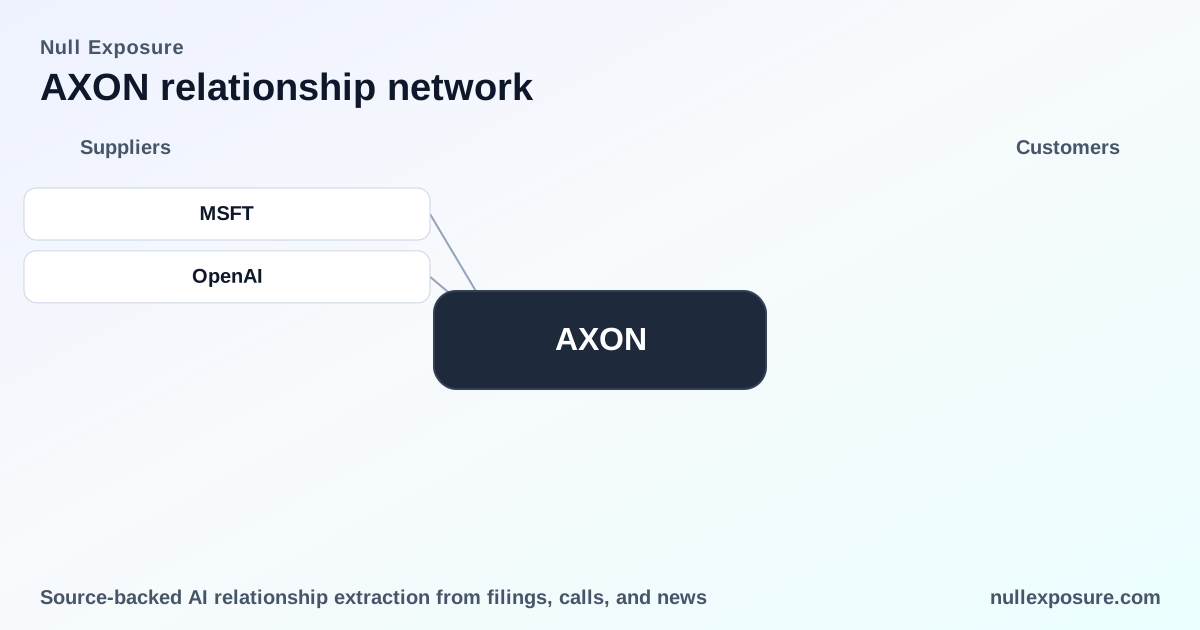
Axon’s customer relationships: monetization through hardware-led subscriptions and steady government demand
Axon monetizes by selling integrated hardware—TASER devices, body and in-car cameras, sensors—and converting those device installations into recurring SaaS revenue through Axon Evidence and auxiliary services (training, VR content, storage). Hardware often transacts at point of sale while the software and evidence-management contracts convert customers into multi-year, subscription-paying accounts that drive predictable revenue and higher lifetime value.
For a concise read on Axon customer links and how they inform revenue durability, see Null Exposure’s research hub: https://nullexposure.com/.
How Axon’s customer model actually works — a clear operating posture
Axon runs a hardware-anchored, subscription-forward business model. Company disclosures and segment commentary show a two-track monetization approach: (1) one-time product revenue when devices ship, and (2) recurring subscription revenue for cloud-hosted evidence management, analytics and training. The combination delivers a contracting posture that mixes point-in-time (spot) product sales with high-margin, recurring SaaS contracts that are intentionally bundled to drive customer lock-in and renewals.
- Contracting posture: Hardware is sold on a spot basis; software and evidence services are sold as subscriptions and often bundled with hardware through integrated plans, which increases switching costs for customers. According to Axon’s filings, subscriptions and Axon Evidence generate material ARR and recurring revenue (company reporting as of December 31, 2024).
- Customer mix and criticality: Axon’s core customers are government entities—U.S. federal, state and local law enforcement—plus international public safety organizations and commercial/consumer channels. Government customers provide mission-critical, budgeted demand; commercial and retail channels expand TAM for consumer brands such as TASER and Byrna.
- Geographic concentration: The company is North America–heavy, with roughly 85% of revenue in the U.S. in the year ending December 31, 2024, making U.S. policy and public procurement cycles strategically important.
- Concentration: No single customer represented over 10% of net sales in 2022–2024, signaling low counterparty concentration risk at the account level.
- Segments and role: Axon is simultaneously a hardware manufacturer, software licensor, and services provider—it licenses Evidence.com and packages digital training and VR content, which turns hardware deployments into recurring revenue streams.
These characteristics create high gross-profit potential on the software side, predictable renewal patterns, and a hardware revenue stream that is more volatile but also a lever for upsells.
What the public mentions reveal about distribution and retail partnerships
Axon’s consumer-facing brands and channel strategy show up in retail and specialty partnerships, and recent press highlights incremental retail rollouts.
Sportsman's Warehouse — FY2025 transcript mention (InsiderMonkey, March 2026)
Sportsman's Warehouse management explicitly cited Byrna and TASER as growth drivers and described in-store experiences (try-before-you-buy, archery lanes) as differentiators supporting these brands. This indicates Axon’s consumer products are being placed into specialty retail environments to drive direct-to-consumer adoption and awareness (InsiderMonkey transcript, March 2026).
Source: InsiderMonkey blog covering SPWH Q3 FY2026 earnings call transcript (published March 10, 2026).
Sportsman's Warehouse — FY2025 media coverage (SGB Online, March 2026)
SGB Online reported that Sportsman's Warehouse launched TASER in its top-performing personal protection stores, showing intentional retail rollouts for TASER in physical stores during FY2025 that support commercial channel expansion beyond law enforcement sales (SGB Online, March 2026).
Source: SGB Online article on Sportsman's Warehouse guidance and product launches (published March 10, 2026).
What these relationships imply for Axon’s business model and risks
The Sportsman’s Warehouse mentions confirm two strategic axes: (1) Axon is pushing consumer-facing distribution for Byrna and TASER through retail partners, and (2) these placements complement rather than replace Axon’s core government contracts. Those points matter for investors because they affect growth optionality and margin mix.
- Upside: Retail distribution expands TAM and shortens time to consumer adoption for less-lethal and personal-protection products, providing additional growable, spot sales that can feed subscription upsells for training and evidence offerings.
- Margin mix risk: Retail-driven device sales are generally lower-margin and non-recurring compared with subscription revenue; sustained growth from retail without proportionate subscription conversion will increase revenue volatility.
- Policy and regulatory sensitivity: Because Axon’s largest verticals are law enforcement and public safety, changes in procurement budgets or regulation are direct revenue risks; retail sales introduce different regulatory and reputational considerations but diversify funding sources.
- Operational maturity and scale: Axon reports substantial ARR (about $1.0 billion as of December 31, 2024) and cross-selling of hardware into SaaS contracts demonstrates a maturing recurring revenue base that supports valuation premia, albeit with high multiple sensitivity to growth deceleration.
Overall, Axon’s revenue durability is driven by its ability to convert hardware customers into long-term software subscribers, while retail partners broaden distribution for consumer brands. The mix creates optionality but requires disciplined execution to keep subscription growth ahead of hardware spot volatility.
Key takeaways for investors
- Business model: Hardware sells acquisition; software licenses and evidence subscriptions provide recurring revenue and higher margins. Company filings show subscription-led revenue expansion and integrated subscription plans.
- Customer base: Primarily government/public safety (mission-critical) with growing retail/commercial channels for TASER and Byrna—retail is an incremental growth vector, not a replacement for government demand.
- Concentration and geography: Revenue is North America–centric and diversified at the account level (no single customer >10% of sales), lowering counterparty concentration risk but increasing policy exposure.
- Risk profile: Regulatory and procurement cycles are central risks; retail distribution introduces revenue diversification but also margin and reputational variables.
For a deeper look at customer-level signals and how they feed into premium finance assessments, visit Null Exposure’s research center: https://nullexposure.com/.
Investors should weigh Axon’s strong SaaS conversion mechanics and ARR scale against hardware-driven volatility and policy sensitivity when calibrating growth and valuation expectations.