Axsome Therapeutics (AXSM): Customer Relationships That Shape Revenue and Risk
Axsome Therapeutics commercializes CNS medicines in the United States and selectively licenses ex‑U.S. rights to partners; it generates revenue from direct product sales through U.S. distributors, royalties and product supply revenues from licensees, and occasional milestone or settlement receipts tied to IP outcomes. This mix positions Axsome as a commercial-stage biotech where license partnerships and distributor contracts materially influence near-term cash flow and long-term erosion risk. Learn more at https://nullexposure.com/.
How Axsome monetizes and runs its commercial engine
Axsome markets Auvelity and Sunosi in the U.S., sells through wholesale distributors, and selectively outsources regional commercialization via exclusive licensing agreements. Revenue streams are therefore twofold: direct product sales through established distributor contracts in North America, and royalty/product‑supply income from regional licensees in EMEA and other territories. The company has been commercially active since 2022, and its reported 2024 financials show significant top-line recognition from both channels (Revenue TTM: $638.5M; Gross Profit TTM: $591.0M).
- Contracting posture: a hybrid of direct sales agreements (distributors) and exclusive licensing deals for ex‑U.S. markets.
- Concentration: the top three customers accounted for roughly 35%, 29%, and 28% of gross product sales in 2024, a high concentration that amplifies counterparty risk.
- Criticality and maturity: the business is in a commercial stage with ongoing manufacturing and supply obligations to licensees; those obligations are contractually significant for product flow outside the U.S.
Customer relationships: what investors need to know
Below are the customer and partner relationships disclosed in public filings and news that drive Axsome’s revenue profile and risk posture. Each relationship summary is concise and source‑cited.
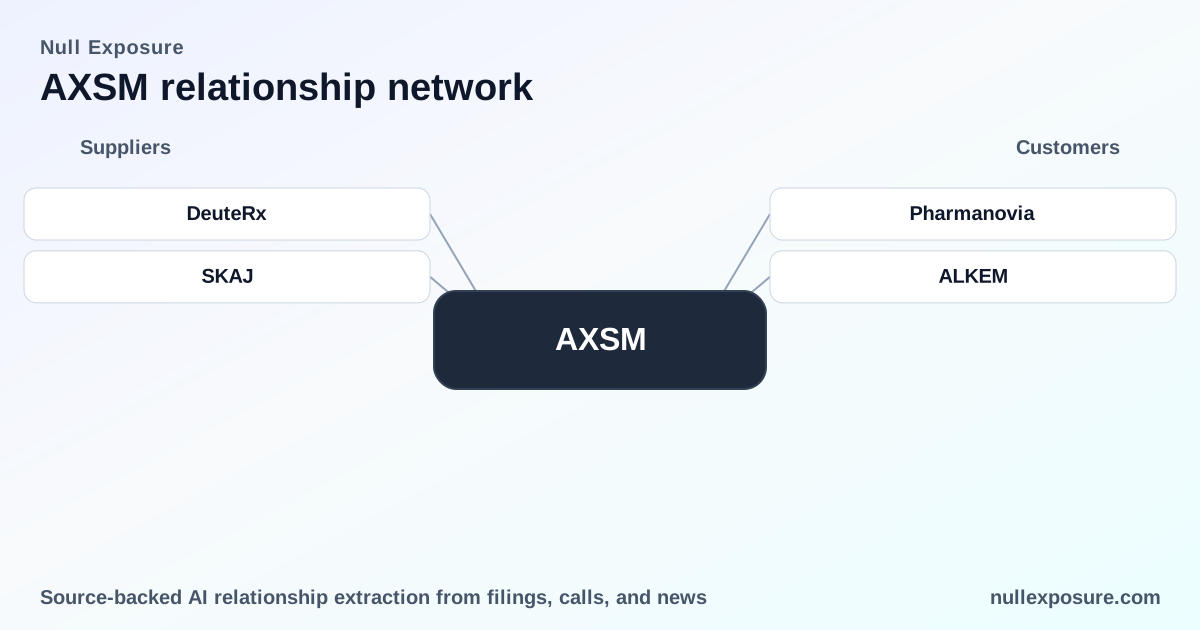
Pharmanovia — exclusive licensee for SUNOSI in EMEA and MENA
Axsome executed an exclusive license agreement (Feb 2023) with Pharmanovia to commercialize and further develop Sunosi in Europe and select Middle East and North Africa markets; Axsome recognized $3.5 million of royalty revenue in FY2024 from Pharmanovia sales, up from $2.4 million in FY2023, and continues to supply product to Pharmanovia under the license. According to Axsome’s 2024 Form 10‑K, the license is active and generates both royalties and product‑supply revenue. (Source: Axsome 2024 Form 10‑K, FY2024)
A separate media mention reiterated Axsome’s strategy to retain U.S. commercial rights while partnering ex‑U.S., citing the Pharmanovia arrangement as an example of selective licensing to maximize product value. (Source: TradingView summary referencing Axsome disclosures, March 2026)
Why this matters: Pharmanovia is a direct revenue generator (royalties and product sales) and represents Axsome’s strategic EMEA distribution channel; the license structure and ongoing supply obligations create a recurring but regionally concentrated revenue stream.
Alkem / Alkem Laboratories Ltd. — patent settlement and future generic entry window
Axsome settled patent litigation with Alkem Laboratories Ltd., agreeing to grant Alkem a license to market a generic version of SUNOSI beginning on or after March 1, 2040 (or September 1, 2040 if pediatric exclusivity is granted), subject to FDA approval and customary conditions. The settlement was announced in a GlobeNewswire press release on February 17, 2026. (Source: GlobeNewswire press release, Feb 17, 2026)
Why this matters: The settlement defines a long-term generic entry horizon that preserves Axsome’s branded exclusivity through the 2030s, while removing litigation uncertainty and converting it into a contractual pathway for generic competition on fixed timing.
Business model constraints and implications for investors
Axsome’s public filings and disclosures surface several company‑level operational constraints that influence investor risk and valuation.
- Licensing as a core contracting posture. The company explicitly uses exclusive license agreements to commercialize products outside the U.S.; the Pharmanovia License Agreement is a direct example that creates royalty and supply revenue but transfers commercialization execution risk to the partner. (Evidence: 10‑K excerpt regarding Axsome Malta and Pharmanovia)
- Distributor-based U.S. sales. Axsome sells Auvelity and Sunosi in the U.S. and Canada through formal agreements with wholesale distributors, establishing a dealer/distribution structure for North American revenues rather than a direct retail route. (Evidence: 10‑K excerpts on distributor sales)
- High customer concentration. In 2024, three customers represented approximately 35%, 29%, and 28% of gross product sales; this concentration elevates counterparty and reimbursement risk because shifts with one large customer materially affect revenue. (Evidence: 10‑K sales concentration disclosure)
- Manufacturing and supply obligations. Axsome retained manufacturing responsibility and will continue to supply Sunosi to Pharmanovia for an indefinite period, making product manufacturing a contractual and operational dependency. This creates operational criticality—supply chain disruptions or cost shifts directly impact revenues linked to the license. (Evidence: 10‑K excerpt on supply to Pharmanovia)
- Geographic split and payor mix. The company’s model splits U.S. commercial control with selective ex‑U.S. licensing; government payers are relevant to pricing and demand in multiple markets, introducing policy and reimbursement risk as a company‑level signal. (Evidence: 10‑K references to government payment and EMEA licensing)
Investment implications and risk drivers
Axsome is a commercial biotech where growth and downside are driven less by clinical readouts and more by commercial execution, contract terms, and IP outcomes. Key considerations for investors:
- Revenue durability rests on exclusivity and partner performance. The Alkem settlement preserves multi‑year exclusivity before generic entry, which supports near‑ to mid‑term branded revenue forecasts. The Pharmanovia deal provides EMEA royalty income but ties some revenue to a third‑party commercial execution model.
- Concentration amplifies volatility. With three customers accounting for the bulk of sales, loss or repricing pressure from any single large counterparty would materially impact reported revenue.
- Operational exposure to manufacturing obligations. Continued supply commitments to licensees create cost and capacity requirements that are non‑trivial to replace if disrupted.
For a concise, consolidated view of Axsome’s commercial partner profile and regulatory/IP milestones, visit https://nullexposure.com/.
Bottom line
Axsome’s customer landscape balances direct U.S. distributor sales with strategic licensing in EMEA and beyond; royalties from Pharmanovia and a longdated settlement timetable with Alkem are two discrete, material relationships that shape near‑term revenue and the timing of generic competition. Investors should track partner execution metrics, manufacturing capacity, and any shifts in payor dynamics given the company’s high customer concentration and the contractual nature of its ex‑U.S. commercialization strategy.