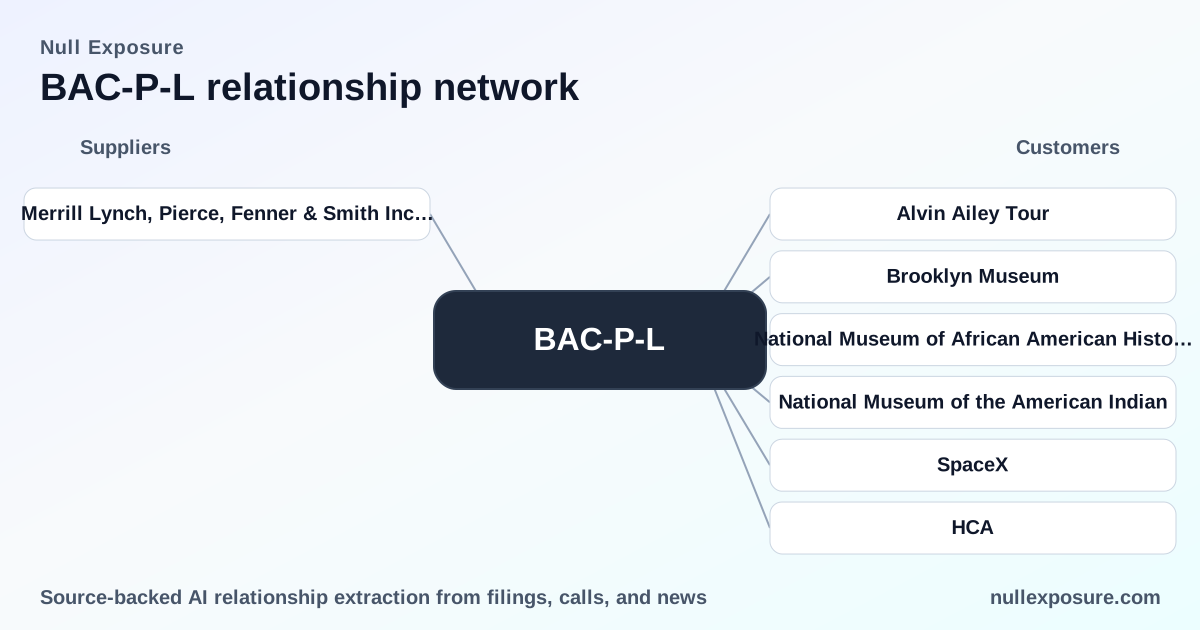
Bank of America (BAC‑P‑L) — Customer Relationship Map and What It Means for Investors
Bank of America monetizes a broad financial services franchise through deposit gathering, credit products (including large-scale co‑brand card partnerships), wealth and investment management, and corporate banking services. Preferred holders in the BAC‑P‑L series therefore own a claim on a bank whose earnings are driven by consumer deposits and fees, interest margin, and recurring revenue from large institutional and co‑brand relationships that lend visibility to card income and fee growth. For investors evaluating customer relationships, the signal set below highlights both brand partnerships that deepen fee and deposit stickiness and civic and cultural sponsorships that affect reputation and ESG exposure. For a consolidated view of customer-derived revenue signals and relationship exposure, see Null Exposure’s platform: https://nullexposure.com/.
High‑level takeaways for credit and income investors
Bank of America’s customer relationships reveal two consistent commercial patterns: large co‑brand and corporate banking agreements provide stable, visible fee streams, while cultural and sponsorship ties drive reputation and regulatory exposure. Key drivers and risks for preferred shareholders:
- Driver: Extended co‑brand card deals (notably with Alaska Air) support recurring card revenue and marketing synergies.
- Driver: Corporate employee banking programs (e.g., HCA) increase deposit access and cross‑sell opportunities.
- Risk: High‑profile cultural sponsorships can amplify reputational scrutiny and ESG campaigning.
- Structural: Concentration of card partnerships and large corporate clients creates revenue visibility but also creates counterparties whose decisions or controversies could influence fee flows.
If you want a consolidated dashboard to track these relationships over time, review aggregated signals at Null Exposure: https://nullexposure.com/.
How these relationships translate to commercial value
Bank of America converts relationships into monetized streams through co‑brand card economics, transactional banking fees, treasury services, and employee benefit programs that surface new retail customers. Co‑brand card renewals and extensions increase card receivables and interchange volumes; employer banking programs capture low‑cost deposits and cross‑sell windows; sponsorships build brand equity that supports retail and corporate product demand.
Detailed relationship notes (each relationship in the results)
HCA Healthcare — FY2022
Bank of America provides a corporate employee banking and investing program to HCA Healthcare employees, offering lower fees and accessible banking services that increase employee deposit penetration and cross‑sell potential. According to a PR Newswire release (March 2026), the program covers employees at more than 200 companies, with HCA highlighting employee financial support as a benefit to colleagues. Source: PR Newswire (Mar 2026).
HCA — FY2022
A separate listing repeats the HCA engagement, underscoring the same corporate employee banking relationship that drives deposit capture and servicing revenue from large employer networks. The PR Newswire release frames participation as part of a broader employee benefit strategy. Source: PR Newswire (Mar 2026).
Brooklyn Museum — FY2020
Bank of America sponsored exhibitions such as “African Arts: Global Conversations” at the Brooklyn Museum, reflecting the bank’s cultural sponsorship program that supports brand positioning among urban, high‑net‑worth, and philanthropic audiences. Coverage of these sponsorships was documented in a Hyperallergic analysis of bank cultural funding (2026 retrospective). Source: Hyperallergic (2026).
National Museum of African American History and Culture — FY2020
Bank of America is listed as a founding member and sponsor of the National Museum of African American History and Culture, a long‑standing cultural relationship that bolsters community engagement and diversity branding. This sponsorship contributes to corporate reputation and community relations efforts reported in cultural coverage. Source: Hyperallergic (2026).
National Museum of the American Indian — FY2020
Bank of America sponsored the “Nation to Nation” exhibition at the National Museum of the American Indian, part of a suite of cultural partnerships that reinforce philanthropic visibility and corporate social responsibility narratives. The relationship was cited in cultural reporting on bank sponsorships. Source: Hyperallergic (2026).
Alvin Ailey Tour — FY2020
Bank of America is a sponsor of the Alvin Ailey Tour, aligning the bank with arts outreach and national touring programs that strengthen brand presence in major markets and support client entertainment and hospitality programs. This sponsorship is referenced alongside other museum partnerships in cultural critiques. Source: Hyperallergic (2026).
SpaceX — FY2026
Bank of America is reported to be one of four Wall Street firms in consideration for senior roles in a potential SpaceX IPO, positioning the bank to capture significant investment banking fees and underwriting revenue should the deal proceed. The report appears in a market article tracking lead bank assignments for high‑profile listings (March 2026). Source: TS2.Tech (Mar 2026).
Alaska Air — FY2026
Bank of America extended its large co‑brand credit card deal with Alaska Air, a renewal that supports card revenue visibility and recurring interchange and fee income; the extension was highlighted in a MarketBeat filing summary alongside notes on significant share buybacks supporting EPS. The Alaska Air co‑brand stands out as BAC’s biggest co‑branded partnership by mentions and commercial importance. Source: MarketBeat (May 2026).
Operating model and business model characteristics
Bank of America’s customer relationships illustrate a mature, concentrated, and contract‑oriented commercial posture. Co‑brand card partnerships and corporate employee programs are governed by multi‑year agreements that deliver predictable fee streams and customer acquisition pathways. Sponsorships and cultural ties are low‑transactional but high‑reputational contracts that affect brand equity and ESG exposure rather than direct balance‑sheet metrics. The bank’s model shows concentration in a few high‑value commercial relationships (e.g., major airline co‑brands), which enhances revenue visibility but increases counterparty influence on card volumes and fee growth.
Investment implications and risk checklist
- Credit/cashflow: Co‑brand renewals (Alaska Air) and corporate banking programs (HCA) translate into steady non‑interest income that supports preferred dividend coverage under normal operating conditions.
- Reputation/ESG: High‑profile cultural sponsorships expose the bank to public scrutiny; these relationships are non‑material to solvency but material to regulatory and reputational risk.
- Deal pipeline: Participation in potential IPO book‑runs (SpaceX) signals continued strength in investment banking origination, which supplements fee income and supports capital generation during active markets.
- Concentration risk: Reliance on a small set of major co‑brand partners increases revenue predictability but concentrates exposure; monitor contract renewals and interchange margin trends.
Conclusion — what investors should watch next
Monitor co‑brand contract renewals and public statements from corporate customers for signs of expanded employee banking programs or renewals; track investment banking lead‑bank announcements for large IPOs that would materially add fee income. For a real‑time, relationship‑level monitoring solution tailored to preferred‑holder analysis, visit Null Exposure to see these signals aggregated and updated: https://nullexposure.com/.
Bold takeaway: Bank of America’s customer mix combines durable fee engines from co‑brand and corporate programs with reputational exposure from cultural sponsorships — a balance that supports preferred income but requires active monitoring of partnership renewals and public sentiment.