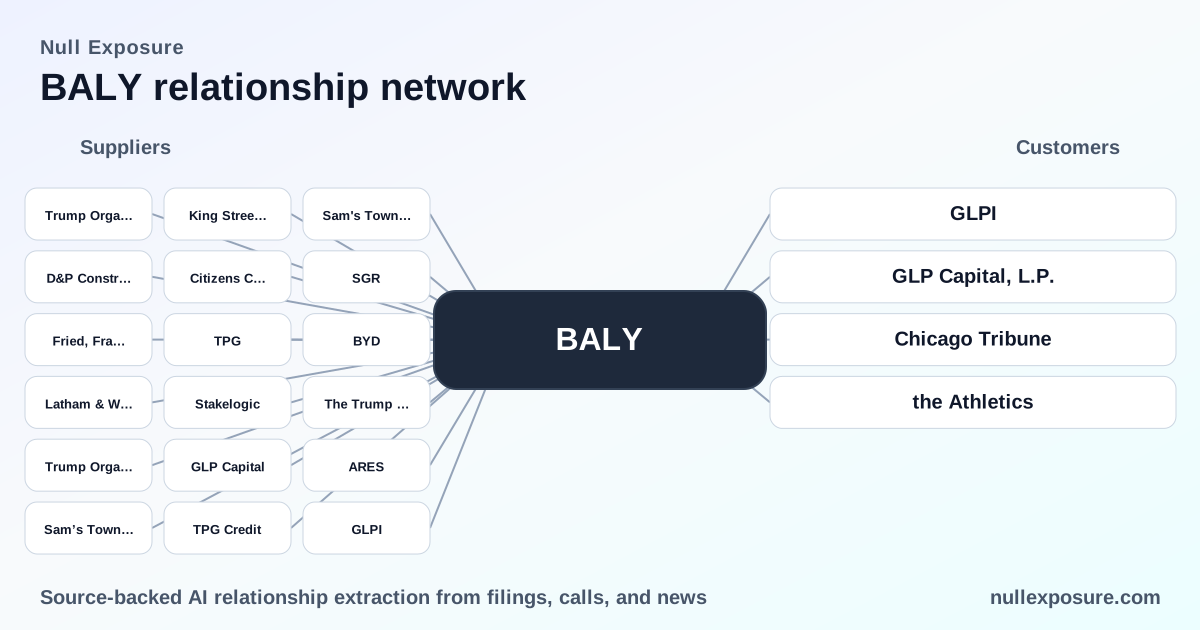
Bally’s (BALY) customer map: monetizing gaming floors, licenses and real estate
Bally’s operates and monetizes a hybrid hospitality and interactive-gaming business: it runs casino floors and resorts while expanding omni-channel iGaming and sports betting, and it routinely converts property assets into liquidity through sale-leasebacks and long-term real‑estate monetization. Revenue streams are therefore a mix of gaming and resort operations, licensing and technology fees, and recurring lease/rent arrangements tied to third‑party real‑estate owners — a structure that drives cash but concentrates counterparty and asset risks. For more on how we track counterparty exposures across operators and real‑estate partners, visit https://nullexposure.com/.
Company operating model and financial posture — what investors should read into it
- Bally’s is asset-light at the portfolio edge: the company repeatedly sells physical property (sale‑leasebacks and whole-asset sales) to generate cash while keeping operating rights, which shifts ownership risk to REITs and capital partners.
- Contract mix is heterogeneous: public disclosures and filings show both long-term exclusive licenses (notably a 20‑year exclusive iGaming arrangement in Rhode Island) and short-term transitional and services agreements (two‑year TSAs and short hotel leases), so revenue criticality varies by counterparty and by contract type.
- Counterparty profile includes governments, institutional REITs, strategic media partners and international gaming suppliers, which broadens market access but creates concentrated exposures where single counterparties control property or distribution.
- International exposure is material to interactive revenues (the UK represented ~28% and Japan ~6% of international interactive revenue in 2024), so currency and regulatory risk are explicit company-level signals.
- Transitional service fees tied to carve‑outs are reported as immaterial to operating results, indicating these short-term receipts do not meaningfully offset the company’s operating leverage.
Key commercial relationships — the practical map for investors Below I cover every counterparty relationship found in recent reporting and press coverage, with concise, source-backed takeaways.
Gaming and Leisure Properties / GLPI
- Bally’s sold or completed sale‑leaseback transactions with Gaming and Leisure Properties (GLPI), including the $700 million acquisition of Bally’s Twin River Lincoln real‑estate assets, reflecting a strategic monetization of property while preserving operating control via lease structures (news reports, March 2026).
Source: MyChesco / GlobeNewswire coverage of GLPI’s March 2026 announcement. - GLPI also acquired other Bally’s properties (Kansas City and Shreveport) in late 2025 for approximately $400 million, underscoring a pattern of asset transfers to GLPI across markets (SimplyWallSt summary, Dec 2025 reporting).
Source: SimplyWallSt report referencing December 2025 transactions. - A GLPI subsidiary (GLP Capital, L.P.) executed a sale‑leaseback tied to the Twin River Lincoln facility and provided related construction or development funding for Bally’s Chicago project, demonstrating GLPI’s role as both landlord and development financier (Yogonet, March 2026; The Globe and Mail, March 2026).
Sources: Yogonet (Feb–Mar 2026) and The Globe and Mail (March 2026).
GLP Capital, L.P.
- GLP Capital, L.P., a GLPI subsidiary, was the counterparty on the Twin River Lincoln sale‑leaseback and is the immediate buyer/lessor in that financing structure, showing that Bally’s leverages specialized GLPI entities for capital and lease arrangements (Yogonet, March 2026).
Source: Yogonet coverage, Feb 12, 2026.
Polla Chilena de Beneficencia S.A. (Chile Lottery)
- Bally’s Intralot signed a long‑term agreement to provide lottery, sports betting and digital technology services to Polla Chilena de Beneficencia in Chile, positioning Bally’s Intralot as a provider of regulated national‑lottery andgaming technology in that market (World Casino Directory, May 2026).
Source: WorldCasinoDirectory news item, May 2, 2026.
Rhode Island Lottery
- The Rhode Island Lottery reimburses Bally’s under different rate structures for Lincoln and Tiverton casinos, which ties gaming‑site economics to state lottery arrangements and highlights a government counterparty that affects local revenue flows (Providence Journal coverage, April 2026).
Source: Providence Journal report, April 14, 2026.
SBGI / Sinclair (broadcast and distribution partner)
- Bally’s entered multiyear strategic commercial agreements with Sinclair (SBGI) to combine Bally’s sports‑betting technology with Sinclair’s broadcast and local distribution footprint, underscoring a distribution and customer‑acquisition partnership rather than a pure revenue share on property (Sinclair Q4 2020 investor materials).
Source: Sinclair (SBGI) Q4 2020 financial results / press release.
Chicago Tribune / Freedom Center transaction
- Bally’s and a partner executed a sale‑leaseback of the former Chicago Tribune Freedom Center, a transaction reported at roughly $200 million in 2022, illustrating the company’s recurring use of sale‑leasebacks as a liquidity tool for large development projects (The Real Deal / Chicago reporting, Feb 2026).
Source: The Real Deal (Chicago), Feb 26, 2026.
The Athletics (Oakland/Las Vegas baseball development partner)
- Bally’s is partnering on mixed‑use developments alongside the Athletics’ ballpark, with both facilities designed to serve Bally’s and the Athletics’ development plans, indicating strategic urban development alignments that support future venue‑level revenues (Yogonet, Jan 2026).
Source: Yogonet report, January 2026.
Intralot
- Bally’s sold its international interactive business to Intralot for €2.7 billion (cash and stock), creating the merged entity Bally’s Intralot; the merged unit has since been used as the operating vehicle for international wins such as the Chile agreement (GamingAmerica and FocusGN coverage, May 2026).
Sources: GamingAmerica (May 2026) and FocusGN (May 2026) reporting on the merger and subsequent contracts.
Investor implications — drivers and risks distilled
- Revenue mix and counterparty concentration: Bally’s ability to convert property into cash via GLPI and similar partners materially reduces funding pressure today but concentrates counterparty risk with large REITs and their financing terms.
- Regulatory and government counterparty exposure: long‑term iGaming exclusives and national lottery contracts create durable revenue if regulatory frameworks remain stable; however, those revenues are dependent on contract duration and state/regulatory terms.
- Short-term services and immaterial transitional income: two‑year TSAs and hotel leases provide operational continuity but are not material to operating results and therefore do not offset operating leverage or margin pressure.
- International revenue sensitivity: substantial UK and other non‑US interactive revenues introduce currency and regulatory risk into operating results.
Bottom line: Bally’s is executing an asset‑light monetization strategy supported by long‑term licensing and selective strategic partnerships, but investors must monitor the concentration risk tied to GLPI/REIT counterparties, government lottery contracts, and the durability of long‑term interactive licenses. For a concise map of counterparty exposures and how they affect credit and equity risk, visit https://nullexposure.com/ for detailed coverage and ongoing monitoring.