BARK’s retail backbone: how distribution partners shape revenue and risk
BARK, Inc. builds a dog-first consumer business by combining subscription boxes (BarkBox, Super Chewer), branded toys and treats, and curated retail product collections sold through large national chains and online marketplaces. The company monetizes with a two-pronged model: recurring subscription revenue recognized at delivery, and wholesale/retail distribution through large enterprise partners that scale reach and inventory turnover. For investors, the interaction between subscription economics and large retail placements is the principal driver of top-line growth and the primary concentration risk on the balance sheet. If you evaluate customer exposure or counterparty risk, this distribution map is essential — for a more detailed counterparty visualization visit https://nullexposure.com/.
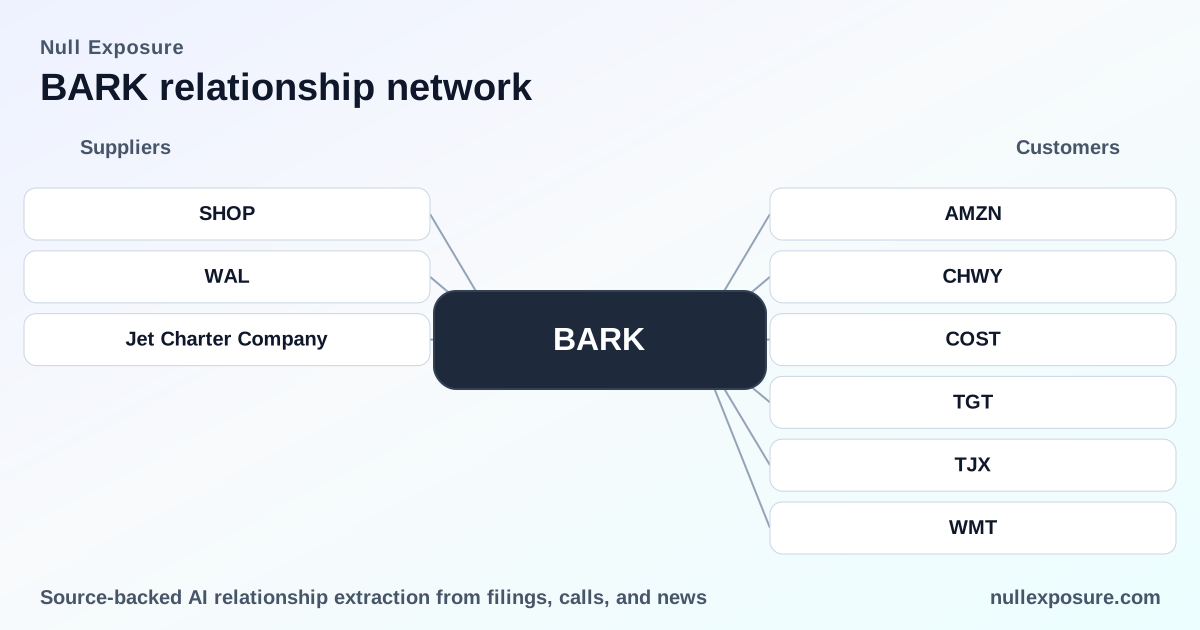
Overview: what the customer relationships look like today BARK’s public disclosures and recent commentary show a deliberate push into broad retail distribution while keeping DTC subscriptions central to the brand. On the Q1 FY2026 earnings call the company reported a ~50% year-over-year increase in retail-driven revenue for the period highlighted, reflecting expanded in-store and online placements across Walmart, Costco, Target, TJX, Chewy and Amazon (earnings call, March 8, 2026). News coverage and press releases reinforce that those retailers are strategic partners for customized product collections and episodic retail programs (Barchart, Yahoo Finance, Globe and Mail, March–May 2026).
What that implies operationally
- Contracting posture: The business mixes recurring subscription contracts with one-off wholesale arrangements; subscriptions are recognized at the point of delivery per company disclosure, which means cash flow timing depends on fulfillment cadence rather than multi-year service amortization.
- Counterparty mix: The company serves both individuals (DTC subscribers) and large enterprise retailers; accounts receivable are explicitly derived from large retail customers, indicating enterprise contract billing and collections dynamics.
- Geography: Operations are primarily U.S.-centric, with most transactions executed in U.S. dollars, limiting translation exposure but concentrating retail and macro risk in North America.
- Concentration: BARK reports sharp receivables concentration — one customer represented 46% of gross accounts receivable as of March 31, 2025 — which is a material counterparty exposure for creditors and equity holders.
Retail partners (each relationship, with source) Below are the named partners BARK cited in recent filings and media, with concise relationship notes and the origin of the mention.
Walmart / WMT
BARK disclosed that expanded in-store and online presence with Walmart contributed to retail revenue growth in Q1 FY2026, positioning Walmart as a major distribution channel for boxed and retail products (earnings call, March 8, 2026). This was reiterated in the earnings commentary that listed Walmart among the retail partners driving the roughly $14 million revenue figure that quarter.
Source: BARK Q1 FY2026 earnings call (Mar 8, 2026).
Costco / COST
Costco appears in the same earnings-call list of retail partners supporting BARK’s footprint expansion, indicating selection for club-store distribution and bulk or curated product placements that boost volume in discrete selling windows (earnings call, March 8, 2026).
Source: BARK Q1 FY2026 earnings call (Mar 8, 2026).
Target / TGT
Target is a recurring strategic partner: BARK has launched BarkBox into Target stores and creates custom product collections for Target, repeatedly referenced across press releases and media coverage as central to the company’s retail strategy (SimplyWall, The Globe and Mail, March–May 2026).
Source: Company press releases and coverage (SimplyWall Mar 2026; The Globe and Mail May 2, 2026).
TJX
TJX is listed among the national retail partners contributing to BARK’s retail expansion and revenue growth during Q1 FY2026, suggesting in-store placement opportunities across TJ Maxx/Marshalls/HomeGoods banners (earnings call, March 8, 2026).
Source: BARK Q1 FY2026 earnings call (Mar 8, 2026).
Chewy / CHWY
Chewy is identified both as a distribution partner for limited-edition collections and as an online retail channel that leverages BARK’s brand for specialty and subscription-related inventory; media coverage documents product launches and partnership activity with Chewy (SimplyWall; Yahoo Finance, March 2026).
Source: Product launch reports and company commentary (SimplyWall Mar 2026; Yahoo Finance Mar 9, 2026).
Amazon / AMZN
Amazon features repeatedly in BARK’s public commentary as a marketplace partner for custom collections and online distribution, cited in both earnings remarks and external press coverage describing BARK’s retail partner network (earnings call; Yahoo Finance; The Globe and Mail, Mar–May 2026).
Source: BARK Q1 FY2026 earnings call (Mar 8, 2026) and press coverage (Yahoo Finance Mar 9, 2026; The Globe and Mail May 2, 2026).
Constraints and corporate risk signals that matter to investors These excerpts from company disclosures and media are not relationship-specific constraints but company-level signals that determine how those relationships function in practice:
-
Subscription contract structure: BARK recognizes subscription revenue at the point of delivery, which means recurring revenue is tightly coupled to fulfillment capacity and monthly churn metrics rather than being amortized over a contract term; this shapes short-term cash flow volatility and working capital needs. Evidence: company subscription revenue recognition language (company disclosure).
-
Large-enterprise counterparty billing: The company explicitly derives accounts receivable from sales contracts with large retail customers, which introduces credit exposure and payment-cycle risk when relying on national retailers for wholesale revenue. Evidence: accounts receivable disclosure in company filings.
-
Dual counterparty types (individual + enterprise): BARK sells Direct-to-Consumer and through retail partners; that combination diversifies channels but requires distinct go-to-market and margin management for subscription vs. wholesale business lines. Evidence: company history and go-to-market description.
-
U.S.-centric geography: The business executes most transactions in U.S. dollars and reports limited foreign-translation risk, concentrating economic sensitivity to the North American consumer environment. Evidence: company geographic disclosure.
-
Material concentration: One unnamed customer accounted for 46% of gross accounts receivable as of March 31, 2025, a material concentration that elevates counterparty credit risk and could amplify cash-flow stress if payment terms shift. Evidence: accounts receivable concentration disclosure.
Implications for valuation and credit analysis
- Growth vs. concentration trade-off: Retail placements deliver rapid scale and lower customer-acquisition cost per unit, but heavy reliance on a few large buyers elevates receivables and covenant risk; stress-testing cash collections and DSO under retailer payment lag scenarios is essential.
- Margin dynamics: Wholesale placements to mass retailers typically compress unit margins versus DTC subscription economics; monitor the mix shift between channels because it directly affects gross margin and free-cash-flow conversion.
- Event sensitivity: Retail program cycles (seasonal slots at Target, Costco, Walmart buys) create episodic revenue spikes and inventory funding needs — investors should align expectations for quarterly volatility.
Conclusion and next steps BARK’s strategy leverages strong brand equity and subscription economics to scale through large retail partners, but material receivables concentration and a U.S.-focused channel mix create concentrated counterparty and geography risk. For analyst teams and operators mapping counterparty exposure, the combination of subscription timing and large-enterprise billing defines both opportunity and vulnerability.
If you want a structured counterparty map and alerts for subsequent public mentions, explore our research tools at https://nullexposure.com/ for practical monitoring and risk-flagging of BARK’s retail relationships.