Baxter (BAX) — customer relationships that shape the recovery story
Baxter International sells and leases medical devices, consumables and related services to hospitals, health systems, governments and distributors worldwide, monetizing through product sales, equipment leases, installation/service contracts and recurring consumable purchases. The company’s commercial model blends short-cycle contract manufacturing and consumables cash flows with longer-term service and lease revenue; recent divestitures and MSAs reshape where revenue is recognized but leave durable, global customer channels intact. Investors should treat Baxter as a medical‑products vendor with a hybrid revenue base — recurring consumables plus asset-backed leases — and a customer profile concentrated in institutional purchasers and government programs.
For a concise, structured view of Baxter’s customer exposure and contractual posture, visit https://nullexposure.com/.
How Baxter’s customer relationships translate into cash flow and risk
Baxter’s go‑to‑market combines direct sales, independent distributors and long‑term purchasing agreements with GPOs and IDNs. The company’s financial profile reflects this mix: FY‑TTM revenue of roughly $11.3B and significant EBITDA (about $1.93B), while margins compress in the near term as the company executes restructuring and divestitures. Several operating characteristics are relevant to investors evaluating counterparty risk and revenue durability:
- Contract tenor is mixed: Baxter recognizes revenue from contract manufacturing in short cycles (production cycles up to 90 days), while certain product and fulfillment arrangements tied to divestitures run for multiple years.
- Counterparties include governments and major institutional buyers: Sales to government entities and hospitals are subject to procurement rules and reimbursement dynamics.
- Global footprint with concentration in institutional channels: Manufacturing and sales occur across 20+ countries and over 100 markets, and a substantial portion of revenue is routed through GPOs, IDNs and major distributors.
- Role is seller and service provider: Baxter generates revenue as a direct seller, lessor of equipment (both sales‑type and operating leases), and service/install contractor; some revenue remains contractually deferred and recognized as services are delivered.
These points are derived from Baxter’s public disclosures through FY2025–FY2026 (company filings and investor presentations) and the corpus of market coverage in early 2026. Investors should weigh the stable consumable demand profile against contracting constraints on price and the company’s exposure to federal reimbursement cycles.
Line‑by‑line: every customer relationship reported in the coverage
Below are the specific customer and counterparty mentions surfaced in the available coverage, with plain‑English takeaways and source citations.
Vantive — MSA revenue of $76 million (FY2026)
Baxter reported MSA revenue from Vantive totaling $76 million, indicating a material managed‑services or supply arrangement recognized in the period. Source: Q1 2026 earnings call transcript coverage (InsiderMonkey, May 2, 2026).
Carlyle — buyer in Kidney Care divestiture
Market commentary referenced the Kidney Care sale to Carlyle, indicating Baxter completed a divestiture that involved a private‑equity buyer. This transaction is central to Baxter’s restructuring narrative and impacts how legacy Kidney Care revenue is treated going forward. Source: SahmCapital article on restructuring and divestiture plans (Feb 16, 2026; cited in coverage March 9, 2026).
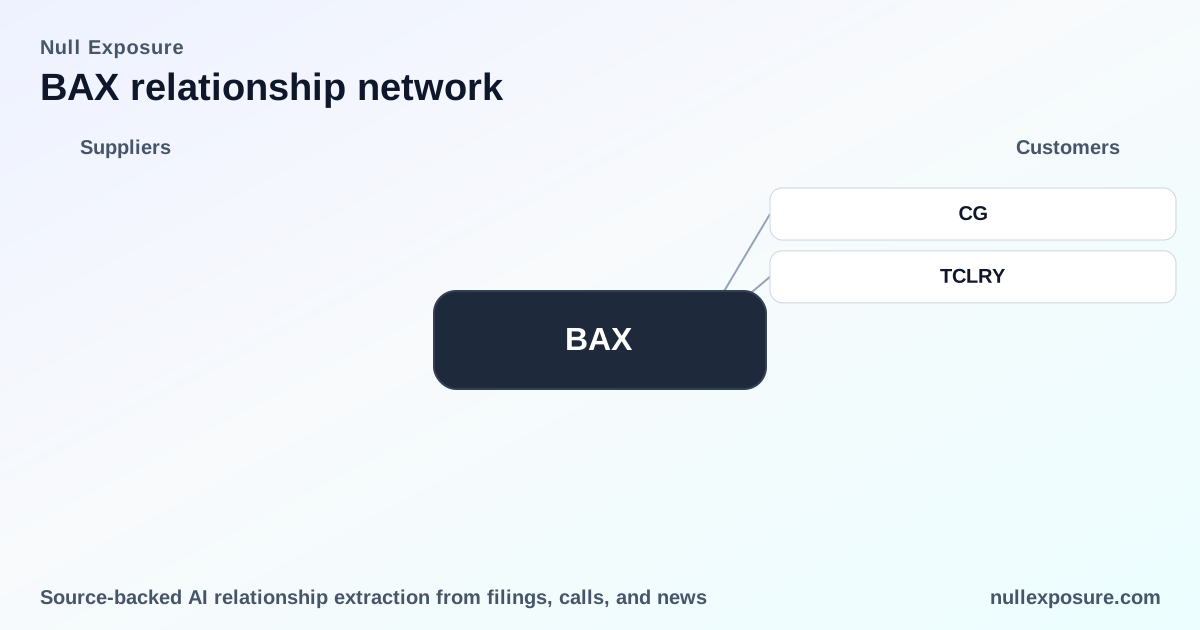
CG — duplicate coverage of the Carlyle Kidney Care sale
A second entry reiterates the Kidney Care sale to Carlyle (CG) in the same report, reflecting multiple mentions of the divestiture in analyst and market commentary. The duplication signals attention from sell‑side and independent analysts to the transaction’s valuation and transitional arrangements. Source: SahmCapital piece on Baxter restructuring (Feb 16, 2026; referenced March 9, 2026).
TCLRY — MSA revenue attributed to Vantiv of $84,000,000 (FY2026 / Q4 2025 context)
In Q4 2025 coverage, Baxter disclosed MSA revenue from Vantiv totaled $84 million, evidencing a substantial managed‑services agreement recognized across fiscal periods and underscoring revenue variability tied to major MSAs. Source: Q4 2025 earnings call transcript coverage (InsiderMonkey, March 9, 2026).
Vantiv — same MSA revenue disclosure ($84,000,000)
A separate entry repeats the $84 million MSA revenue from Vantiv, reinforcing that Vantiv/Vantive relationships represent significant contract revenue lines in consecutive quarterly disclosures. Source: Q4 2025 earnings call transcript coverage (InsiderMonkey, March 9, 2026).
What investors should conclude from these relationships
- Revenue drivers are a mix of recurring consumables and large, contractually defined MSAs. The repeated MSA disclosures (Vantive/Vantiv) show that individual counterparties can generate tens of millions in recognized revenue in a quarter, underlining customer concentration in specific large institutional agreements.
- Divestitures change reported revenue but not the underlying commercial channels. The Kidney Care sale to Carlyle removes an asset from Baxter’s portfolio but leaves transitional service and fulfillment arrangements that affect near‑term revenue recognition and cash flow cadence.
- Contract tenor is relevant to valuation and cash timing. Baxter operates both short‑cycle manufacturing contracts (production cycles up to 90 days) and longer MSAs and post‑closing arrangements that extend multiple years; that mix affects working capital and the predictability of cash conversion.
Operating constraints and company‑level signals
The public disclosures and reporting surface several firm‑level constraints that determine how customer relationships behave operationally and financially:
- Contract types: short‑term production cycles (up to ~90 days) coexist with long‑term obligations (contracts that can exceed one year, and post‑closing MSAs extending up to 10 years).
- Counterparty mix: government and institutional customers are prominent, introducing procurement and reimbursement risk.
- Geography and distribution: global manufacturing and sales across 100+ countries, with distribution via direct sales, independent distributors, wholesalers and specialty channels.
- Role and materiality: Baxter operates principally as seller and lessor, with certain business segments materially dependent on GPOs, IDNs and federal healthcare program reimbursements.
- Relationship stage and revenue recognition: The company reports active lease revenue and deferred service obligations, with most remaining performance obligations expected to be satisfied within 12–24 months.
These constraints are company‑level signals drawn from Baxter’s FY2025–FY2026 disclosures and inform how to model revenue volatility, contract renewal risk and margin recovery.
For a clean, investor‑grade mapping of Baxter’s counterparties and contractual features, continue your analysis at https://nullexposure.com/.
Bottom line: what matters for valuation and monitoring
Baxter’s revenue profile is anchored by large institutional contracts and recurring consumable sales, while divestitures reposition the business and create transitional MSAs that influence near‑term revenue recognition. Investors should focus on renewal terms with GPOs/IDNs, the performance of major MSAs (Vantive/Vantiv), and the impact of post‑closing arrangements from the Kidney Care divestiture on margins and cash conversion. Monitor quarterly disclosures for further granularity on MSA throughput and lease revenue trends, which will drive forward EPS recovery and valuation multiple re‑rating.