BridgeBio (BBIO): A customer-relationship map that explains revenue, risks, and optionality
BridgeBio discovers, develops and supplies drugs for genetic diseases and monetizes through a mix of upfront licensing fees, milestone and royalty streams, direct product sales, and structured financing/royalty monetizations. Its commercial model combines traditional biotech licensing with strategic manufacturing and capital transactions that accelerate cash flow while concentrating revenue exposure on a handful of strategic partners. For a concise, structured view of counterparties and implications, see more at https://nullexposure.com/.
Commercial posture: licensing first, sales where strategic
BridgeBio runs a licensing-led go‑to‑market where the company grants exclusive rights regionally and collects large upfront payments and royalties, while retaining the option to manufacture or supply product under defined supply agreements. The company’s 2024 disclosures and 2025 commercial updates show:
- Licensing is core: multiple exclusive license agreements generate the largest single revenue items (large upfronts and future royalties).
- Contracting is often long‑dated and high‑value: the Bayer supply agreement and multiple license deals carry multi‑year terms and upfronts in the tens-to-hundreds of millions.
- Geographic concentration matters: commercial activity and launches are concentrated across EMEA (≈60%), APAC (≈35%) and the U.S., which creates region-specific regulatory and commercialization risk.
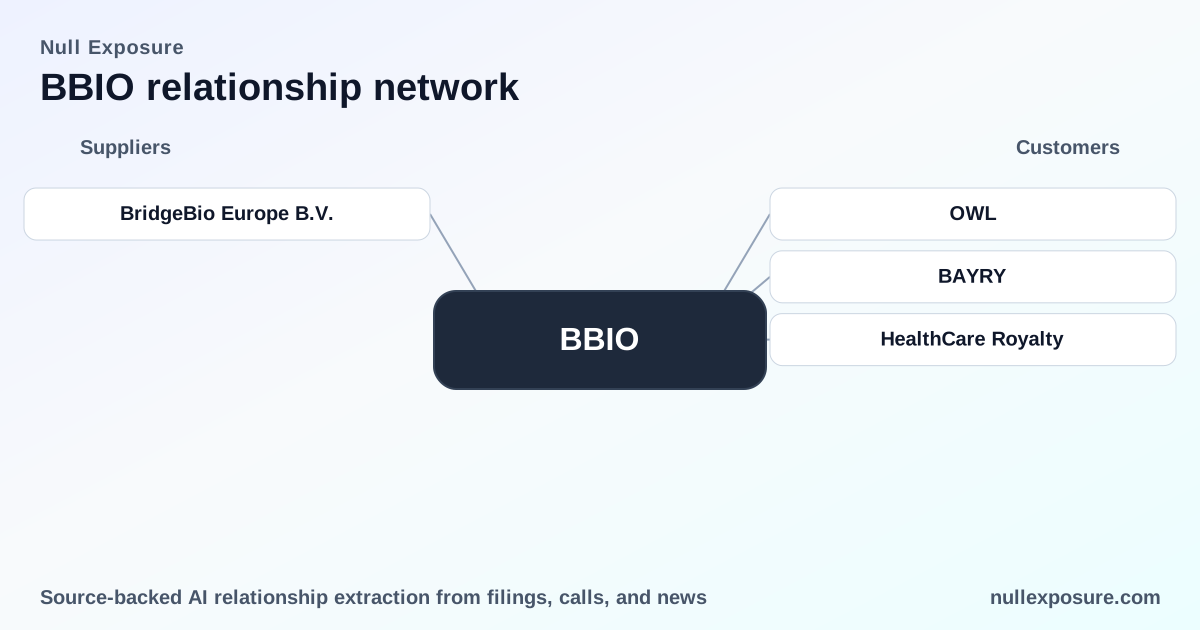
- Alternate financing complements revenue: BridgeBio uses bond issuances and royalty monetizations with parties such as Blue Owl and HealthCare Royalty to convert future cash flows into near-term liquidity.
These operating characteristics yield lumpy revenue recognition (upfronts and milestone recognition under ASC 606), concentration risk around a small set of counterparties, and flexibility via monetization transactions that change the shape of future cash flows.
How contractual terms drive investor outcomes
Contract type, counterparty credit, and role (licensee vs. manufacturer vs. distributor) determine both upside and downside:
- Upfronts and royalties provide near-term cash but tie future revenue to partner execution and product uptake. Large upfronts bolster liquidity and can support R&D, but create asymmetric downside if partners do not commercialize as expected.
- Manufacturing obligations create operational exposure: supply agreements that require BridgeBio units to produce commercial product transfer execution risk (supply chain, quality) to the company.
- Monetizations reduce revenue volatility but compress long‑term upside: the company’s royalty interest sale and note issuance provide capital at the cost of future receipts.
The balance of these elements is visible across the counterparties listed below.
Relationship roll call — what each counterparty contributes to BBIO’s economics
Bayer
BridgeBio granted Bayer regional rights and entered into a supply agreement: Bayer paid a $135 million upfront under their license and later secured European rights for Attruby with a $310 million upfront/near‑term payment and tiered royalties in the low‑thirties percent range; BridgeBio’s 2024 10‑K also records that the Bayer License Agreement is treated as a customer arrangement under ASC 606. Additionally, BridgeBio Europe B.V. has a 30‑month supply agreement to manufacture and supply commercial product to Bayer, evidencing a long‑term, high‑value commercial and manufacturing relationship (BridgeBio 10‑K, FY2024; NAI500, Mar 2026).
AstraZeneca
AstraZeneca holds licensed rights for a BridgeBio product in Japan, reflecting BridgeBio’s strategy of regional licensing to major pharma for local commercialization and regulatory execution (NAI500, Mar 2026).
Blue Owl Capital / OWL
BridgeBio executed a Royalty Interest Purchase and Sale Agreement with Blue Owl (referenced as OWL) that generated $297.0 million in net proceeds in June 2025, used alongside other financings to shore up liquidity; the company also issued 2031 Notes bringing net proceeds of $563.0 million in February 2025 (GlobeNewswire / Globe and Mail, Mar 2026).
HealthCare Royalty
HealthCare Royalty participated in the royalty interest sale alongside Blue Owl and was identified as a related party in the June 2025 transaction that produced $297.0 million in proceeds, demonstrating BridgeBio’s willingness to monetize royalty streams with institutional royalty investors (GlobeNewswire / Globe and Mail, Mar 2026).
Payoneer (PAYO)
Payoneer announced a partnership to embed end‑to‑end stablecoin workflows powered by Bridge into its platform, signaling BridgeBio’s (Bridge’s) expanding role in payments/crypto rails for business customers; the announcement appeared in PR Newswire and related coverage in February–March 2026 (PR Newswire; InsiderMonkey/Finviz, Feb–Mar 2026).
Visa (V)
Visa announced a global partnership with Bridge to expand stablecoin‑backed cards into more than 100 countries, underlining Bridge’s strategic positioning in payments infrastructure and broadened commercial distribution for its stablecoin capabilities (SahmCapital, Mar 2026).
Cardlytics (CDLX)
Cardlytics integrates identity resolution capabilities through Bridg (Bridge’s identity product), which converts anonymous in‑store transactions into privacy‑safe customer profiles, supporting Cardlytics’ advertising and measurement products (FinancialContent / WSS Bizwire, Jan 2026).
PAR Technology (PAR)
PAR acquired Bridg, the identity‑resolution platform that connects in‑store transactions to privacy‑safe customer identities, positioning Bridge’s Bridg product within PAR’s point‑of‑sale and merchant services footprint (CSPDailyNews, Mar 2026).
Company‑level constraints and what they imply for investors
- Contract maturity and tenure: BridgeBio’s supply agreement with Bayer began June 2024 with an initial 30‑month term (ends Dec 2026), demonstrating multi‑year operational commitments that require ongoing manufacturing and supply execution.
- Licensing concentration: Multiple excerpts in filings show BridgeBio regularly enters exclusive licensing deals (Bayer, Navire/BMS, QED/Kyowa Kirin, historical Eidos‑Alexion), confirming licensing is a repeatable high‑value commercial approach.
- Regional revenue mix: Public disclosures highlight heavy exposure to EMEA and APAC, alongside U.S. commercial activities for Attruby—investors should treat regional approvals and market penetration as primary performance drivers.
- Spend and cash‑flow composition: Upfront payments in the $10M–$100M and $100M+ bands recur in BridgeBio’s deals; the company also monetizes future flows via royalty sales and notes to generate immediate liquidity.
Together these signals explain why BridgeBio’s revenue profile is lumpy, partner‑dependent, and supplemented by structured financings that trade future upside for present capital.
Bottom line and next step
BridgeBio’s counterparty map is clear: large upfronts and royalties from global pharma partners sit alongside manufacturing obligations and third‑party monetizations, creating a hybrid cash‑flow model that accelerates funding but concentrates commercial risk around a handful of partners. For a deeper, transaction‑level look at counterparties and the financial implications, visit https://nullexposure.com/.
If you want a tailored exposure report or alerts for BBIO counterparties, check our homepage for subscription options and analyst briefings at https://nullexposure.com/.