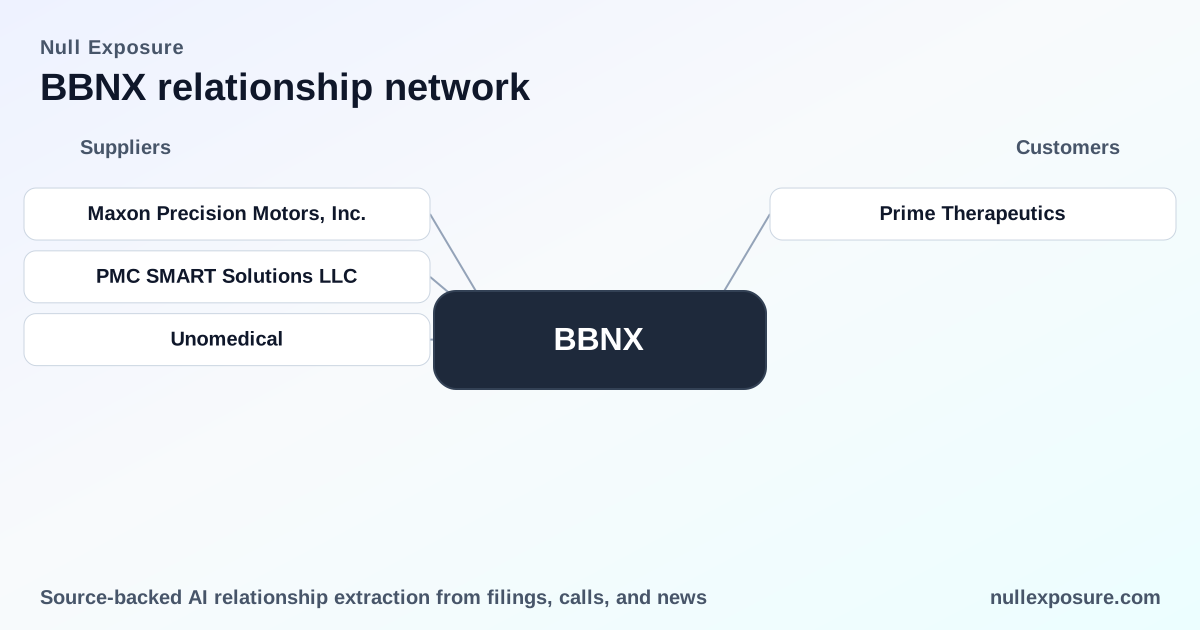
Beta Bionics (BBNX): Customer Relationships and Commercial Dynamics
Beta Bionics sells a regulated medical device—the iLet Bionic Pancreas—and the single‑use consumables that support it, monetizing through device and consumable sales channeled primarily via distributors and pharmacies, with reimbursement layered through commercial pharmacy networks and Medicare Part B. Revenue is driven by installed‑base growth and recurring consumable demand, while commercial progress hinges on payer coverage and distribution partnerships such as the agreement with Prime Therapeutics. For a succinct feed of customer‑relationship signals and ongoing monitoring, visit https://nullexposure.com/.
How Beta Bionics makes money and where customers sit
Beta Bionics is a commercial‑stage medical device company that commercialized the iLet after FDA clearance in May 2023. The company sells the iLet device and single‑use products that are consumed with the device; primary customers are distributors and pharmacies that resell to insulin‑requiring people with diabetes (PWD). Financials reflect an early but accelerating commercial ramp: Revenue TTM $110.2M, Gross Profit TTM $63.0M, and a rapidly expanding installed base (15,298 iLets as of December 31, 2024). These figures illustrate a business model that combines one‑time device sales with recurring consumable revenues and payer‑dependent reimbursement.
Key operating facts:
- Distribution‑led go‑to‑market: Sales flow through a network of distributors and pharmacies rather than direct‑to‑consumer volume alone, making channel relationships strategically critical.
- Payer complexity: Medicare Part B provides a pathway for DME reimbursement for the iLet, but coverage criteria are set at national and local levels and condition reimbursement behavior.
- Commercial maturity: The product is commercial since May 2023 and the installed base grew nearly fivefold from end‑2023 to end‑2024, indicating strong early adoption but still early commercial scale.
The Prime Therapeutics relationship: what changed and why it matters
Beta Bionics expanded pharmacy coverage in Q1 2025 through an agreement with Prime Therapeutics, a major pharmacy benefit manager. This deal extended pharmacy access for the iLet and likely improves patient access and purchase routing through PBM‑managed plans. According to the company’s Q4 2025 earnings transcript (published March 9, 2026), management highlighted the Prime agreement as a meaningful expansion of pharmacy coverage in early 2025 (The Globe and Mail, Q4 2025 earnings transcript, March 9, 2026).
All customer relationships identified in the record
- Prime Therapeutics — Beta Bionics reported that it meaningfully expanded pharmacy coverage in Q1 2025 through an agreement with Prime Therapeutics, improving the device’s route to patients via PBM channels and likely increasing covered claims and prescription fulfillment in PBM‑managed plans (company Q4 2025 earnings transcript, published March 9, 2026).
This account covers every customer relationship surfaced in available sources.
Contracting posture, concentration, criticality and maturity — company‑level signals
Across public disclosures and filings, Beta Bionics shows the following operating model characteristics as company‑level signals:
- Contracting posture: The company operates a channel‑centric contracting posture: agreements with distributors, pharmacies and payer networks (including PBMs and Medicare) determine commercial access and reimbursement. These contracts are strategic: they control point‑of‑sale access and cash flow timing.
- Customer concentration: The business model concentrates revenue risk around distributors and pharmacies as the primary customer class. That concentration creates dependency on a relatively narrow set of commercial partners to reach end users.
- Criticality: The iLet is the core product and the driver of recurring consumable purchases; the device’s commercial success is tightly coupled to distributor/pharmacy network coverage and payer decisions (including Medicare DME policies).
- Maturity: Beta Bionics is in an early commercial scaling phase—FDA clearance in May 2023, rapid installed‑base expansion to 15,298 as of Dec 31, 2024, and active relationship formation with PBMs and distributors signal a transition from product launch to broader commercialization.
These signals together imply a business where strategic channel and payer relationships materially affect near‑term revenue trajectory and cash conversion.
Strategic implications for investors and operators
- Coverage wins matter more than product innovation in the short run. Agreements like the Prime Therapeutics deal directly increase how many patients can access the iLet through pharmacy channels, altering realized addressable market and uptake speed.
- Reimbursement is a binary lever on economics. CMS DME eligibility under Medicare Part B is a powerful source of demand but is governed by national and local determinations; changes or delays in coverage rules directly impact revenue recognition and unit economics (company disclosures on Medicare coverage).
- Channel concentration is both a force multiplier and a risk. Distributors and pharmacies accelerate scale but create counterparty risk and margin pressure; monitoring the number and diversity of distribution partners is essential.
- Installed base growth drives recurring revenue. With consumables sold alongside the device, installed‑base expansion is the clearest leading indicator for recurring revenue and gross profit expansion.
What to watch next
- New PBM or payer agreements beyond Prime Therapeutics and their contract terms (coverage scope, prior authorization requirements, reimbursement levels).
- Changes in Medicare national or local coverage determinations impacting DME classification and payment for the iLet.
- Distribution network breadth and any shifts from single large distributors to a more diversified channel mix.
- Quarterly updates to installed‑base metrics, consumable attach rates and revenue per user to validate recurring revenue progression.
For a centralized view of customer‑relationship signals and continuous monitoring of partner coverage events, visit https://nullexposure.com/ for detailed tracking and alerts.
Bold takeaway: Beta Bionics’ near‑term commercial value is driven more by payer and channel coverage (Prime Therapeutics and Medicare policy) than by incremental product changes; investors should price the stock around execution on distribution and reimbursement expansion rather than product R&D milestones alone.