BridgeBio Oncology Therapeutics (BBOT): Capital Partners Drive Value in a Revenue‑Zero Biotech
BridgeBio Oncology Therapeutics operates as a clinical‑stage developer of small‑molecule cancer therapies and currently monetizes through capital markets and partnership arrangements rather than product revenue. With zero reported revenue and a negative operating profile, BBOT’s value inflection depends on successful trials, regulatory progress and ongoing institutional financing — making investor relationships functionally equivalent to customer relationships for near‑term survival and optionality. For ongoing monitoring of BBOT’s external relationships visit https://nullexposure.com/.
Why financing is BBOT’s de facto commercial channel
BridgeBio Oncology is a research‑heavy company without commercial products. Public filings through FY2025 show RevenueTTM = $0, EBITDA deeply negative, and EPS of –4.34, which together establish that the company is not yet generating operating cashflows and must rely on external capital to fund operations. Market capitalization sits around $678 million, while insider ownership is meaningful (about 27%) and institutional ownership is high (about 71%), indicating both management skin in the game and significant institutional influence on capital decisions.
- Practical consequence: investor commitments and financing tranches are the primary mechanisms that convert research progress into runway and optionality for commercialization.
- Commercial posture: contracting behavior will be investor‑driven, with financing terms, rights and dilution dynamics shaping strategic choices more than customer contracts or product sales at this stage.
Disclosed institutional relationship: Cormorant’s anchor purchase
MedCity News reported that Cormorant led a syndicate of institutional investors committed to purchase BBOT shares at $10.36 each to raise $260 million, concurrent with the company’s transition to the public markets (reported March 9, 2026). This capital commitment functions as a cornerstone financing event that materially extends runway and validates investor appetite. (Source: MedCity News, March 9, 2026.)
What that relationship means for investors and operators
Cormorant’s committed purchase should be read as both a financing lifeline and a governance signal. Anchor purchases of this size typically come with negotiated protections and information rights, which concentrate influence in the hands of lead investors and can accelerate strategic decisions such as partnering, licensing, or selective asset divestiture. For operators, the priority becomes hitting near‑term clinical milestones that unlock subsequent tranches or attract partnering revenue; for investors, exposure is to clinical and regulatory binary risk amplified by dilution sensitivity.
Complete list of customer/partner relationships we located
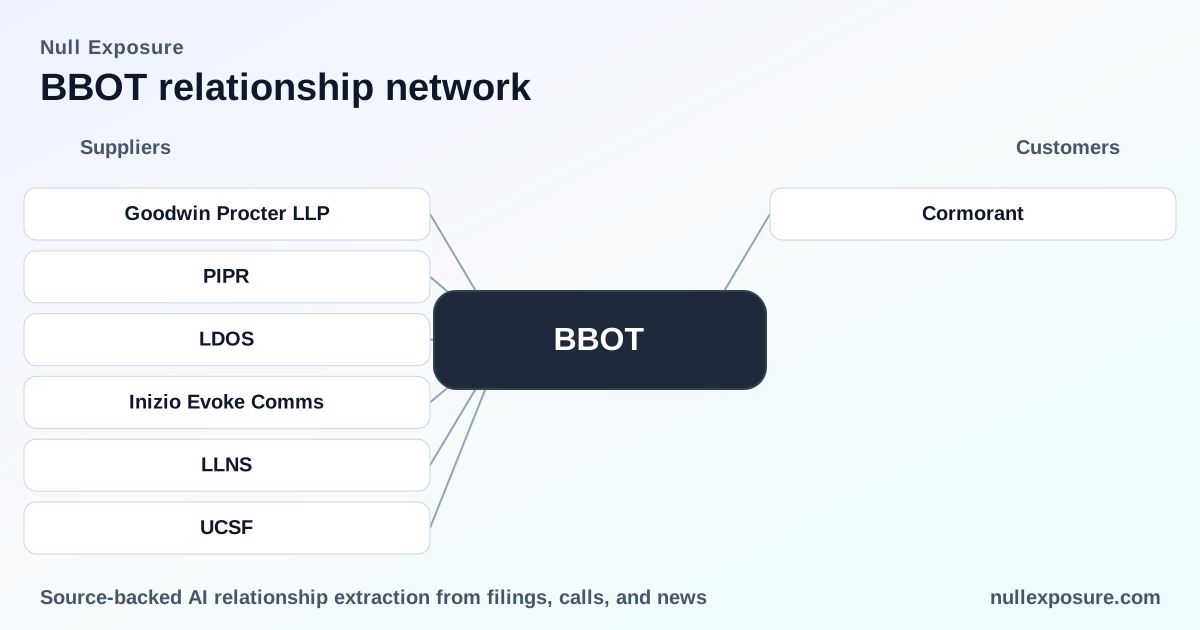
- Cormorant — MedCity News reported that Cormorant led a group of institutional investors committing to purchase BridgeBio Oncology shares at $10.36 each in a $260 million transaction tied to the company’s public transition (MedCity News, March 9, 2026). This transaction is a direct capital commitment that materially alters BBOT’s funding runway and stakeholder mix.
Operating‑model constraints and company‑level signals
Because there are no constraint excerpts that explicitly name other customer entities, the following are company‑level operating signals derived from public financials and the relationship evidence:
- Contracting posture: capital‑provider centric. The company’s primary contractual obligations today are to equity and debt providers rather than end customers, shifting negotiation leverage toward lead investors and underwriters.
- Concentration: funding concentration risk is elevated. A small number of institutional backers (exemplified by Cormorant’s anchor role) can supply necessary capital quickly but also concentrate control and amplify dilution risk for smaller shareholders.
- Criticality: external capital is critical to survival and program continuity. With no product revenue, financing cadence dictates clinical activity, hiring and partner negotiations.
- Maturity: BBOT is early‑stage/clinical‑stage; commercial maturity is contingent on successful trials and subsequent regulatory approvals or licensing outcomes.
These constraints are not tied to any single customer in the record; they are company‑level realities that define BBOT’s business model and strategic posture.
Investment implications — risks and upside drivers
- Upside drivers: clinical validation, favorable regulatory outcomes, and subsequent licensing or royalty agreements could transform BBOT from a capital‑dependent developer into a commercial or royalty‑generating entity. Analyst coverage tilts positive — aggregated targets and buy ratings indicate optimism among sell‑side coverage.
- Key risks: the principal short‑term risk is financing dilution and milestone delivery; if expected capital commitments do not materialize, the company will face rapid runway compression. Clinical trial failures produce binary downside outcomes given the absence of operating revenue.
- Balance‑sheet reality: committed anchor investments like the Cormorant purchase reduce immediate refinancing risk but also set reference prices and dilution expectations for future rounds.
How operators and research teams should think about relationships
Operators should treat institutional investors as strategic partners who can accelerate program timelines but also impose governance and reporting requirements. Institutional anchor investments validate programs and attract follow‑on capital, yet they require tight execution discipline: milestones, transparency and efficient capital deployment become the metrics investors will track most closely.
For research partners and potential licensors, BBOT’s capital commitments signal credibility in the near term, increasing the company’s capacity to entertain collaborations and co‑development agreements.
For ongoing tracking of BBOT’s financing relationships and customer‑equivalent counterparties, see https://nullexposure.com/ for updated relationship mapping.
Bottom line
BridgeBio Oncology is operating as a capital‑intensive clinical developer where investor commitments functionally serve as customers by providing the funding necessary to advance drug candidates. The disclosed Cormorant anchor purchase is the dominant near‑term relationship disclosed to date and meaningfully de‑risks BBOT’s runway while concentrating governance. Investors should treat future capital events and clinical readouts as the primary catalysts for value realization.