Briacell Therapeutics (BCTX): Subsidiary-led asset monetization defines near-term value creation
Briacell Therapeutics is a clinical-stage immuno-oncology company that develops novel therapeutics and monetizes primarily through licensing and intra-group asset transactions rather than product revenue. The company is pre-revenue (Revenue TTM $0) and relies on strategic transfers of IP and licenses—most recently centered on the soluble CD80 program—to crystallize value while funding clinical development through parent-subsidiary financing and asset sales. For deeper relationship analytics, visit https://nullexposure.com/.
Business model in one sentence: program assets, licensing and internal commercialization pathways
Briacell operates as an R&D-first biotech: no commercial revenues, heavy negative EBITDA (reported -$30.6M) and negative EPS (-$14.11) underscore a financing-and-licensing-driven model. Value realization depends on successfully de-risking clinical readouts or transferring rights to third parties or controlled subsidiaries; the recent move of the sCD80 license into BriaPro illustrates that pattern.
The BriaPro relationship is central to near-term strategy
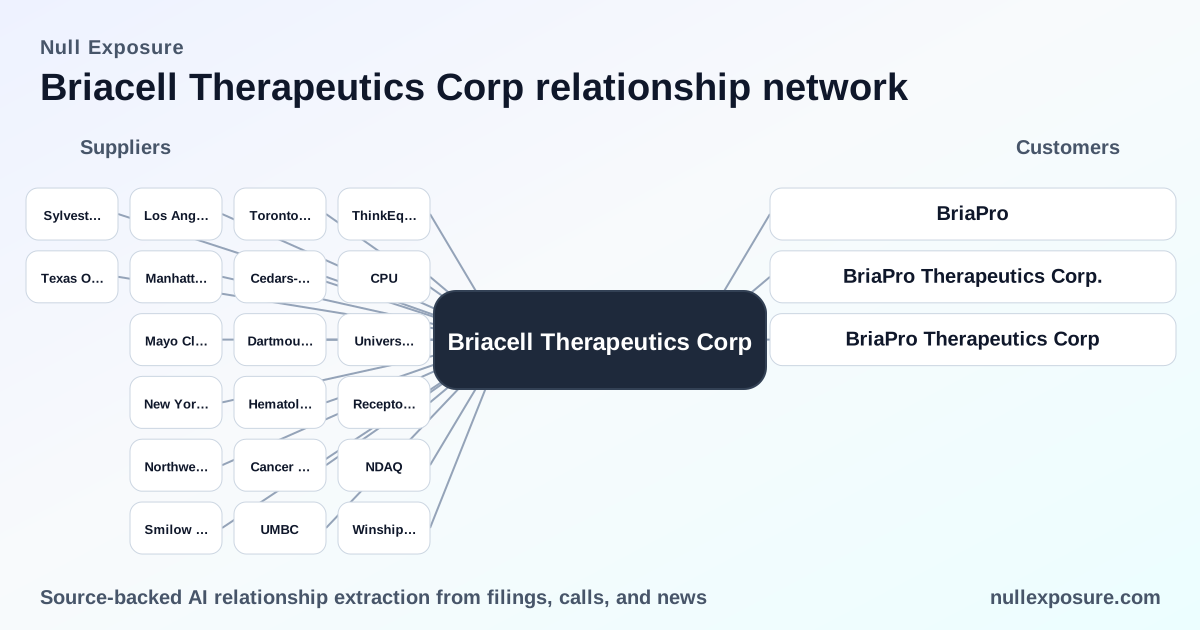
BriaPro Therapeutics is a majority-owned subsidiary and is the counterparty in every customer/asset relationship captured for BCTX in the available records. The group is executing an internal commercialization and monetization strategy by assigning or selling specific biologic rights into BriaPro, while the subsidiary remains financially dependent on the parent for capital and services. A GlobeNewswire press release dated February 18, 2026, describes the definitive purchase agreement that transfers the exclusive sCD80 license from Briacell to BriaPro.
- Key corporate signal: Briacell uses a consolidated affiliate structure to hold commercial rights and to separate development/commercial risk, while financing those affiliates centrally.
Documented relationships and source-by-source summaries
BriaPro Therapeutics — GlobeNewswire press release (February 18, 2026)
BriaPro agreed to purchase Briacell’s exclusive license to develop and commercialize soluble CD80 (sCD80) and associated assets, formalizing an intra-group transfer intended to concentrate development and commercialization responsibilities in the subsidiary. According to the February 18, 2026 GlobeNewswire announcement, the transaction is a definitive asset purchase agreement between Briacell and its majority-owned subsidiary.
BriaPro — Intellectia.ai news report (March 9, 2026)
The Intellectia.ai article reports that BriaPro entered a purchase agreement with Briacell for worldwide rights to sCD80 and states the transaction was expected to close around March 12, 2026, positioning BriaPro as the vehicle to advance a promising clinical therapy. This coverage frames the transfer as a material commercial advancement for the sCD80 program and a step toward external development and potential monetization.
BriaPro Therapeutics — GlobeNewswire (secondary release reference, March 9, 2026)
A subsequent GlobeNewswire reiteration (dated in March filings) confirms BriaCell and its majority-owned BriaPro entered into the definitive purchase agreement for the sCD80 license, emphasizing that the transfer is intended to support development and commercialization of the biologic agent for cancer treatment. This communication publicly attributes the sCD80 program as a core asset moving to BriaPro for downstream development.
BriaPro — TradingView summary of subsidiary filings (FY2025 reporting)
TradingView's coverage of BriaPro’s filed financial statements notes the subsidiary’s reliance on Briacell for financial support and services, indicating that BriaPro does not operate independently from a capital and administrative standpoint. This indicates internal funding dependence, which increases the parent’s cash-burn exposure until BriaPro achieves external financing or revenue.
BriaPro — TradingView follow-up (FY2025 / FY2026 context)
A follow-up TradingView note reiterates that BriaPro remains dependent on Briacell for financial support, reinforcing the picture that the subsidiary acts as a development/commercial vehicle rather than a self-sustaining operating company. This underscores the consolidated exposure of Briacell to BriaPro’s progress.
Operational implications: contracting posture, concentration, criticality, maturity
- Contracting posture: Briacell demonstrates an internal-transfer, affiliate-focused contracting posture, using BriaPro as the primary counterparty to hold and develop commercial rights. This reduces external partner complexity but concentrates execution risk within the corporate family.
- Concentration: The record set shows high concentration around a single program (sCD80) and a single subsidiary counterparty (BriaPro) for material customer/asset activity; that concentration is a key driver of near-term valuation volatility.
- Criticality: sCD80 is critical to Briacell’s commercialization pathway because the company currently records no revenues and depends on asset transfers and licensing events to create optionality and attract financing.
- Maturity: The company is pre-revenue and early-stage, relying on internal capital allocations and corporate transactions; maturity is limited and value realization depends on successful development or third-party deals.
Note: No explicit contractual constraints or third-party limitation clauses were recorded in the relationship entries reviewed; this absence should be read as an absence from these relationship records rather than a legal guarantee.
Investment implications and risk/reward profile
- Upside: If BriaPro secures closing, external financing, or a third-party partnership for sCD80, Briacell could crystallize significant value from a single high-impact program—this is the mechanism for upside given the company’s pre-revenue position.
- Downside: High program concentration, continued negative EBITDA and EPS, and the subsidiary’s funding dependence on the parent mean valuation is binary and execution-sensitive; failure to monetize sCD80 or to raise capital will prolong dilution and cash-pressure risk.
- Catalysts to watch: closing confirmation of the sCD80 transfer, BriaPro financing announcements, clinical readouts for sCD80, and any licensing or partnering agreements that move development risk off the parent balance sheet.
For comprehensive monitoring of BCTX customer and partner dynamics, visit https://nullexposure.com/ for regularly updated relationship workflows and deal tracking.
Final take
Briacell’s current commercial posture centers on internal asset transfers and subsidiary-led development as the primary route toward value capture. Investors should treat the BriaPro transaction as the lynchpin of near-term upside and the principal execution risk given the company’s pre-revenue status and dependence on intra-group financing.