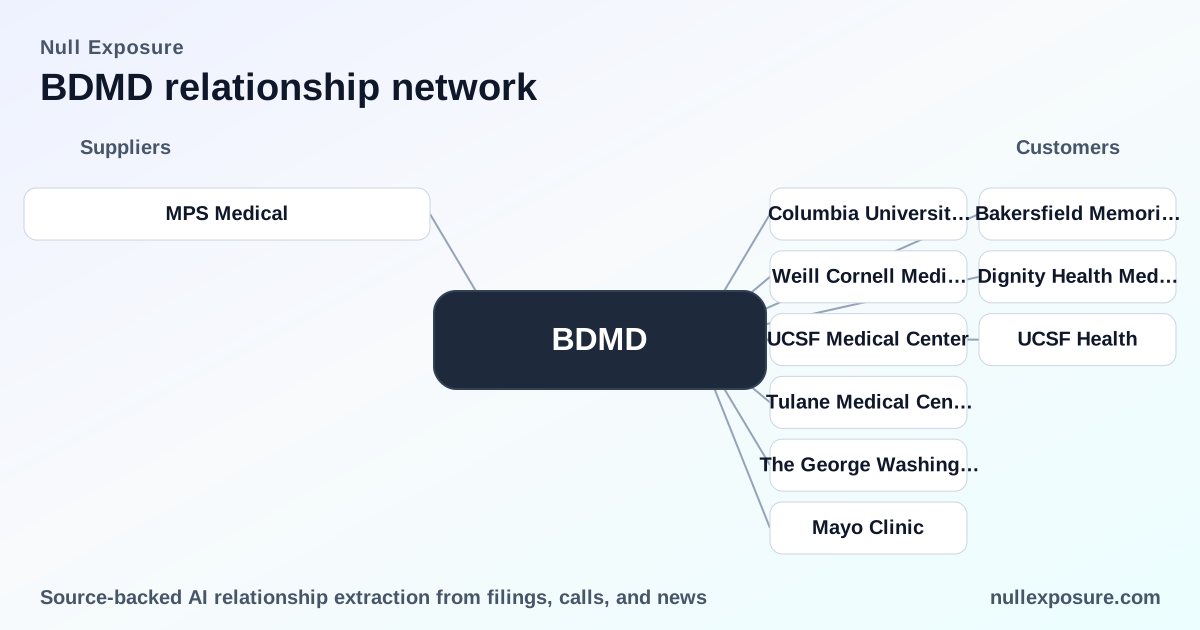
Baird Medical (BDMD) — hospital roster validates early U.S. commercial traction and clinical endorsement
Baird Medical manufactures microwave ablation systems and related devices for minimally invasive tumor and thyroid procedures and monetizes through device sales, consumables and clinical education programs tied to commercial launches. The company's strategy is to leverage FDA 510(k) clearance and a targeted clinical roll‑out at leading academic and health‑system centers to build adoption, recurring disposables revenue, and a services footprint in the U.S. market. Learn more about our coverage at https://nullexposure.com/.
Why investors should care: Baird’s news flow shows concentrated, high‑value reference customers that accelerate adoption cycles and clinical credibility, but revenue metrics still reflect an early commercial stage and negative EBITDA.
Commercial and operating implications from the hospital roster
Baird’s announced customer set reads like a credentialing playbook—prestigious academic medical centers and regional hospitals are acting as early adopters and training sites. That pattern signals a deliberate contracting posture: pursue opinion‑leader validation first, then expand into broader community hospitals where volume and consumable revenue scale. The company reports its MWA technology has been used in “over 30” U.S. hospitals; that breadth reduces single‑account concentration risk but does not eliminate commercial execution risk given current revenue and margins.
Operational characteristics to flag for investors:
- Contracting posture: Direct commercial launches and clinical masterclasses at flagship centers point to a relationship sales model that combines equipment placement with physician training and case support.
- Customer criticality: Devices are clinical assets for minimally invasive procedures; hospital adoption depends on clinician endorsement and local procedure volume, so clinical outcomes and training materially drive purchasing decisions.
- Concentration and maturity: Deployment at top academic centers provides high signaling value, but BDMD’s financials reflect early monetization—investors should treat reported customer placements as adoption milestones rather than mature recurring revenue streams.
- Regulatory positioning: FDA 510(k) clearance and multiple PR filings promote U.S. market access; regulatory status lowers a structural barrier to entry compared with novel implantable devices but does not remove reimbursement and adoption hurdles.
If you want a consolidated view of BDMD’s customer relationships and how they matter for go‑to‑market execution, see the relationship catalog below. For further company signals and modeled scenarios visit https://nullexposure.com/.
Catalog of named customer relationships and primary citations
-
Columbia University Medical Center
Baird cites Columbia as an early clinical site using its MWA platform in the U.S. roll‑out and as a partner for masterclasses and strategic engagement. Source: PR Newswire and company releases citing Columbia University Medical Center (FY2026). -
Mayo Clinic
Mayo Clinic is listed among the over‑30 U.S. hospitals using Baird’s FDA 510(k)‑cleared systems, a high‑value reference that supports physician education and commercial conversations. Source: PR Newswire / StockTitan announcements (FY2026). -
UCSF Medical Center
UCSF has been reported as a site where Baird’s MWA system was used successfully in thyroid procedures, illustrating clinical use in a major academic health system. Source: PR Newswire / Futunn coverage noting UCSF procedure outcomes (FY2025–FY2026). -
Weill Cornell Medical Center (Weill Cornell Medicine)
Weill Cornell appears repeatedly in company announcements as a deployment and clinical education partner, reinforcing academic endorsement across multiple communications. Source: PR Newswire and Marketscreener company releases (FY2025–FY2026). -
The George Washington University Hospital
The George Washington University Hospital is named in multiple Baird press releases as a U.S. clinical user and participant in commercial launch activities. Source: PR Newswire and StockTitan coverage (FY2025–FY2026). -
Tulane Medical Center
Tulane is included among the U.S. hospitals where Baird’s devices have been used, and it has been referenced in event and conference related announcements. Source: PR Newswire and Baird event releases (FY2025–FY2026). -
Johns Hopkins Hospital
Johns Hopkins is listed in company materials as one of the prestigious hospitals deploying Baird technology, adding top‑tier academic validation. Source: PR Newswire release describing deployments and awards (FY2025). -
Dignity Health Medical Group
Dignity Health Medical Group facilitated an inaugural procedure performed by an identified physician using Baird’s platform, indicating early adoption in a large regional health network. Source: StockTitan / PR Newswire commercial launch announcement (FY2026). -
Bakersfield Memorial Hospital
Bakersfield Memorial hosted a commercial launch event for Baird’s MWA platform in February 2026, representing initial community hospital penetration outside academic centers. Source: PR Newswire / StockTitan (Feb 11, 2026; FY2026). -
Ain Shams Specialized Hospital (Egypt)
Baird entered the Egyptian market with its first microwave ablation procedure at Ain Shams Specialized Hospital, signaling international expansion beyond the U.S. academic footprint. Source: Investing.com coverage of company masterclass and international rollout (FY2026). -
UCSF Health (separate mention)
In addition to UCSF Medical Center references, Baird’s communications list UCSF Health in relation to successful procedures and clinical cases, reinforcing the same institutional engagement reported elsewhere. Source: Futunn / Finance Yahoo summaries citing UCSF Health case use (FY2025–FY2026). -
Weill Cornell Medicine (separate mention)
Company news alternately references Weill Cornell Medicine and Weill Cornell Medical Center across filings and releases; both names denote the same institutional endorsement cited in multiple strategic releases. Source: PR Newswire / Marketscreener (FY2025–FY2026).
What this roster means for investors and operators
The customer list is strategically curated: academic centers deliver clinical validation and training scale while community hospitals provide the path to recurring consumables revenue. For investors, the balance to watch is whether placements convert into measurable recurring revenue growth and margin expansion over the next two to four quarters. For operators, continued investment in clinical education, a U.S. manufacturing footprint, and targeted field support are critical to convert high‑prestige references into a broad commercial base.
Key risk and upside signals
- Upside: High‑profile hospital endorsements accelerate adoption conversations and shorten procurement cycles at peer institutions. PR‑documented deployments at Mayo, Johns Hopkins and UCSF strengthen market credibility.
- Risk: Current financials show limited revenue scale and negative EBITDA, so clinical placements are necessary but not sufficient—execution risk in scaling adoption to community hospitals and building consumable attachment rates remains material.
Conclusion
Baird Medical’s reported customer relationships provide a clear, staged commercialization path: obtain academic validation, run masterclasses, then push into community hospitals for volume. Investors should track conversion of these placements into recurring revenue, attachment rates on disposables, and sequential margin improvement as the most direct indicators that early clinical traction is translating into commercial success.
For a consolidated dataset and ongoing updates on BDMD customer signals, visit https://nullexposure.com/.