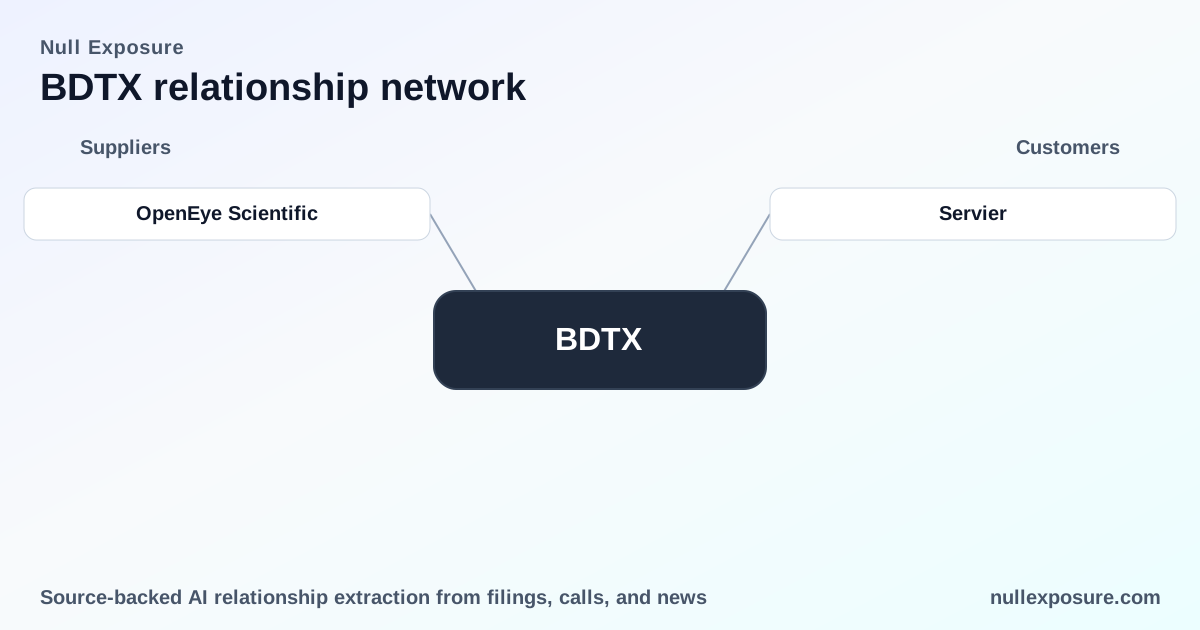
Black Diamond Therapeutics (BDTX): Partnering to Derisk Development and Preserve Upside
Black Diamond Therapeutics discovers and develops small-molecule, mutation-targeted oncology drugs and monetizes through a hybrid model of direct clinical development and selective out‑licensing to global pharmaceutical partners. The company advances early programs to value inflection points and extracts non‑dilutive capital through licensing deals while retaining upside via milestone and royalty economics. For investors, the structural story is clear: discipline on capital allocation through partnerships plus an eventual option to commercialize directly in the U.S. underpins both downside protection and upside optionality.
Explore how we map partner exposure and commercial posture at https://nullexposure.com/.
The headline relationship: Servier took BDTX-4933 and the development bill
Black Diamond executed a global licensing agreement with Servier for BDTX‑4933, transferring global development and commercialization responsibility for that asset while receiving material upfront and downstream consideration. Servier’s agreement moves development risk off BDTX’s balance sheet and delivered meaningful non‑dilutive capital — an upfront payment reported at $70 million in March 2025 — plus larger potential milestone and royalty payments reported by press coverage. According to a March 19, 2025 press release on GlobeNewswire and Servier’s own newsroom, the deal covers global development and commercialization for a targeted RAF/RAS program; TradingView (Zacks coverage) noted the $70 million upfront and business terms that assign commercial responsibility to Servier.
Why this matters to investors
- De‑risking: Out‑licensing BDTX‑4933 to Servier materially reduces near‑term cash burn risk tied to that program while preserving upside via contingent payments. TradingView and industry press reported the upfront and headline potential deal value.
- Focus signal: The transaction signals a portfolio approach—advance differentiated assets to points where a pharmaceutical partner assumes late development and commercialization costs. Servier’s role as global developer shifts execution exposure away from BDTX.
Explore deeper partner mapping and implications at https://nullexposure.com/.
Complete relationship inventory
- Servier / Servier Pharmaceuticals — Black Diamond licensed BDTX‑4933 under a global deal that hands Servier responsibility for development and commercialization while delivering upfront and potential milestone payments to Black Diamond; the company received a $70 million upfront in March 2025 and press accounts place total deal economics in the large hundreds of millions in potential payments. Source: GlobeNewswire press release (Mar 19, 2025); Servier newsroom release (Mar 2025); TradingView / Zacks coverage (May 2026); industry reports via Sahm Capital and Benzinga (coverage referencing the headline deal value).
Operational constraints and company‑level signals
The disclosures include a company‑level commercial posture statement that is independent of any single partner: “Subject to receiving marketing approvals, we expect to commence commercialization activities by building a focused sales and marketing organization in the United States to sell our products.” This is a direct statement of intent from management and it carries these operational implications:
- Contracting posture: Black Diamond runs a hybrid model — it will out‑license selective assets to global pharma partners to capture non‑dilutive capital and transfer late‑stage development risk, while reserving the right to commercialize approved products domestically via an internal, focused salesforce. That posture allows management to optimize capital allocation between licensing revenue and potential higher-margin direct sales when commercial economics justify the investment.
- Concentration and criticality: The company’s public relationship set shows targeted, program‑level partnerships rather than portfolio‑wide exits, indicating concentration at the program level rather than across the entire pipeline. Program‑level licensing reduces short‑term capital stress but concentrates revenue outcomes on milestone realization and partner execution.
- Maturity and path to cash flow: Licensing deals such as the Servier transaction provide upfront cash and future contingent receipts, accelerating runway and enabling sustained R&D investment without immediate equity dilution. The commercialization intent in the U.S. signals a staged maturity plan: partner outsources global commercialization now, internal commercialization is reserved for approved products or selectively retained indications.
Risk factors tied to partner strategy and commercialization plans
- Execution transfer risk: Assigning global development and commercialization to Servier reduces BDTX’s operational burden but introduces dependency on the partner’s execution timetable and regulatory strategy. TradingView coverage explicitly notes the shift in development responsibility and the associated funding.
- Revenue timing and concentration: Upfront payments immediately improve liquidity, but the bulk of potential value is milestone‑based and concentrated on the success of a small number of assets; press reporting (Sahm Capital, Benzinga) highlighted headline potential deal sizes but those are contingent on clinical and regulatory outcomes.
- Commercial capability pivot: The company’s stated plan to build a focused U.S. commercial organization post‑approval creates a future fixed‑cost commitment that will change the firm’s cost structure if and when products reach the market.
Valuation context and investor takeaway
Black Diamond’s headline financials show Market Cap: $154.7M and Revenue (TTM): $70M, with a trailing P/E of 6.6 and profit margin of 32% (company snapshot, latest quarter FY2025). The Servier licensing transaction exemplifies the company’s chosen path: extract non‑dilutive capital where third parties can better shoulder global commercialization costs while preserving upside through milestones and royalties. For investors, the crucial questions are execution by partners on licensed programs, timing of milestone realization, and the company’s discipline in deploying licensing proceeds into the pipeline.
Key takeaway: Black Diamond’s partnership with Servier is a deliberate capital and risk‑management strategy that transfers late‑stage execution risk while preserving sizeable upside; monitor partner milestones and the company’s stated timeline to stand up a U.S. salesforce as primary drivers of valuation re‑rating.
For a structured view of partner exposure and what each agreement means to corporate cash flow, see our mapping at https://nullexposure.com/.