BENF: Liquidity engine for alternative assets — revenue through fees, loans and trust services
Beneficient (NASDAQ: BENF) operates a technology-enabled liquidity and trust platform — AltAccess — that provides exit options, primary capital and custody/trust administration to holders of alternative assets. The company monetizes through upfront origination fees, recurring trust administration and custody fees, interest income on long-dated ExAlt loans, and select equity financings; its operating model combines long-term loan contracts with subscription-style platform billing and bespoke trustee services to mid-to-high net worth investors, family offices and smaller institutions. For investors and operators evaluating customer relationships, Beneficient’s business is defined by contractual cash flows, concentrated ownership, and high operational criticality around its platform and trust services. For concise coverage of this sector and comparable relationships, see NullExposure’s research hub: NullExposure.
How Beneficient runs and monetizes the business
- Beneficient’s commercial posture blends long-term, amortization-limited lending (ExAlt loans with multi-year maturities and deferred principal schedules) and ongoing service contracts (platform access and trust administration billed periodically). Evidence in filings shows ExAlt Loans commonly carry maturities measured in years and fees recognized ratably over 7–12 year life cycles.
- The company targets MHNW individuals, family offices, small-to-mid institutions and fund GPs, and it operates primarily in North America, consistent with public geography disclosures and its Kansas TEFFI chartering activity.
- Operating risk is concentration-driven: Ben’s balance sheet includes a substantial loan portfolio (hundreds of millions in ExAlt loans) and very high insider ownership (over 92% insiders), which increases governance and liquidity considerations for public minority holders.
- The AltAccess platform is being positioned for a software-enabled delivery and potential subscription model alongside bespoke trust and custody services, creating a hybrid services + software revenue mix.
- Service provider posture is central: Ben provides trustee, custody, trust administration and ancillary shared services to customers and affiliated entities, making operational continuity and vendor performance critical to revenue realization.
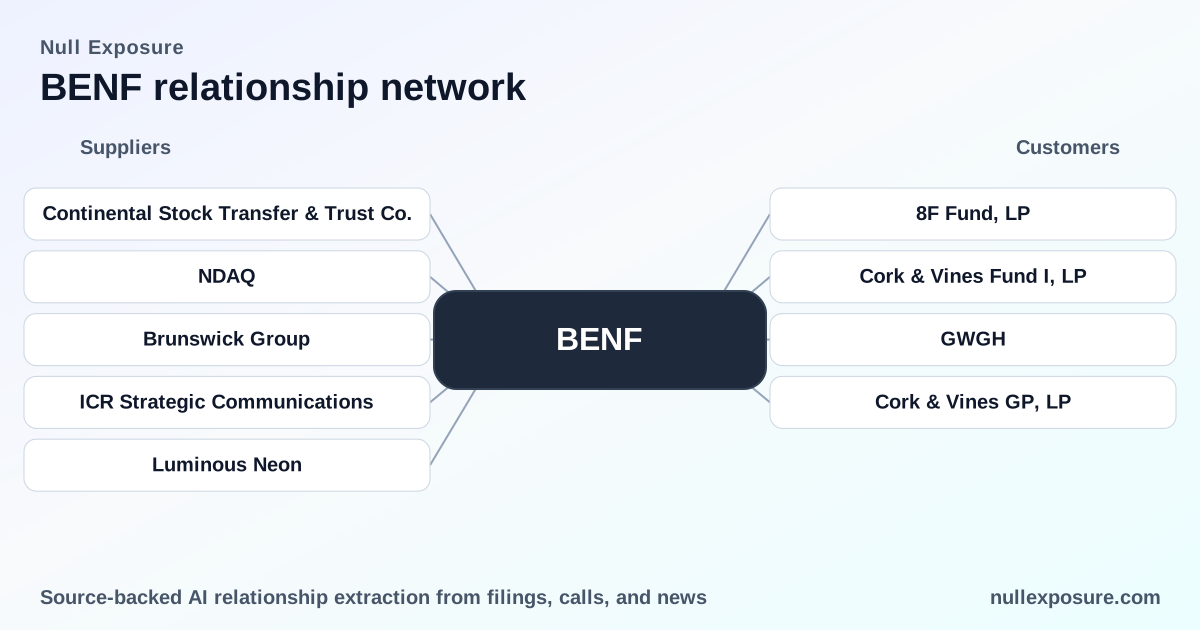
Customer relationships and recent transactions Below I cover every customer relationship reported in the available results, with a concise plain-English summary and source citation.
-
8F Fund, LP — Beneficient closed financing for a $1.36 million primary capital commitment to 8F Fund, LP, a fund managed by 8F Asset Management focused on vertically integrated aquaculture assets. This transaction was reported in fiscal period FY2025. Source: StockTitan press release, March 9, 2026 — https://www.stocktitan.net/news/BENF/beneficient-enters-into-1-36-million-gp-primary-capital-ol6mg8idd1jd.html.
-
Cork & Vines Fund I, LP — Beneficient closed an approximately $3.0 million primary capital commitment to Cork & Vines Fund I, LP, a fund targeting premium experiential and luxury dining investments, reported in FY2026. Source: StockTitan press release, March 9, 2026 — https://www.stocktitan.net/news/BENF/beneficient-enters-into-3-million-gp-primary-capital-4fufbunbuzxp.html.
-
Quartus Capital Partners LLC (FY2026 entry) — Beneficient announced it closed an $8.75 million GP primary capital transaction for a fund managed by Quartus Capital Partners LLC; this was disclosed in a fiscal 2026 update. Source: GlobeNewswire press release, February 17, 2026 — https://www.globenewswire.com/news-release/2026/02/17/3239835/0/en/Beneficient-Reports-Third-Quarter-Fiscal-2026-Results.html.
-
GWGH — Historical coverage notes that a portion of Beneficient was once auctioned to GWG (GWGH) in a prior episode involving L bonds and GWG shares; the reference is part of earlier reporting tied to FY2023. Source: Kansas Reflector investigative report, March 1, 2023 (referenced in dataset) — https://kansasreflector.com/2023/03/01/classic-ponzi-scheme-angry-creditors-lambast-ceo-of-kansas-asset-swap-business-in-court-records/.
-
GWG Holdings — The same Kansas Reflector record also lists GWG Holdings in connection with an auction transaction involving Beneficient assets and legacy instruments, captured in the FY2023 narrative. Source: Kansas Reflector investigative report, March 1, 2023 — https://kansasreflector.com/2023/03/01/classic-ponzi-scheme-angry-creditors-lambast-ceo-of-kansas-asset-swap-business-in-court-records/.
-
Cork & Vines GP, LP — The manager entity for Cork & Vines Fund I, LP, Cork & Vines GP, LP, is cited in the same March 9, 2026 announcement as the sponsor of the approximately $3.0 million primary capital financing arranged by Beneficient. Source: StockTitan press release, March 9, 2026 — https://www.stocktitan.net/news/BENF/beneficient-enters-into-3-million-gp-primary-capital-4fufbunbuzxp.html.
-
Quartus Capital Partners LLC (FY2025 entry) — Beneficient previously disclosed it closed an $8.75 million commitment for a Quartus-managed fund in fiscal 2025 as well; filings and investor releases list the same dollar amount across adjacent reporting periods. Source: GlobeNewswire fiscal 2025 results release, September 29, 2025 — https://www.globenewswire.com/news-release/2025/09/29/3158184/0/en/Beneficient-Reports-Results-for-Fourth-Quarter-Fiscal-Year-Ended-March-31-2025.html.
-
Yorkville — Beneficient disclosed a Standby Equity Purchase Agreement (SEPA) with Yorkville, sales of Class A shares to raise approximately $0.3 million, and convertible debentures issued to Yorkville that were fully repaid by maturity, as noted in SEC-related reporting for fiscal 2025. Source: TradingView summary of Beneficient SEC filings, FY2025 (SEC 10‑K highlights) — https://www.tradingview.com/news/tradingview:7b9ca76296a5d:0-beneficient-sec-10-k-report/.
Operational constraints and investor implications
- Long-term contractual profile: ExAlt loans and trust economics are structured with extended maturities and deferred recognition of fees, creating predictable fee schedules but concentrated credit duration risk. This is a company-level signal derived from contract descriptions showing 7–12 year recognition and loan maturities.
- Revenue mix and criticality: The company runs a hybrid services-first model (trust administration, custodian work) supplemented by loan interest and origination fees; AltAccess positions Ben to convert some services into recurring platform revenue. These are company-wide strategic signals.
- Concentration and governance: Insider ownership exceeds 90%, creating control concentration and low free float for institutions — a material governance and liquidity consideration for public investors.
- Scale of balance-sheet exposure: Public disclosures show hundreds of millions in ExAlt loan principal outstanding, making credit performance and trust-level VIE treatment central to consolidated results.
- Geographic footprint: North America dominates the customer base and regulatory engagement (Kansas TEFFI charter), which concentrates regulatory and market risk regionally.
Key takeaways for investors
- Beneficient generates recurring, contractually-timed cash flows through long-lived loans and ongoing trust services; this supports revenue visibility but concentrates credit and operational execution risk.
- Recent customer-level activity is predominantly GP primary capital financings at small- to mid-single-digit millions per transaction and one larger $8.75 million commitment to Quartus, signaling active deployment into sponsor-level financings across sectors.
- Governance and liquidity are distinctive risks given the extreme insider ownership and limited institutional float; minority shareholders should treat public liquidity as constrained.
For additional relationship-level intelligence and comparable transaction analysis, visit NullExposure.