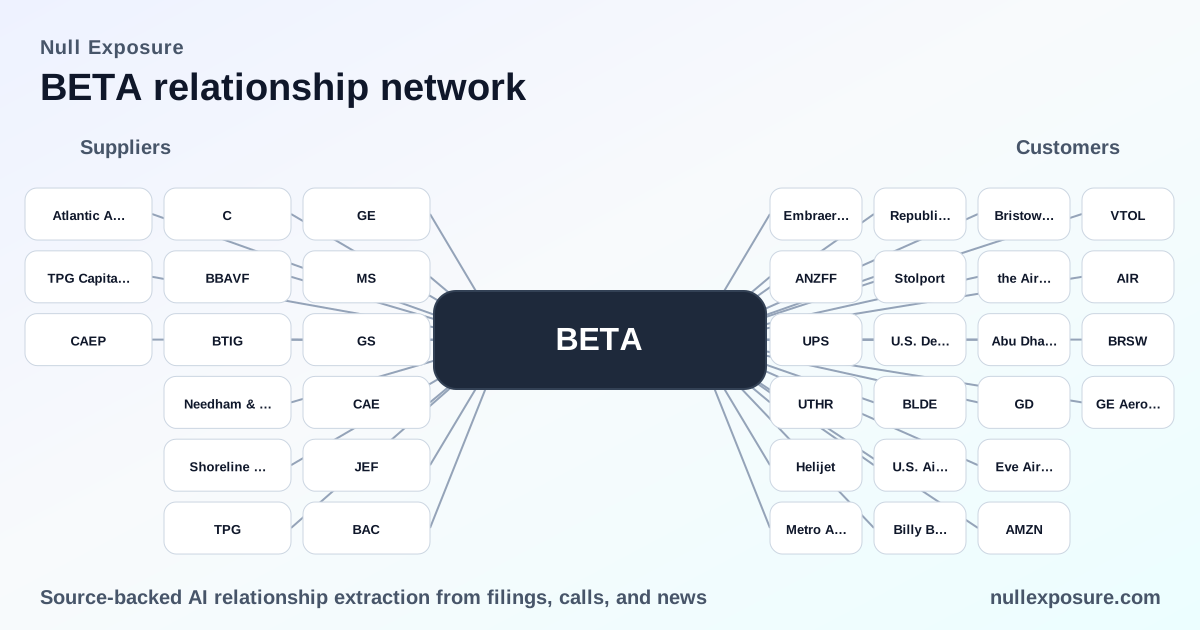
Beta Technologies: who’s buying the aircraft and why it matters to investors
Beta Technologies designs and manufactures electric aircraft, propulsion systems and charging infrastructure and monetizes through aircraft sales, long‑term motor supply agreements, and infrastructure contracts accompanying those sales. The company’s commercial progress is driven by a handful of large anchor customers for logistics, medical transport and nascent passenger services, with substantial optional demand behind those firm orders. For investors, the story is not just technology — it is execution against forward purchase orders, infrastructure rollouts and the runway between early revenues ($35.6M TTM) and the scale implied by its order book. Learn more about the coverage and signals on our site: https://nullexposure.com/
A roadmap of Beta’s customer universe — quick thesis
Beta’s commercial relationships fall into three clear buckets: (1) logistics and freight customers buying ALIA aircraft for regional networks; (2) medical and special‑mission customers securing aircraft for time‑sensitive transport; and (3) OEM and airline partners contracting Beta for propulsion motors and ground infrastructure. This mix creates concentrated counterparty exposure to a handful of strategic buyers but also generates multiple monetization paths (aircraft, motors, chargers, services).
The full list — who’s on the customer and partner roster (plain English, source by source)
-
Embraer Eve
Beta delivered the motors required for Eve’s next phase of flight testing, indicating an active supplier relationship for propulsion components. Source: Beta’s 2025 Q3 earnings call (transcript, reported March 2026). -
Eve Air Mobility (EVEX)
Eve selected Beta to supply electric pusher motors for prototypes and future production aircraft, a deal described in press reporting as a multi‑year opportunity potentially worth up to $1 billion. Source: Eve corporate notices and multiple news reports (December 2025–Mar 2026). -
Air New Zealand (ANZFF / AIR)
Air New Zealand has declared intent to order eCTOL/eCTOL‑type aircraft (three firm with options for more) and is listed among early customers for Beta’s aircraft under the airline’s Mission Next‑Gen program. Source: CompositesWorld and InterestingEngineering reports (FY2023 reporting; press articles 2025–2026). -
UPS / UPS Flight Forward / United Parcel Service
UPS placed advance orders and trial agreements for Alia aircraft to operate regional delivery routes, with reporting of at‑least‑10 aircraft deals and ongoing real‑world missions with Beta aircraft. Source: Beta press coverage and earnings commentary (news reports FY2021–FY2025; Beta 2025 Q3 earnings call). -
United Therapeutics (UTHR)
United Therapeutics is an early strategic backer and customer, requested aircraft to move manufactured organs and medical equipment, and contributed meaningful early revenues through contractual work. Source: SevenDaysVT and CompositesWorld reporting (FY2021–FY2026). -
Surf Air Mobility (SRFM)
Surf Air Mobility signed a firm order for 25 ALIA CTOL aircraft with options for up to 75 more and designated Beta preferred supplier for ground electrification infrastructure supporting its Hawaii passenger initiative. Source: Surf Air announcements and industry press (May 2026). -
General Dynamics (GD)
Beta reported delivery of initial products to General Dynamics during the referenced quarter, indicating a commercial or government‑contracting relationship. Source: Beta’s 2025 Q3 earnings call (transcript, March 2026). -
Blade / Blade Air Mobility (BLDE)
Blade placed a firm order for up to 20 Beta aircraft in 2021 and has participated in demonstration flights with Beta equipment. Source: Flying Magazine and prior Blade announcements (FY2021–FY2025). -
Bristow / Bristow Group / Bristow Norway (VTOL reported)
Bristow placed deposit‑backed orders (up to 50 eCTOL aircraft) and is slated to receive aircraft for extensive flight testing (including Norway operations), representing a large commercial operator commitment. Source: CompositesWorld, AINonline and Flying Magazine reporting (FY2023–FY2025). -
Helijet
Helijet appears in aggregate customer lists alongside other operators, reflecting interest from regional passenger and helicopter operators. Source: Runway Girl Network coverage of Beta’s partner list (FY2025). -
Metro Aviation
Metro Aviation is listed among operators trialing or planning to operate Beta aircraft, representing interest from emergency‑service and regional operators. Source: Runway Girl Network reporting (FY2025). -
Republic Airways
Republic Airways shows up in grouped customer mentions as a potential operator partner for Beta aircraft. Source: Runway Girl Network (FY2025). -
Stolport
Stolport purchased a Beta Minicube charger for operations at Billy Bishop Toronto City Airport, signaling traction for Beta’s charging infrastructure sales. Source: Runway Girl Network coverage of Billy Bishop deployments (FY2025). -
Billy Bishop Toronto City Airport
The airport joined Beta’s growing network of infrastructure and hosted Alia aircraft activity — a local infrastructure reference for Beta’s charger deployments. Source: Runway Girl Network (FY2025). -
U.S. Department of Defense (DoD)
Beta has conducted demonstrations and contracted deployments with military entities and is listed among customers across demonstration programs. Source: Runway Girl Network and multiple flying/industry reports (FY2025). -
U.S. Air Force / 413th Test Squadron
Beta landed its all‑electric aircraft at a U.S. Air Force field for a contracted deployment and testing period, reflecting military certification and operational testing interest. Source: Local press coverage of the October 2023 deployment and subsequent reporting (FY2024–FY2025). -
Abu Dhabi Airports
Abu Dhabi Airports selected Beta’s charge infrastructure for its advanced air mobility network, indicating international infrastructure sales traction. Source: FinancialContent/press releases and industry coverage (FY2025). -
AllianceBernstein
Reported as a potential cornerstone investor in Beta’s public offering, listed alongside institutional backers — this is investor support rather than an operating customer relationship, but relevant to commercial confidence. Source: Yahoo Finance coverage of the offering (FY2025). -
BlackRock
Cited as a potential cornerstone investor in the Class A offering, signaling institutional investor interest. Source: Yahoo Finance (FY2025). -
Ellipse and Federated
Named among potential cornerstone buyers in public offering reporting; included as institutional participants supporting the equity raise. Source: Yahoo Finance (FY2025). -
GE Aerospace
Named among cornerstone investor or partner mentions in offering coverage and industry commentary, reflecting strategic investor/partner alignment. Source: Yahoo Finance and Sahm Capital commentary (FY2025–FY2026). -
Amazon (AMZN)
Mentioned in analyst and industry commentary as a potential large‑scale future counterparty whose engagement would be a signal of commercial confidence. Source: Sahm Capital coverage and industry commentary (FY2026).
What this pattern tells investors about Beta’s operating model and business risks
-
Contracting posture: Beta sells aircraft with forward purchase orders, deposit‑backed orders and multi‑year component supply deals (motors and chargers). This creates a revenue cadence tied to milestone delivery and certification progress rather than immediate large recurring revenue. Evidence: public press on UPS, United Therapeutics, Bristow and Surf Air Mobility orders (news coverage FY2021–FY2026).
-
Concentration and counterparty risk: A small number of strategic customers (UPS, United Therapeutics, Air New Zealand, Surf Air Mobility, Bristow) account for bulk of disclosed orders and pilot programs; this creates concentration risk if any anchor counterparty delays or reduces commitments.
-
Criticality and use cases: Customers span logistics, medical transport, passenger services and defense — a diversified set of mission profiles increases commercial optionality but also demands multiple certification and operational proofs.
-
Maturity and revenue profile: Beta is early commercial: revenue is modest ($35.6M TTM) and operations are loss‑making, while the business is supported by institutional investors and anchor orders that underpin future scale assumptions (company financials and offering coverage, FY2025–FY2026).
Bottom line for investors
Beta’s customer base demonstrates real commercial progress with anchor buyers across logistics, medical and passenger markets, and material optionality in motor supply agreements (Eve) and infrastructure deployments (Abu Dhabi, Stolport, Surf Air Mobility). The business remains high‑execution risk: delivery and certification milestones and the conversion of options into firm orders are the primary drivers of value creation.
If you want a consolidated view of these relationships and how they map to Beta’s revenue and order pipeline, visit https://nullexposure.com/ for our in‑depth customer maps and signal tracking.