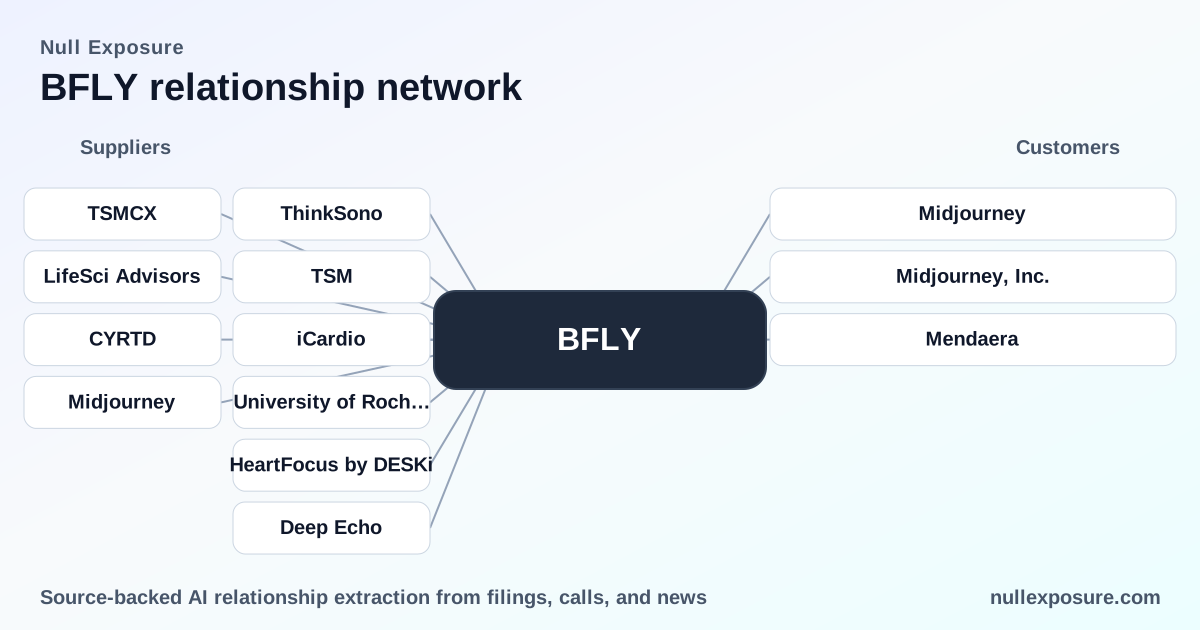
Butterfly Network (BFLY): Customer Relationships and Commercial Implications
Butterfly Network sells a semiconductor-based, handheld ultrasound system and captures revenue through a mix of hardware sales and recurring software subscriptions, supplemented increasingly by licensing and co-development deals with third parties. Management has shifted the revenue mix toward enterprise agreements that include upfront payments and multi-year licensing, creating higher near-term cash visibility while expanding addressable markets beyond traditional clinical buyers. For access to more relationship-level intelligence, visit https://nullexposure.com/.
How Butterfly monetizes and how that shapes risk-return
Butterfly’s core go-to-market combines three revenue engines: device sales (hardware), software subscriptions, and enterprise/licensing contracts. Hardware drives unit economics and adoption; software subscriptions provide recurring revenue and lifecycle control; licensing and co-development deals accelerate penetration into adjacent markets (robotics, semiconductors, AI-enabled imaging) and generate large, lump-sum or multi-year cash flows. The company sells through a direct sales force, distributors and eCommerce, meaning it balances scalable online channels with higher-touch enterprise engagement.
- Revenue concentration is still skewed to North America, where a majority of sales are booked, but the company has global installed base coverage.
- Contracting posture is evolving from transactional device sales to blended commercial terms that include upfront fees and annual license payments.
- Customer base spans individuals (clinicians buying devices), healthcare systems (large and very large enterprises), and strategic corporate partners.
Every material customer relationship disclosed
Midjourney — a material co‑development and licensing partner
Butterfly signed a co-development and licensing agreement with Midjourney that drove $6.8 million of Q4 revenue and was cited by management as the trigger for positive operating cash flow in that quarter. According to the Q4 2025 earnings call, the Midjourney arrangement contributed meaningfully to 41% year-over-year growth in that period. An 8‑K filed November 17, 2025 and subsequent press coverage describe a structure that includes a one‑time payment, annual license fees, milestone payments, and potential multi-year total consideration; multiple public reports summarize a one‑time fee of $15 million plus a $10 million annual license and potential milestone payments, with press reporting up to $74 million in expected payments over five years. (Sources: Q4 2025 earnings call; Form 8‑K disclosed Nov 17, 2025; company and press coverage in March–May 2026.)
Mendaera — commercial agreement for interventional robotics
Butterfly announced a commercial agreement with Mendaera to integrate Butterfly’s ultrasound‑on‑chip technology into a next‑generation interventional robotic system, positioning Butterfly’s imaging stack as a critical sensor input for robotic guidance in interventional procedures. This partnership is publicized as a product-level commercial agreement and demonstrates Butterfly’s route into device OEM channels beyond its own handheld. (Source: DICardiology coverage, FY2024/announced commercial agreement.)
Operating model signals and business model constraints
The disclosed relationship evidence and company commentary produce a clear portrait of operating characteristics that investors should internalize:
- Subscription orientation: Butterfly sells software memberships at defined price points for individual users and bundles software with devices. This indicates recurring revenue discipline that supports customer retention and lifetime value expansion. (Company disclosures detailing Core and Advanced Technology membership plans.)
- Mixed counterparty base: The company actively targets individual clinicians, large healthcare systems, and very large enterprise systems, reflecting both broad clinician adoption and strategic enterprise penetration. (Company commercial strategy disclosure; U.S. presence in top 100 systems.)
- Geographic revenue concentration: North America is the dominant revenue market, with international sales growing but smaller by dollar amount versus U.S. operations. (Reported revenue by geography for FY2024–FY2025.)
- Role diversity: Butterfly operates both as a seller to healthcare providers and as a technology licensor/vendor to OEM partners and developers, often using distributors for scale. (Commercial channel disclosures.)
- Contract maturity and proof points: Some enterprise engagements remain in pilot stages (for example, virtual chronic care management pilots), while others (Midjourney, Mendaera) have advanced to signed agreements and commercial revenue recognition—signaling a mix of early‑stage pilots and executable, revenue‑producing contracts.
- Revenue segmentation: The company reports hardware and software as distinct revenue segments, exposing valuation to both one‑time device cycles and recurring software economics.
Strategic implications for investors and operators
Butterfly is transitioning from a pure device vendor to a platform licensor and embedded imaging supplier, which changes growth levers and risk profiles.
- Upside: Licensing deals like Midjourney create large, near-term cash inflows and recurring license revenue, improving cash flow visibility and funding R&D and go‑to‑market investments. Partnerships with robotics OEMs (Mendaera) open higher margin, embedded revenue streams and scale distribution through third‑party platforms.
- Concentration and execution risk: Reliance on sizable enterprise agreements creates counterparty concentration risk and requires tight program management to deliver milestones and integrate technology across partners’ systems. North American revenue concentration also exposes Butterfly to regional reimbursement and procurement cycles.
- Monetization diversification: The movement toward software subscriptions and licensing improves gross margin profile over time and supports platform defensibility, while hardware sales remain critical for clinician adoption and data capture.
- Contracting posture: The company’s ability to secure upfront payments and annual license fees indicates stronger negotiating leverage with corporate partners; sustaining that leverage depends on technological differentiation and successful integration outcomes.
Key takeaways for investors
- Midjourney is a transformational contract for Butterfly: recognized revenue already, significant near-term cash and multi-year licensing upside. (Q4 2025 earnings call; Nov 2025 8‑K and press coverage.)
- Mendaera validates OEM pathway into high-value procedural robotics, expanding addressable market beyond point‑of‑care ultrasound. (DICardiology report.)
- Business model is hybrid: device-led adoption plus subscription resilience and growing licensing revenue, but North American concentration and a mix of pilot-stage and commercial contracts remain material risk factors.
- Execution matters more than ever: the company’s valuation multiple will hinge on its ability to replicate Midjourney‑type deals and scale recurring revenue without sacrificing device adoption economics.
For a deeper dive into relationship-level intelligence and to track future contract disclosures, explore https://nullexposure.com/.
Conclusion: Butterfly’s commercial evolution is measurable and material—enterprise licensing contracts are already reshaping cash flows and strategy. Investors should value the company not only on hardware unit economics but increasingly on its ability to monetize intellectual property through repeatable, multi‑year partnerships while managing concentration and execution risk.