Biofrontera (BFRI): Strategic divestitures reshape a US‑centric commercial model
Biofrontera Inc. operates as a specialty dermatology biopharma that sells prescription dermatology products directly to U.S. dermatology offices and monetizes through product sales and selective asset monetizations. Recent activity shows a deliberate shift: the company is disposing non‑core U.S. assets and crystallizing near‑term cash, while its operating profile remains concentrated on Ameluz® and its photodynamic therapy ecosystem.
If you want a compact feed of primary sources and customer‑relationship implications, visit https://nullexposure.com/ for a vendor‑grade snapshot.
What happened: cashing out Xepi and why it matters
In November 2025 Biofrontera sold the U.S. license for Xepi® (ozenoxacin) Cream, 1% to Pelthos for upfront consideration and contingent payments. Transaction economics reported in company filings and press releases list $3.0 million at closing, $1.0 million upon commercial availability, and contingent milestone payments tied to revenue thresholds; public statements cite up to $6.0 million in milestones in some materials and up to $7.0 million in other reports. This is an explicit monetization of a non‑core antibiotic cream to refocus the balance sheet and free cash flow on core dermatology assets. See the company press release on GlobeNewswire (Nov 7, 2025) and subsequent earnings disclosures (Q3/Q4 2025 filings and transcripts).
How to read customer and counterparty signals
Biofrontera’s customer relationships and operational posture are defined by a few clear signals:
- U.S. revenue concentration: all reported revenues derive from the United States and the company operates its own national commercial team for licensed products, which increases exposure to U.S. payor and practice dynamics.
- Direct seller: management sells licensed products directly to dermatology offices and groups rather than relying on wide distributor networks, which creates closer customer touchpoints but also higher sales‑force expense and concentration risk.
- Product concentration: Ameluz® plus RhodoLED® lamps is the principal licensed offering, meaning revenue and commercial success are tightly linked to that core product franchise.
- Low leasing revenue and winding related‑party arrangements: clinical lamp lease income has been negligible historically (~$0.1M in 2024), and a prior related‑party lease arrangement with Biofrontera Bioscience ended December 31, 2024; that reduces recurring lease risk but also removes a small recurring revenue line.
These characteristics imply a contracting posture that favors direct commercial deployment and tight customer relationships, moderate concentration around a core product franchise, and limited legacy dependency on lease income. Taken together, the business is commercially mature in go‑to‑market approach but still financially immature, given negative profitability metrics and ongoing capital maneuvers.
Relationship inventory — every counterparty from the records
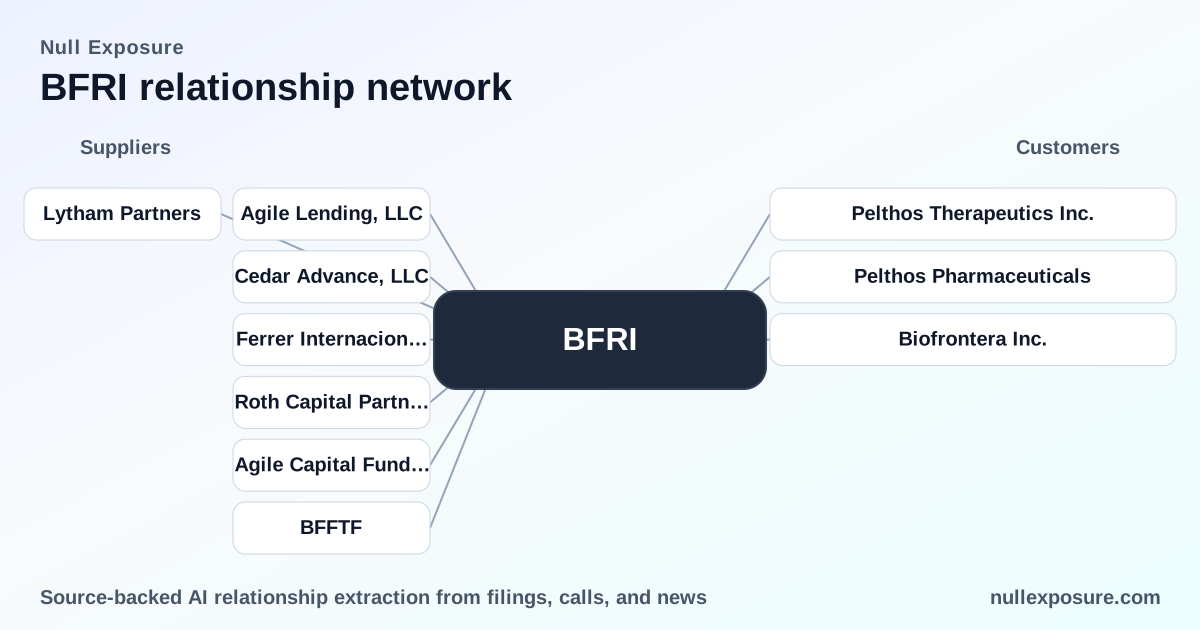
Pelthos Therapeutics / Pelthos Pharmaceuticals — buyer of Xepi (multiple reports)
Biofrontera divested its U.S. license for Xepi to Pelthos with $3.0M at closing, $1.0M on commercial availability, and contingent milestone payments; public disclosures list milestone caps reported as up to $6.0M in some filings and up to $7.0M in certain call transcripts and news items. See Biofrontera press release on GlobeNewswire (Nov 7, 2025) and the company’s Q3/Q4 2025 earnings releases and transcripts (reported Nov 2025 and Mar–May 2026).
Sources: GlobeNewswire Nov 7, 2025; Biofrontera Q3 2025 press release and Q4 2025 earnings disclosures (reported March–May 2026).
Biofrontera AG / German Biofrontera Group — intercompany negotiations and claim deferral
Negotiations between the German Biofrontera Group and U.S. Biofrontera Inc. over license and supply arrangements continued through mid‑2025 and included a temporary deferral of a EUR 1.8M claim by the German group while strategic options were discussed. Reuters reported these developments in a June 2025 ad hoc release, describing the negotiations as potentially leading to fundamental changes in cooperation and business model orientation. This record signals active internal restructuring and the presence of intercompany financial stress points.
Source: Reuters / TradingView summary of June 26, 2025 ad hoc release.
(Note: the dataset of public mentions also reproduces the Pelthos transaction across multiple outlets — Yahoo Finance, StockTITAN, Investing.com, TradingView — all tracing back to the same Nov 2025 sale announcement and subsequent earnings disclosures.)
What the relationships imply for risk, concentration, and runway
- Concentration and criticality: the commercial model is tightly tied to Ameluz® and associated devices; Xepi was non‑core enough to be sold, which reduces product‑line complexity but increases reliance on the remaining core franchise for revenue. The Pelthos sale lowers operational burden but also removes a potential upside stream.
- Contracting posture: Biofrontera runs direct sales in the U.S., giving it granular control over pricing and customer engagement, but exposing it to reimbursement and practice economics in a single geography.
- Financial maturity and runway: the company reported negative EBITDA and net losses in recent filings, even as revenue and gross margins improved; asset sales and investor financing tranches (reported alongside the Xepi transaction) provide near‑term liquidity relief while signaling ongoing capital management.
- Counterparty risk: the intercompany negotiation and EUR 1.8M deferral demonstrate internal financing strain points that investors should model into potential consolidation or further asset sales.
Practical takeaways for investors and operators
- Active asset monetization is a strategic lever Biofrontera is using to shore up liquidity and reduce non‑core complexity; the Xepi sale is the leading example and converted an underperforming asset into immediate cash plus conditional upside.
- U.S. commercial execution is central: all revenue is U.S. sourced and sold through the company’s commercial team, so diligence should prioritize U.S. sales trends, payor relationships, and practice‑level adoption rates of Ameluz/RhodoLED.
- Monitor intercompany arrangements: the German group’s claim deferral and strategic negotiations are material to capital structure and supply chain assumptions; further developments could alter transfer pricing, supply flows, or require additional restructuring.
If you want the full primary‑source consolidation and signals map for BFRI customer relationships, see the analytical hub at https://nullexposure.com/.
Bottom line
Biofrontera is executing a pragmatic reorientation: shrink non‑core exposure, crystallize immediate cash, and concentrate resources on a U.S. direct‑sell dermatology franchise. That profile improves liquidity flexibility but increases product and geographic concentration risk — a trade investors should price explicitly when valuing BFRI equity or assessing counterparty exposure.