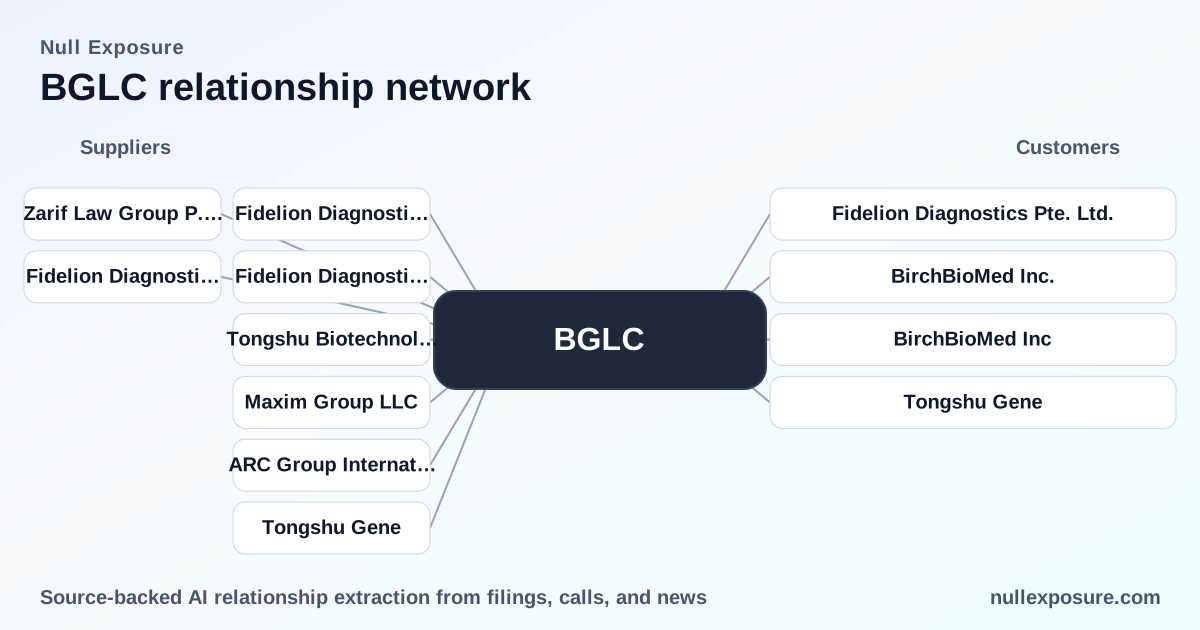
BioNexus Gene Lab (BGLC): Revenue channels, strategic partners, and operational constraints
BioNexus Gene Lab Corp operates as a hybrid specialty-chemicals distributor and genomics services company, monetizing through two distinct channels: industrial chemicals distribution via a Chemrex trading arm and commercial genomic testing and IP commercialization through proprietary biomarkers and licensing vehicles. The company generates product revenue by wholesaling chemical raw materials in Southeast Asia while building service revenue from genomic screening and regional licensing of diagnostic platforms. For investors, the thesis is straightforward: near-term cash flow is concentrated and low-margin through distribution, while optionality and upside are concentrated in nascent commercial partnerships for diagnostics across ASEAN markets. Learn more on the firm profile at https://nullexposure.com/.
One-sentence operating thesis for investors
BioNexus is a dual‑track operator: a distribution-led cash engine (Chemrex) that supplies the P&L today, and a services/IP commercialization arm that provides longer-term growth optionality through exclusive regional licenses and strategic alliances.
Customer relationships and what they mean for revenue
Below I cover every customer/partner relationship disclosed in recent public reporting and press coverage. Each entry is a concise, plain-English summary with the original reporting noted.
Chemrex — near-total distribution concentration
Chemrex functions as BioNexus’s primary distribution channel and accounted for roughly 99.7% of reported revenue in FY2026, making it the dominant source of cash generation and working capital burden. (TradingView report on BGLC, May 2026)
Fidelion Diagnostics Pte. Ltd. — exclusive commercialization vehicle for VitaGuard™ MRD
BioNexus executed an exclusive Southeast Asia license with Fidelion, which the company is using as the commercial vehicle for regional IP commercialization and scale for the VitaGuard™ MRD diagnostic platform. This positions BioNexus to capture licensing and services revenues as fidelity of regional rollout advances. (Press release coverage summarized by Finviz and StockTitan, March 2026)
BirchBioMed Inc. — strategic partner for FS2 topical platform regulatory and market support
BioNexus entered a strategic partnership with BirchBioMed to provide market intelligence, regulatory and clinical‑trial strategy, and help secure licensees and commercialization partners for the FS2 topical cream in Malaysia and Singapore. This is a services‑for‑equity/commercialization arrangement aligned with the company’s diagnostics and therapeutics commercialization playbook. (Company announcement and TradingView coverage, Oct 20, 2025 / reported March 2026)
Tongshu Gene — cross‑equity alignment supporting ASEAN exclusivity
Agreements tied to the VitaGuard™ rollout include alignment with Tongshu Gene that, together with Fidelion, established exclusive ASEAN territory rights and cross‑equity alignment in late 2025—a corporate structure intended to lock in regional commercialization pathways and align incentives across developers and distributors. (StockTitan coverage, March 2026)
Operational constraints and what they reveal about the model
Public disclosures and reporting surface a set of actionable signals about BioNexus’s contracting posture, geography, role mix, and scale.
-
Framework contracting posture. The company disclosed strategic outsourcing arrangements and framework agreements (for example, an MRNA Scientific agreement tied to Vitarray in Sept 2024), which indicates BioNexus prefers standing agreements to ad hoc purchases—useful for predictable volumes but potentially locking in margin pressure. (Company disclosure excerpt, Sept 14, 2024)
-
APAC commercial focus. Multiple excerpts and partner agreements explicitly target Southeast Asia—Malaysia, Indonesia, Vietnam and ASEAN markets—confirming a regional go‑to‑market that shapes regulatory, reimbursement, and distribution risk. (Company filings and press releases referencing Southeast Asia)
-
Hybrid role: manufacturer / service provider. Company statements show it both purchases and resells chemical raw materials to manufacturers and provides genomic screening services via MRNA Scientific and in-house biomarkers, reflecting a dual value chain where operational capabilities differ by segment. (Company filings and press materials)
-
Segment mix: distribution plus services. Trading and wholesale of industrial chemicals through Chemrex currently dominates revenue, while genomic screening and licensing efforts represent the strategic services segment with higher theoretical margins but earlier stage commercialization. (Public company disclosures and press commentary)
-
Scale and contract spend. Evidence suggests individual contract sizes sit in the $100k–$1m band, indicating meaningful but not enterprise-scale procurement or project sizes—relevant to cash flow timing and negotiation leverage. (Reported contract/payment excerpt)
Taken together, these constraints signal a company with high revenue concentration in a commoditized distribution channel, coupled with a deliberate push into higher-margin services and licensing that requires successful regulatory and partner outcomes in ASEAN.
Investment implications: key risk/reward vectors
-
Concentration risk is material. Chemrex producing ~99.7% of revenue creates a single‑point dependency for cash flow; any disruption to that channel materially damages liquidity and valuation. (TradingView, May 2026)
-
Optionality in diagnostics is high but binary. Exclusive licensing arrangements (Fidelion/Tongshu) and partnerships with BirchBioMed expose BGLC to upside if regional rollouts succeed, but these are execution‑dependent across regulatory, clinical, and commercialization milestones. (Finviz/StockTitan coverage, March 2026)
-
Regional execution complexity. ASEAN markets provide growth runway but introduce fragmented regulatory regimes and reimbursement uncertainty that lengthen commercialization timelines and increase go‑to‑market cost. (Company regional statements)
-
Balance sheet and profitability context. Recent financials show negative margins and EBITDA loss; distribution cash flow currently underpins operations while services/IP initiatives absorb capital and management attention. Investors should underwrite both downside cash needs and upside licensing revenue timing. (Company financials FY2026)
What investors should watch next
- Quarterly revenue split to verify whether Chemrex concentration persists or declines as services/licensing scale.
- Regulatory milestones and rollout timelines from Fidelion and Tongshu for VitaGuard™ in target ASEAN markets.
- Commercial traction for FS2 via BirchBioMed in Malaysia and Singapore and any licensing or milestone payments recorded.
- Cash flow and working capital disclosures tied to distribution inventory and receivables.
For a deeper empirical view and ongoing tracking of BioNexus’s partner network and revenue composition, visit https://nullexposure.com/.
Conclusion: BioNexus is a small‑cap with a bifurcated model—a dominant, low‑margin distribution engine that funds strategic bets on regional diagnostics commercialization. The investment case is a trade between near‑term concentration risk and longer‑term optionality from exclusive regional licenses; directionality will be determined by execution on regulatory pathways and successful monetization of diagnostic IP.