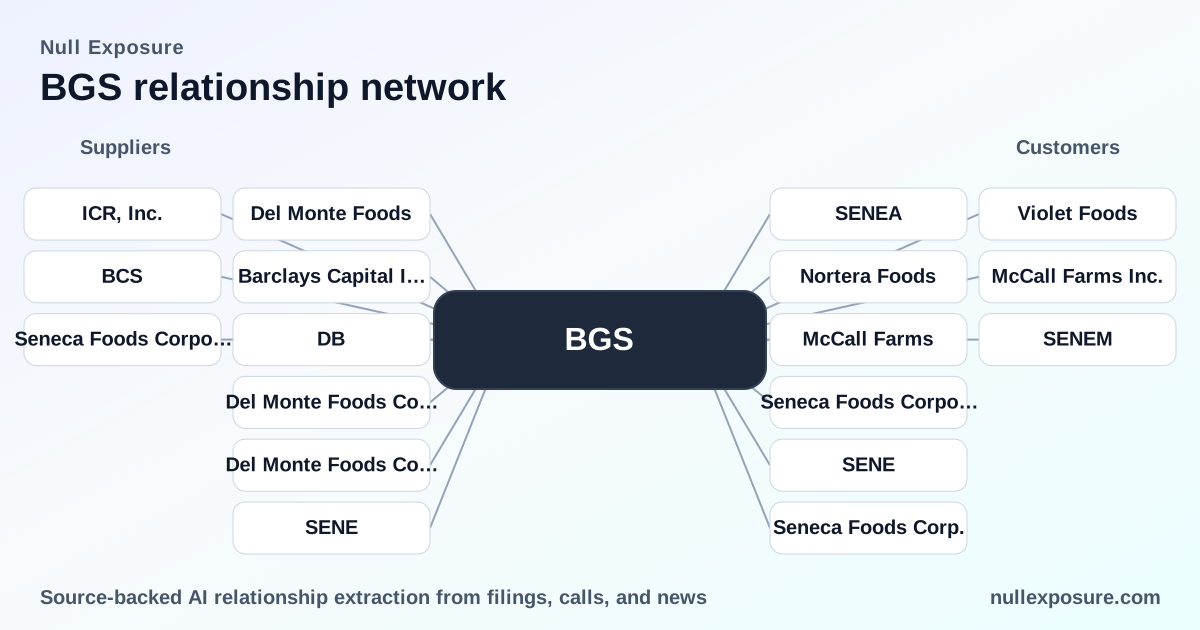
B&G Foods (BGS): Portfolio reshaping turns branded shelf-stable risk into a narrower, higher-margin play
B&G Foods manufactures and sells a diversified portfolio of shelf-stable and frozen grocery brands across the United States, Canada and Puerto Rico and monetizes through branded retail sales, co‑packing agreements and targeted divestitures. Recent activity shows management is prioritizing portfolio streamlining — selling non-core lines while preserving manufacturing revenue through supply/co‑pack contracts to protect cashflow and support the high-yield dividend profile. For investors and operators evaluating customer relationships, these transactions reframe B&G’s counterparty exposure from retailer concentration to a mix of acquirers and retained-supply partners. Learn more at https://nullexposure.com/.
What the recent deals change about B&G’s operating model
B&G’s announced disposals in FY2025–FY2026 materially alter the company’s revenue composition and customer posture. Top-ten customer concentration is high (≈62.7% of net sales in FY2024), so shrinking the branded portfolio reduces gross sales but increases reliance on fewer, more strategic counterparties and contractual manufacturing relationships. The publicly reported constraints suggest a company that:
- Contracts broadly to mass-market channels — supermarkets, warehouse clubs, foodservice and non-food outlets — indicating high distribution reach but also high buyer concentration.
- Operates predominantly in North America with a meaningful Canada exposure (~7–8% of sales historically), so geographic risk is contained to NA tax and trade regimes.
- Retains manufacturing assets and capacity and is transitioning to a mix of brand owner and contract manufacturer/co‑packer, which changes counterparty criticality from retail shelf placement to contractual supply commitments.
- Exhibits material customer concentration and moderate maturity: large legacy brands are being sold, but manufacturing leases and facilities remain, implying continued operational commitments.
These are company‑level signals drawn from recent filings and public commentary; they reflect strategic direction rather than a single counterparty’s action.
How deal counterparties now factor into counterparty risk and cashflow
Below I catalogue the counterparties reported across press coverage and provide a concise investor-oriented take on each relationship and its implications.
Seneca Foods Corporation (Seneca / SENE / SENEA / SENEB)
B&G sold the Green Giant U.S. frozen vegetable product line to Seneca Foods effective March 2, 2026; the transaction included the Yuma, Arizona plant and a supply/co‑pack agreement for certain products manufactured by B&G in Mexico, preserving roughly $100 million in annual net sales through production contracts. Sources include company announcements and coverage in FoodBusinessNews and multiple press reports in March 2026 that detail the asset transfer and the ongoing supply agreement.
Nortera Foods
B&G executed a transaction in October 2025 to sell the Canadian rights to the Green Giant and Le Sieur frozen and shelf‑stable vegetable product lines to Nortera Foods, moving Canadian brand ownership out of B&G’s portfolio while eliminating the related Canadian sales and operational responsibility. Coverage of the October 2025 deal and its mention in March 2026 press summaries was reported by Prepared Foods and Just‑Food.
McCall Farms
McCall Farms acquired the Le Sueur U.S. shelf‑stable vegetable brand from B&G in August 2025, a divestiture that generated a small non‑recurring gain (reported as ~$15.5m in media summaries) and removed legacy canned vegetable exposure from B&G’s balance sheet. Just‑Food and FoodBusinessNews reported the August 2025 closing and its financial impact during B&G’s FY2025 commentary.
Violet Foods
Violet Foods purchased the Don Pepino and Sclafani sauces and canned tomatoes brands from B&G earlier in FY2026, representing further execution of the company’s disposal program designed to concentrate capital and management focus on core, higher-margin brands. Just‑Food detailed these disposals in its FY2026 coverage of B&G’s portfolio transformation.
Why these relationships matter for investors
- Revenue composition: Divestitures remove roughly $200m+ of annual sales from B&G’s top-line (media coverage cites a ~$203m reduction in annual sales), but the company retains manufacturing activity through supply/co‑pack agreements that convert lost retail sales into contracted manufacturing revenue. Intellectia and FoodBusinessNews summarized the sales impact and the conversion to supply agreements in March 2026.
- Counterparty concentration vs. counterparty diversity: While B&G historically sells through a concentrated set of retail customers (top‑ten = ~62.7% of net sales), the post‑deal model shifts concentration toward fewer partnering acquirers and larger contract manufacturing customers. That changes the nature of credit and operational risk: fewer retail collection exposures, more concentrated counterparty contractual risk.
- Operational posture: B&G continues to own and operate manufacturing assets (operating and finance leases remain), positioning the firm as both brand owner and manufacturer where economically beneficial. This hybrid posture increases contractual sophistication and elevates the importance of supply agreement terms and manufacturing continuity.
Risks and operational constraints to monitor
- Customer concentration is material. Company filings state top-ten customer concentration is significant; any retailer weakness or negotiation pressure will disproportionately affect earnings.
- North American focus increases regional policy sensitivity. B&G’s primary revenues and operations are in the U.S., Canada and Puerto Rico, and the company faces tax and transfer‑pricing scrutiny across jurisdictions — a recurring cost and compliance vector.
- Transition to contract manufacturing shifts counterparty criticality. Supply agreements can protect cashflow but create dependency on counterparties for consistent throughput and timely payments; monitoring the financial strength of those counterparties is now essential.
Bottom line: what investors should watch next
B&G’s execution of the Green Giant and related disposals is a deliberate move to reshape the cashflow profile: reducing low‑growth brand ownership while retaining manufacturing economics through supply deals. The Seneca, Nortera, McCall Farms and Violet Foods transactions are the headline counterparties executing that strategy. Investors should monitor quarterly filings for the precise revenue and margin mix from co‑packing, the receivable exposure to large retail customers, and updates to the dividend policy given the shift in topline scale. For further analysis and to track evolving counterparty signals, visit https://nullexposure.com/.
Appendix — quick source notes
- Seneca acquisition and co‑pack/supply agreement: FoodBusinessNews and multiple March 2026 press reports (company announcements and media coverage).
- Nortera Canada asset sale (Oct 2025): Prepared Foods and Just‑Food (reported in March 2026 summaries).
- McCall Farms Le Sueur purchase (Aug 2025): Just‑Food and FoodBusinessNews.
- Violet Foods purchase of Don Pepino and Sclafani (FY2026): Just‑Food coverage of B&G’s disposals.
If you want a transaction-level model that translates these disposals into pro‑forma revenue, margin and receivable scenarios, I can prepare a focused financial sensitivity note.