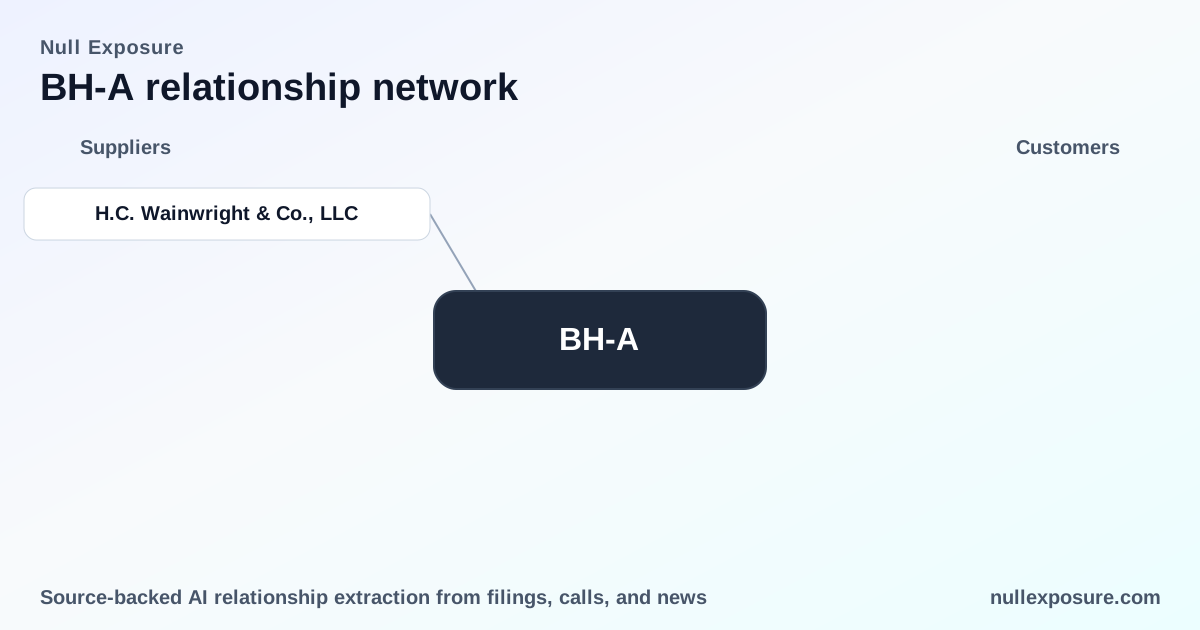
Biglari Holdings (BH-A) — Customer Relationships and What They Mean for Investors
Biglari Holdings operates and monetizes primarily as an owner-operator and franchisor in the restaurant sector, collecting operating cash flow from company-owned outlets and fee/royalty streams from franchise relationships. The business generates top-line from restaurant sales and ancillary income from franchise arrangements; recent filings show trailing revenue of $395.3M and adjusted EBITDA near $62.6M, but the company reports a negative net result on a per‑share basis. For investors and operators evaluating Biglari’s customer and franchise exposures, the key questions are concentration of franchise counterparties, the contractual posture of third‑party partners, and the sensitivity of store-level economics to company pricing or menu decisions. Learn more at https://nullexposure.com/.
Quick read: why the single-citation relationship matters
A recent media mention links a long‑standing Steak ’n Shake franchisee, Stuller Inc., to a public dispute over a low‑price menu initiative that the franchisee predicted would depress sales materially at its locations. This is direct evidence that franchisee economics remain a live operational risk for Biglari’s restaurant businesses: franchisee pushback on corporate pricing can translate to litigation, brand fragmentation, or revenue pressure at store level. A Mashed feature covering franchise dynamics documented the claim, noting the projected sales impact across five stores in FY2022 (Mashed, reported May 2026). (Source: https://www.mashed.com/224393/the-untold-truth-of-steak-n-shake/)
The customer relationship universe: what was found
- Stuller Inc. — A Mashed article recounts that Stuller, described as the longest-operating Steak ’n Shake franchisee, projected that a corporate $4 menu would reduce annual sales at its five stores by about $900,000 in FY2022. This places Stuller in the role of an active franchise customer raising economic objections to corporate pricing strategy (Mashed, May 2026). Source: https://www.mashed.com/224393/the-untold-truth-of-steak-n-shake/
This report is the only customer‑facing relationship surfaced in the reviewed results; it is a direct, store-level indicator of franchise tension rather than a passive supplier relationship.
What the constraint signals tell us about operating posture
The textual constraints extracted alongside the relationship search produced two role signals — “distributor” and “seller” — with moderate confidence. The supporting excerpts refer to other firms (Southern Pioneer and Abraxas Petroleum) rather than naming a Biglari counterparty, so treat these as company‑level signals about how relationships are characterized in the coverage set rather than proofs tied to a particular partner.
- Distributor role signal (max_confidence 0.80): the excerpt references an insurer (Southern Pioneer) underwriting nationwide through agents — a vocabulary set that elevates distribution channels and third‑party intermediaries as an operational theme. Company‑level inference: Biglari’s external relationships are discussed in contexts that emphasize distribution networks and intermediated flows of product and risk.
- Seller role signal (max_confidence 0.80): the excerpt about Abraxas Petroleum selling undeveloped reserves signals transactional language — sales contracts and asset dispositions — are present in the corpus. Company‑level inference: commercial agreements and discrete sales events figure into how stakeholders frame Biglari’s counterparties.
Taken together, these signals indicate an operational model where third‑party contractual roles (distributors, sellers, franchisees) are meaningful levers. They also imply an information environment in which partner actions and one‑off transactions draw public attention, which raises monitoring and governance requirements for Biglari.
How these relationship signals map to investment risks and levers
- Contracting posture: The presence of active franchisee pushback (Stuller) and textual emphasis on distribution/sales roles indicate that Biglari’s outcomes depend on negotiated, legally enforceable franchise contracts and distributor arrangements. Investors should assess contract terms, change‑of‑pricing clauses, and dispute resolution mechanisms in filings and franchise agreements.
- Concentration: The media focus on a long‑running franchisee with five stores suggests that certain franchisees represent material local revenue runs and therefore concentrated operational risk at the store level. Track franchisee count and single‑partner store concentrations in SEC disclosures.
- Criticality: Franchisee economics are critical to near‑term sales volatility. A single franchisee’s public rejection of corporate pricing can generate negative press and localized revenue loss, potentially seeding broader franchisee resistance.
- Maturity of relationships: The descriptor “longest‑operating franchisee” implies mature, entrenched counterparty relationships that carry legacy expectations and bargaining power; long tenure increases the complexity of implementing sweeping corporate changes.
Operational and financial context you should weigh
Biglari’s public figures show positive operating margin (3.6% TTM) but a negative net result on a per‑share basis, reflecting non‑operating items or capital structure effects; revenue per share and book value are large on a per‑share basis, and institutional ownership is high (over 93%). These facts shape counterparty dynamics:
- High institutional ownership and concentrated franchise economics increase scrutiny and the likelihood that material franchise disputes will impact investor perception and stock volatility.
- Positive operating margin alongside a negative bottom line underscores the importance of operating cash flows from restaurants and franchise royalties; partner actions that cut into same‑store sales will feed directly into core operating cash performance.
Practical investor takeaways
- Monitor franchise litigation and public franchisee statements closely. The Stuller example demonstrates that store-level objections to corporate menu decisions have measurable sales impact and publicity risk (Mashed, May 2026).
- Request or review contract disclosure where available. Investors and operators should prioritize clarity on pricing change mechanisms, termination rights, and revenue-sharing terms to assess who bears downside from aggressive menu or promotional strategies.
- Assess counterparty concentration. Identify franchisees that represent outsized store counts or revenues; concentrated counterparties introduce outsized operational risk.
- Factor maturity and bargaining power into scenario modeling. Long-tenured franchisees can block or slow corporate initiatives, creating a governance and execution risk layer distinct from pure retail competition.
Bottom line: where this leaves investors
The available customer‑relationship signal set is focused and instructive: one media-documented franchisee (Stuller Inc.) has publicly quantified a meaningful sales impact from corporate pricing changes, and textual role signals suggest third‑party distributor/seller dynamics are part of the operating narrative. For holders and prospective buyers of BH‑A, that combination elevates franchise governance and contract quality as primary value levers.
If you are conducting diligence or managing exposure, prioritize primary‑source franchise agreements, event-driven monitoring of franchisee statements, and a review of operating‑margin sensitivity to same‑store sales swings. For a deeper cross‑relationship program and ongoing monitoring tools, visit https://nullexposure.com/.
Bold takeaway: franchisee economics are a live, material driver of Biglari’s operating performance — governance of those relationships is the single most actionable lever for investors.