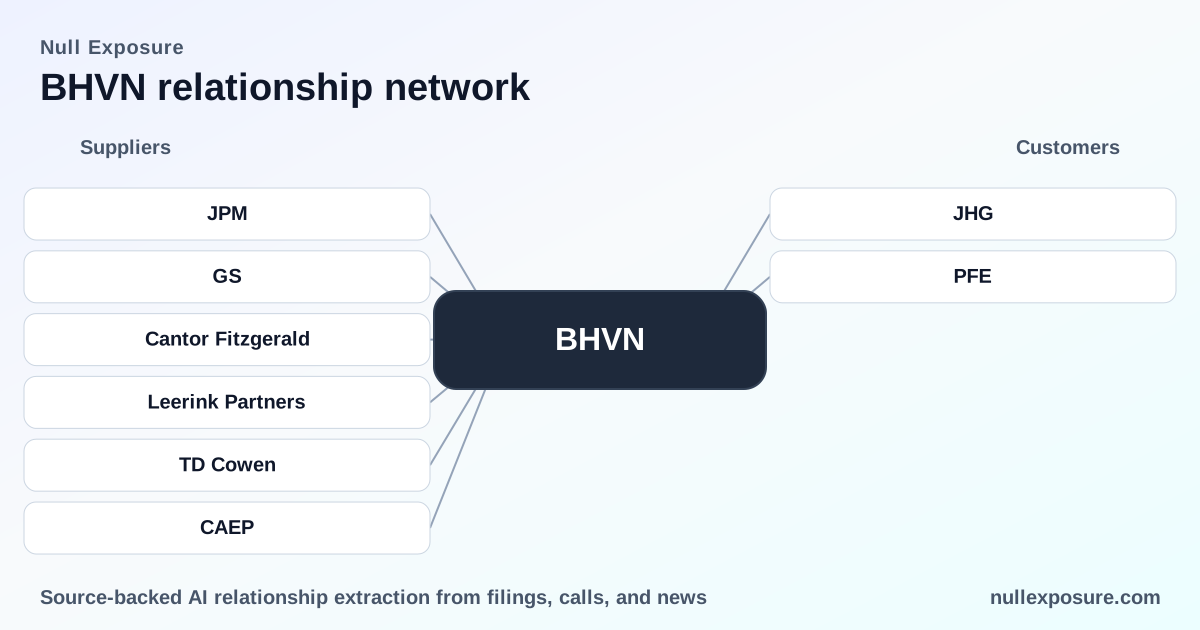
Biohaven (BHVN) — Customer Relationships and Commercial Implications
Biohaven is a clinical-stage biopharmaceutical company that develops therapies for neurological and rare disorders and currently monetizes through strategic asset transactions, licensing/royalty arrangements, and equity financings rather than recurring product revenue. With no recorded revenue in the latest trailing twelve months and a history of major asset sales, Biohaven’s commercial profile is driven by one-off monetization events, capital markets access, and future commercialization risk tied to regulatory approvals and third‑party payors. For a deeper assist on mapping counterparty exposure and transactional activity, visit https://nullexposure.com/.
Executive snapshot — what investors should hold top of mind
Biohaven’s operating model is not a traditional product‑sales company today. The firm converted R&D value into realized capital through the sale of its CGRP franchise to Pfizer in 2022, and it supplements liquidity with equity placements such as the January 2026 sale to Janus Henderson. Key investor levers are access to capital, outcome of late‑stage clinical programs, and the company’s ability to commercialize new approvals globally under third‑party reimbursement regimes.
Headline relationships investors must track
Janus Henderson — equity financing partner
Biohaven agreed to sell 12.5 million shares to Janus Henderson Investors for gross proceeds of $125 million, a transaction announced in early January 2026 that strengthens the company’s capital position while increasing share count and dilution for existing holders. According to TradingView’s coverage of the January 6, 2026 announcement, the placement was explicit and priced as part of Biohaven’s near‑term financing activities; media summaries noted dilution as a material consideration for shareholders. (TradingView, Jan 6, 2026 — https://www.tradingview.com/news/tradingview:9fc240b473d7a:0-biohaven-ltd-announces-125-million-share-sale/) Additional reporting that same period reiterated the financing and its dual effect on liquidity and dilution. (Intellectia.ai coverage, March 2026 — https://intellectia.ai/news/stock/biohaven-ltd-nysebhvn-shares-surge-342-to-1210-amid-positive-clinical-data)
Pfizer — purchaser of core commercial franchise
In October 2022 Pfizer completed acquisition of Biohaven’s CGRP business, converting a core commercial franchise into immediate proceeds and altering Biohaven’s future revenue mix by removing an established marketed product line. PredictStreet’s December 26, 2025 market commentary and FinancialContent aggregation restate the October 2022 closing and frame the transaction as a major cash realization and strategic divestment for Biohaven. (PredictStreet / FinancialContent, Dec 26, 2025 — https://markets.financialcontent.com/wral/article/predictstreet-2025-12-26-biohaven-ltd-bhvn-a-high-stakes-clinical-crossroad-in-neuroscience-and-immunology)
What every relationship in the results collectively implies
The documented relationships fall into two functional buckets: capital providers (Janus Henderson) and strategic acquirers / commercialization partners (Pfizer). Together these relationships demonstrate Biohaven’s reliance on external capital markets and one‑time strategic transactions to finance operations and realize R&D value rather than recurring therapeutic sales today.
- Janus Henderson’s investment is a straight equity financing that reduces near‑term cash strain but increases share count — a classic tradeoff between solvency and dilution.
- Pfizer’s 2022 purchase is a strategic disposition that materially altered Biohaven’s product portfolio and revenue runway by monetizing an existing commercial franchise.
Company‑level constraints and what they signal about Biohaven’s operating model
The filings and evidence record several constraints that are company‑level signals rather than ties to a single counterparty:
- Counterparty mix includes government payors: Biohaven’s commercialization and reimbursement environment is structured around third‑party payors, including Medicare/Medicaid and private insurers, indicating high reimbursement sensitivity and the need for payor negotiation capabilities.
- Global commercialization ambition: The company explicitly plans regulatory and commercial activity in the United States, EU and other global markets, signaling geographic diversification of commercial risk but also the complexity and cost of multi‑jurisdiction launches.
- Buyer role and reimbursement dependence: Evidence positions Biohaven in a market where coverage and reimbursement adequacy drive sales outcomes, an operating posture that requires payer evidence generation and contracting sophistication.
- Core product orientation: The company’s focus on core therapeutic candidates in neuroscience, immunology, and oncology identifies a concentrated product portfolio where clinical trial outcomes and regulatory timing are primary business drivers.
These signals describe a company that is capital‑intensive, clinically binary in valuation, and commercially dependent on payor acceptance, with operating choices that prioritize strategic asset monetization and capital raises to fund development.
Investment implications and risk framework
- Liquidity vs. dilution tradeoff is active: The Janus Henderson placement illustrates management’s willingness to use equity issuance for liquidity rather than debt, which reduces near‑term solvency risk but increases long‑term EPS pressure through dilution. (TradingView and Intellectia.ai coverage, Jan–Mar 2026)
- Asset monetization is core to prior value realization: The Pfizer CGRP acquisition demonstrates Biohaven’s ability to extract value from successful assets, but it also reduces recurring revenue potential and heightens the importance of the remaining pipeline. (PredictStreet/FinancialContent, Dec 2025)
- Commercial execution risk is payor‑driven: With government and private payors central to future launches, reimbursement negotiations will determine commercial scale for any approved candidate.
- Concentration and clinical binary risk: A focused pipeline means single trial outcomes will swing valuation materially; this profile suits investors who tolerate high event risk in exchange for asymmetric upside.
Tactical takeaways for investors and operators
- For capital allocators: Monitor dilution cadence and financing terms — equity placements like the Janus Henderson sale set reference points for future raises and residual share count.
- For partners and purchasers: Payor strategy and global regulatory sequencing should be assessed before engaging on commercialization or licensing because Biohaven’s model depends on successful global market access.
- For risk managers: Track clinical milestones and regulatory filings as immediate value triggers; the company’s lack of trailing revenue means milestone outcomes are primary valuation drivers.
For a structured evaluation of Biohaven’s counterparty exposures and event timelines, consider a tailored mapping solution at https://nullexposure.com/ — it’s designed for investors who need a concise view of financing flows, partner concentration, and commercial counterparties.
Bottom line
Biohaven operates as a development‑stage biopharma that monetizes through strategic disposals and capital markets access while depending on payor acceptance and successful late‑stage clinical outcomes to build recurring revenues. Investors should weigh the immediate balance‑sheet relief from financings against dilution and retain focus on clinical readouts and reimbursement strategy as primary determinants of value.