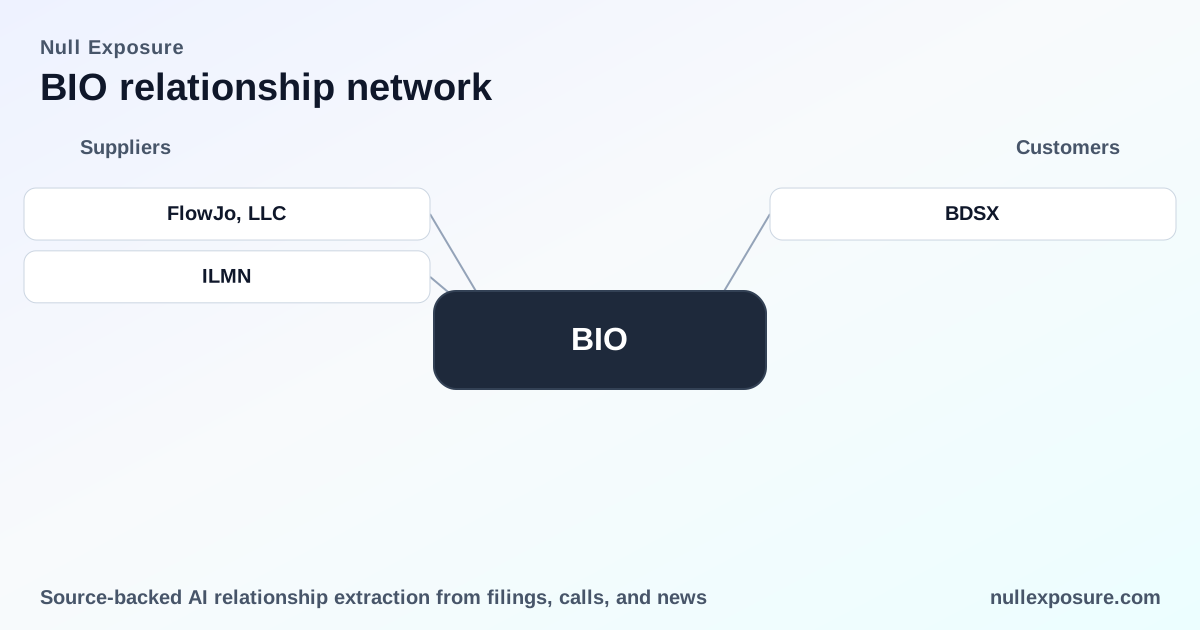
Bio‑Rad Laboratories (BIO): customer relationships that power recurring diagnostics revenue
Bio‑Rad Laboratories sells instruments, reagents and services into life‑science research and clinical diagnostics; it monetizes through point‑of‑sale product transfers, longer‑term reagent and consumable streams tied to installed instruments, and licensing/IVD partnerships that convert research platforms into regulated diagnostics. For investors this is a hardware‑anchored recurring revenue model: instrument placements drive repeat purchases of consumables and often evolve into co‑development or licensing arrangements with diagnostic partners.
For a deeper look at these customer ties and strategic partners, visit https://nullexposure.com/.
Key takeaway: Bio‑Rad’s customer relationships are concentrated in diagnostic and research partners that commercialize assays on Bio‑Rad’s Droplet Digital PCR (ddPCR) platforms, creating a mix of product sales, usage‑based reagent revenue and licensing or co‑development arrangements that support margin durability.
How these customer links translate into cash flow
Bio‑Rad’s model blends three monetization levers: (1) one‑time equipment revenue recognized at transfer of control, (2) usage‑based consumable and reagent sales that scale with sample volumes, and (3) license or co‑development revenue for IVD conversions and regulatory submissions. Company disclosures highlight reagent rental/usage arrangements and functional licensing as important revenue mechanics, and international diversification (roughly 60% non‑U.S., Europe the largest region) makes revenues geographically resilient. These characteristics produce recurring, predictable revenue streams but create dependence on partners’ successful clinical and regulatory launches.
CTA: Learn more about how platform vendors monetize clinical partnerships at https://nullexposure.com/.
Operating constraints that shape commercial execution
- Contracting posture: Bio‑Rad recognizes revenue from functional IP licenses at a point in time and often structures reagent rental/usage arrangements with variable payments rather than fixed minimums. This signals a hybrid contracting posture: product sales plus variable, volume‑linked commercial terms.
- Concentration and criticality: Laboratories standardize on platforms; an installed base becomes a critical and sticky revenue source because assays, software and reagents are platform‑specific. That makes Bio‑Rad strategically important to partners developing IVD assays.
- Maturity and stage: Many partner relationships are active and in clinical/regulatory stages, moving from research to commercial IVD status—this raises near‑term revenue optionality but also ties Bio‑Rad to partners’ regulatory timelines.
- Geography and counterparty mix: Bio‑Rad operates globally with significant EMEA exposure and sells into government, academic and commercial diagnostic labs — a diversified buyer base that still centers on healthcare institutions.
- Service footprint: Reagent‑rental and instrument maintenance are material service lines that underpin recurring revenue and customer retention.
Customer relationships — what investors need to know
Insight Molecular Diagnostics
Bio‑Rad is a named instrumentation and reagents partner for Insight Molecular Diagnostics’ kidney transplant monitoring assay (GraftAssureDx), supporting the company’s path toward FDA submission and a kitted IVD offering designed for clinical deployment. Source: company statements reported in an earnings‑call transcript (Investing.com, May 2, 2026) and press releases (GlobeNewswire, March 2026).
IMDX
IMDX (insight/IMDX references in filings and press) explicitly credits Bio‑Rad for supplying finalized equipment and reagents used in precision and repeatability studies as it completes development work ahead of commercial launch. This ties Bio‑Rad to IMDX’s manufacturing and IVD readiness. Source: GlobeNewswire press release (March 3, 2026).
Incyte Molecular Diagnostics (formerly OncoCyte)
Bio‑Rad referenced support for the company formerly known as OncoCyte in an earnings‑call transcript, noting technical assistance on a kidney IVD solution and FDA pathway work toward 2026. This is another example of Bio‑Rad converting research‑grade ddPCR engagements into clinical diagnostic workflows. Source: Investing.com earnings‑call transcript (May 2, 2026).
Biodesix, Inc.
Biodesix has signed an expanded partnership to develop, clinically validate and pursue regulatory submissions for IVD assays that run on Bio‑Rad’s QX600 ddPCR platform, focused on oncology genomic markers; the collaboration explicitly covers development and regulatory filing responsibilities. Source: Biodesix press release cited on Yahoo Finance and GlobeNewswire (March 9, 2026; multiple March 2026 filings).
BDSX
Listed references to BDSX mirror Biodesix’s public announcements that the company will leverage Bio‑Rad ddPCR technology for high‑complexity oncology assays and presentations at scientific meetings demonstrate cross‑platform usage in their workflows. Investors should interpret BDSX‑BIO as a commercially oriented co‑development partnership with near‑term clinical validation activity. Source: multiple media reports and conference materials (AACR / GlobeNewswire, March–April 2026).
Genioscopy
Bio‑Rad’s ddPCR technology underpins Genioscopy’s ColiSense colon cancer screening test, a relationship highlighted on Bio‑Rad’s earnings calls and indicating that diagnostics developers are building end‑to‑end assays on Bio‑Rad platforms for screening use‑cases. Source: Investing.com earnings‑call transcript (May 2, 2026).
Geneoscopy (variant reporting)
Alternate press excerpts list “Geneoscopy” advancing a colon cancer screening test powered by Bio‑Rad ddPCR technology; the duplicative naming in press coverage underscores that multiple diagnostic innovators are adopting Bio‑Rad’s ddPCR as the assay engine for screening and monitoring applications. Source: Investing.com earnings‑call transcript (May 2, 2026).
Investment implications and risk focus
- Revenue durability: The installed‑base economics and reagent rental/usage pricing create predictable recurring revenue, supporting margin stability. Bio‑Rad’s FY‑2025 metrics show gross profits and operating margins consistent with this model.
- Regulatory concentration risk: Bio‑Rad’s upside is tied to partners successfully completing clinical validation and FDA approvals; those timelines can accelerate or delay the revenue conversion of co‑development deals. The IMDX and Biodesix programs are examples of revenue optionality contingent on regulatory events.
- Commercial concentration across platforms: Heavy adoption of the QX600/ddPCR family creates a single‑platform dependency risk if competing technologies win market share. Conversely, it increases switching costs for customers once assays are validated on Bio‑Rad systems.
- Geographic exposure: With ~60% of sales generated outside the U.S. and Europe the largest international market, Bio‑Rad benefits from diversification but is exposed to international reimbursement and regulatory variability.
Bottom line
Bio‑Rad’s customer relationships are not simple supplier contracts; they are co‑development and platform‑anchored partnerships that convert instrumentation placements into predictable consumable revenue and create high operating leverage to successful IVD launches. The critical value for investors is recurring consumables and the optionality embedded in partners’ regulatory milestones.
For a practitioner‑level view of platform monetization and partner exposure, explore further at https://nullexposure.com/.