Bio‑Rad (BIO‑B): Customer relationships that steer recurring diagnostics revenue
Bio‑Rad Laboratories operates and monetizes through a two‑pronged model: it sells and rents specialized instruments and sells the high‑margin reagents and consumables that run on those platforms, and it augments that base with services, maintenance and IP licensing. This installed‑base model converts one‑time hardware sales into long‑lived recurring revenue streams driven by per‑test reagent consumption and service contracts. For a concise view of the company and its customer footprint, visit https://nullexposure.com/.
Why the customer angle drives valuation — and what to watch for
Bio‑Rad’s commercial structure creates predictable annuity‑style economics where installed instruments lock in downstream consumable purchases. Company filings describe a reagent‑rental program that charges customers on a per‑test basis, with rental agreements often including instrument maintenance and training; these arrangements typically have variable, volume‑linked payments rather than fixed minimums. This contracting posture reduces upfront price sensitivity for customers while increasing lifetime value for Bio‑Rad, but it also introduces revenue volatility tied to testing volumes.
Geography and counterparty mix are material. For the year ended December 31, 2025, the company reported roughly $1,022.7 million of U.S. sales, $881.8 million in Europe and $513.3 million in Asia, with about 40% of sales from the U.S. and 60% international, making Europe the single largest international market. Bio‑Rad’s customer base explicitly includes universities, pharmaceutical and biotech firms, industrial labs and government agencies, giving the company a blend of commercial growth prospects and institutional stability. The installed‑base nature of the business is a mature commercial relationship signal: once labs adopt a platform, they standardize on reagents and consumables, producing recurring revenue.
Customer relationships on the radar — what each partnership actually is
Below are every customer/partner mention in the available records, presented with a plain‑English summary and the source context.
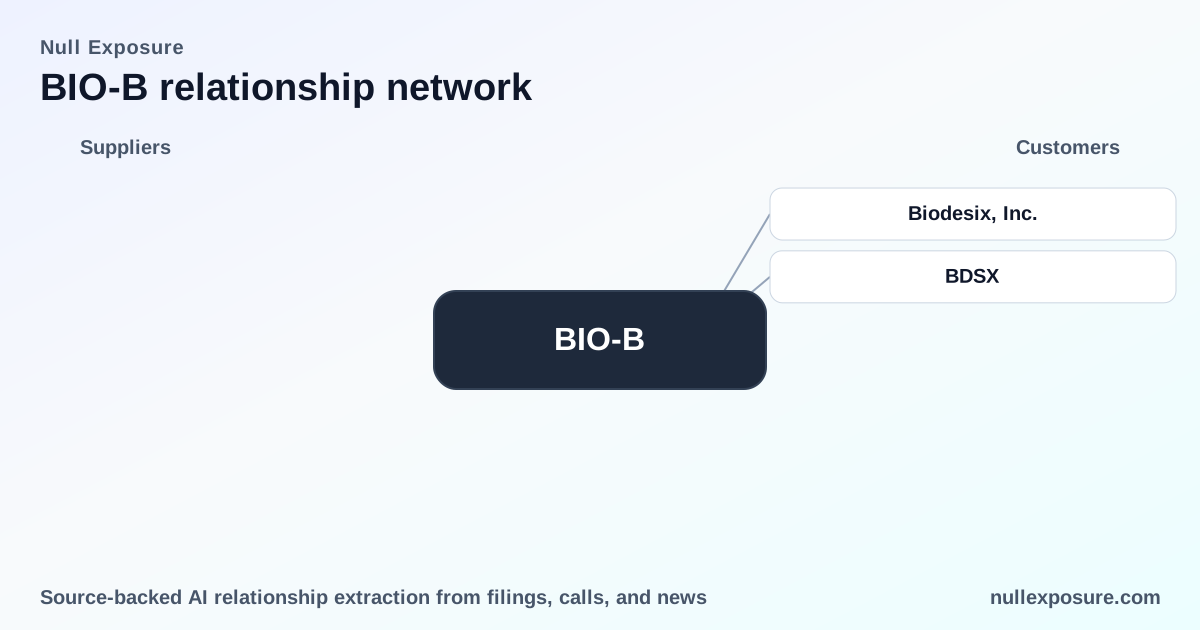
Biodesix, Inc. (news; FY2025)
Bio‑Rad expanded a collaboration with Biodesix to develop and pursue regulatory approval for new in‑vitro diagnostic assays using Bio‑Rad’s Droplet Digital PCR technology, initially targeting an ESR1 mutation test for advanced breast cancer. This is a commercial and regulatory collaboration aimed at embedding Bio‑Rad’s QX600 ddPCR as the assay platform. Source: SahmCapital coverage (article dated 2025‑10‑22) reporting the FY2025 announcement.
BDSX (news; FY2025)
Coverage described Bio‑Rad’s expanded partnership with Biodesix around the QX600 ddPCR platform and positioned that work within the broader diagnostics ecosystem tied to blood collection and automation‑led diagnostics. The mention frames Bio‑Rad’s technology as central to multi‑marker oncology assays that feed into clinical diagnostics workflows. Source: SahmCapital analysis (article dated 2025‑12‑15).
Biodesix (alternate mention / FY2025)
A second mention reiterates the same strategic emphasis: Bio‑Rad’s QX600 ddPCR platform is being integrated into multi‑marker oncology assay development with Biodesix, reinforcing the company’s push into precision oncology diagnostics. Source: SahmCapital analysis (article dated 2025‑12‑15).
BDSX (10‑K disclosure; FY2024)
BDSX’s FY2024 10‑K documents a nonexclusive license and supply agreement entered with Bio‑Rad in August 2019, confirming a formal commercial and IP relationship that predates the recent press coverage. The filing establishes a contractual supplier/licensor linkage that underpins recurring reagent and consumable sales tied to the licensed technology. Source: BDSX Form 10‑K (filed year‑end 2024).
IMDX (news; FY2026)
IMDX is conducting large‑scale precision and repeatability studies using its finalized IVD software combined with finalized Bio‑Rad equipment and reagents, a step typically required before formal regulatory submission for a transplant‑rejection diagnostic. This positions Bio‑Rad’s instruments and reagents as the reference platform for IMDX’s pending clinical diagnostic offering. Source: Clinical Lab Product Magazine reporting (May 3, 2026).
How these relationships translate into strategic value and risk
- Strategic value: Partnerships with Biodesix and IMDX show Bio‑Rad is moving beyond instrument sales into co‑development and regulatory pathways that lock in platform usage for higher‑value oncology and transplant diagnostics. The nonexclusive license with BDSX validates Bio‑Rad’s technology licensing as a revenue lever and strengthens cross‑company product cycles.
- Revenue quality: The company’s usage‑based reagent rental and consumable model creates recurring, higher‑margin revenue streams anchored to installed instruments. That creates durable cash flow as labs standardize on platforms.
- Visibility and volatility: Because many contracts use variable, per‑test pricing, reported revenue is sensitive to testing volumes and macro demand swings — a bet on sustained lab throughput.
- Geographic diversification: With 60% of sales outside the U.S. and substantial EMEA and APAC exposure, Bio‑Rad benefits from diversified end markets but remains exposed to regional reimbursement and regulatory cycles.
- Counterparty mix: The presence of government customers provides countercyclical stability for certain product lines, while commercial biotech and pharma partnerships offer higher‑growth opportunities but more cyclical demand.
- Maturity: The installed‑base dynamic is a mature commercial stage driver — growth now leans on expanding assays and higher per‑instrument consumption rather than one‑off device placements.
For investors evaluating customer concentration, contract risk, or product stickiness, these relationship footprints matter: they signal technology entrenchment (ddPCR/QX600), recurring per‑test economics, and deeper co‑development pathways that raise lifetime revenue per customer.
For a rigorous view of Bio‑Rad’s partner landscape and how these deal structures affect cash flow predictability, see the company overview and filings at https://nullexposure.com/.
Bottom line for investors
Bio‑Rad’s customer relationships coalesce into a clear commercial thesis: hardware is the anchor; reagents and co‑developed assays are the recurring annuity. Partnerships with diagnostics developers such as Biodesix, BDSX and IMDX accelerate clinical adoption of Bio‑Rad’s platforms and convert installed instruments into sustained revenue streams. The company’s usage‑based contracting improves lifetime value but transfers short‑term revenue volatility risk to investors through volume sensitivity. Geographic diversification and government customers temper that volatility.
Key investor takeaway: This is a diagnostic‑platform company monetizing stickiness and recurring reagent economics, with accelerating clinical partnerships that enhance long‑term revenue density but preserve near‑term sensitivity to testing volumes.