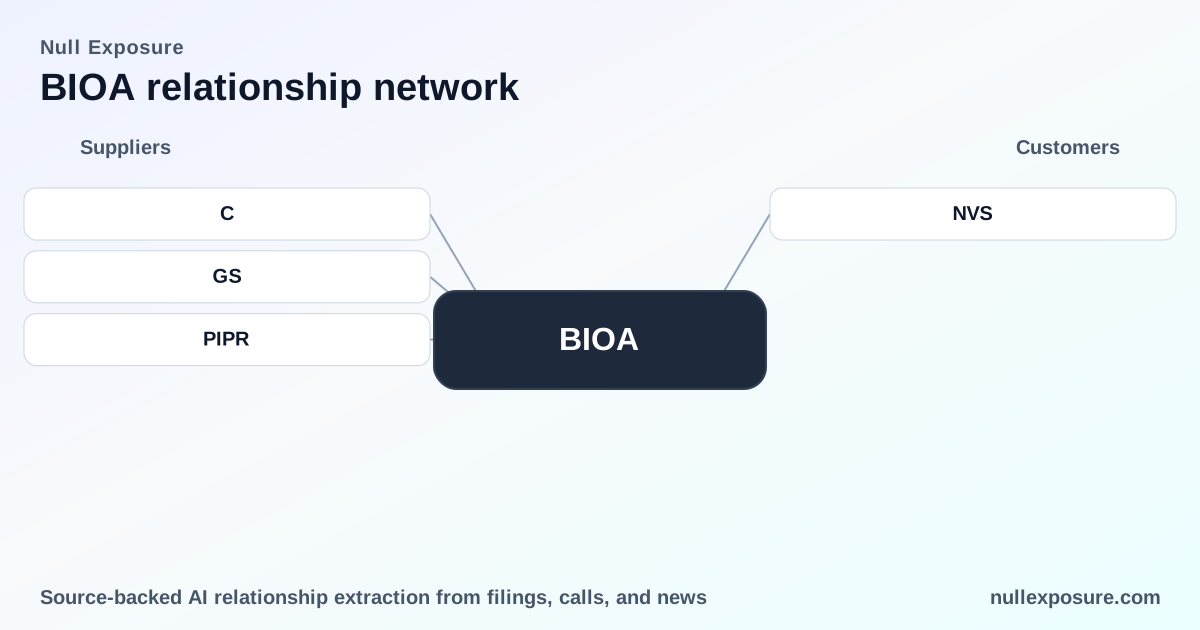
BioAge Labs (BIOA): Collaboration-led revenue, platform validation, concentrated counterparty exposure
BioAge monetizes its discovery platform primarily through multi-year research collaborations, option agreements, and milestone/license arrangements with large pharmaceutical partners. The company converts discovery into near-term cash by selling R&D services and optioned assets to pharma — collaborations are both validation and the dominant driver of reported revenue growth. For investors, the core thesis is straightforward: platform de-risking via blue‑chip partners accelerates value realization but concentrates revenue and commercial dependency into a handful of counterparties.
For more on relationship intelligence and counterparty signals, visit https://nullexposure.com/.
What Novartis is paying for: research collaboration that began in 2025
BioAge recognized incremental collaboration revenue tied to a multi‑year research collaboration with Novartis as the work commenced in 2025. Management reported a $2.1 million uplift in collaboration revenue during the third quarter of 2025 and a further $9.0 million increase recognized in fiscal 2026 as the program scaled. According to BioAge’s investor release, the increases reflect revenue recognition under the multi‑year Novartis collaboration as work commenced in 2025 (GlobeNewswire, Nov 6, 2025; GlobeNewswire, Mar 24, 2026).
Lilly ExploR&D: strategic antibody development partnership
BioAge is progressing a strategic collaboration with Lilly ExploR&D to develop therapeutic antibodies against metabolic aging targets identified by BioAge’s discovery platform. This relationship underscores BioAge’s model of translating platform hits into partnered antibody programs that carry both near‑term research revenue and longer‑term option value. Management summarized the Lilly collaboration in its full‑year 2025 business update (GlobeNewswire, Mar 24, 2026).
JiKang Therapeutics: optioned APJ agonist nanobody
Under an exclusive option agreement announced in June 2025, BioAge and JiKang are jointly advancing an APJ agonist nanobody that management reports demonstrates at least 10‑fold greater potency than apelin, now progressing toward IND‑enabling studies. This is a classic option structure — BioAge advances early work and grants exclusivity or options to a partner that will take the program further in exchange for near‑term R&D collaboration and potential downstream economics. The program detail and option arrangement were described in BioAge’s March 24, 2026 update (GlobeNewswire, Mar 24, 2026).
How recent partner activity shows up in the numbers
BioAge’s collaboration revenue moves are large relative to the company’s trailing revenue base: the reported $9.0 million incremental collaboration revenue in FY2026 compares directly to BioAge’s TTM revenue of approximately $9.0 million, indicating that one or two partner engagements materially shift reported top‑line growth. Management disclosed these collaboration revenue recognitions in quarterly and full‑year releases (GlobeNewswire, Nov 6, 2025; GlobeNewswire, Mar 24, 2026).
Contracting posture, concentration and maturity — what constraints reveal
Company disclosures and contract excerpts give a clear signal about BioAge’s operating model:
- Contracting posture: BioAge operates principally as a funded discovery partner and service provider to larger biopharma, using commercial research and option agreements to externalize development cost while capturing upside through milestones and licenses. This posture is explicit in past commercial research funding agreements disclosed by the company.
- Concentration risk: Collaboration revenue movements show that a small number of high‑quality counterparties drive a disproportionate share of near‑term revenue; that structure accelerates monetization but raises client concentration risk versus a broad, product‑sales base.
- Maturity of programs: Revenue recognition tied to work commencing in 2025 indicates these partnerships are entering early execution phases rather than late‑stage commercialization; the economic returns remain tied to program progression and future milestones.
- Evidence of selectivity and lifecycle management: Company filings show BioAge entered a Commercial Research Funding Agreement with Wellcome Leap in September 2023, received $3.3 million in grant funding for a COPD trial, and later informed Wellcome Leap of plans to terminate the trial for commercial feasibility reasons; the Wellcome Leap Agreement was terminated May 31, 2024. This sequence signals disciplined go/no‑go decisioning and a willingness to exit partnerships that do not meet commercial thresholds (company filings and Wellcome Leap disclosures).
Relationship summaries — concise, sourced takeaways
- Novartis (NVS): A multi‑year research collaboration began execution in 2025, producing $2.1 million of collaboration revenue during Q3 2025 and a subsequent $9.0 million increase recognized in fiscal 2026 as work ramped. (GlobeNewswire releases, Nov 6, 2025; Mar 24, 2026)
- Lilly ExploR&D (LLY): BioAge is advancing therapeutic‑antibody discovery programs with Lilly ExploR&D, leveraging platform target identification to create partnered antibody opportunities that generate research revenue and downstream option economics. (GlobeNewswire, Mar 24, 2026)
- JiKang Therapeutics: An exclusive option agreement announced in mid‑2025 covers an APJ agonist nanobody with reported potency advantages and joint progression toward IND‑enabling work. (GlobeNewswire, Mar 24, 2026)
Operational and investor implications
- Validation by blue‑chip partners is a de‑risking signal for the platform, raising the probability that platform discoveries convert to fundable programs or licensing events. Novartis and Lilly as counterparties materially improve BioAge’s technical and commercial credibility.
- Revenue volatility is intrinsic to the model. Because collaboration cash flows can be lumpy and concentrated, quarter‑to‑quarter revenue will track partner milestones and work commencements rather than steady product sales.
- Balance between upside and dependency. The option/collaboration model preserves upside participation for BioAge while shifting many downstream development costs and risks to partners, but it also creates dependency: partner selection, milestone timing, and commercial decisions by counterparties will largely determine BioAge’s near‑term financial trajectory.
- Execution discipline is visible. The Wellcome Leap termination after the COPD trial highlights that management will discontinue programs that fail commercial feasibility tests rather than extend costs indefinitely — a favorable signal for capital allocation discipline.
For institutional users evaluating customer relationships, the decisive factors are partner quality, the timing of work commencements and milestone schedules, and the balance between collaboration revenue and the company’s small standalone sales base. Investors should treat collaboration recognitions as signals of platform traction but not as guarantees of sustainable product revenue.
Explore more counterparty intelligence and relationship signals at https://nullexposure.com/.
Conclusion: BioAge’s model is collaboration‑centric and validated by top‑tier pharma partners, which materially accelerates value recognition but concentrates revenue and creates sensitivity to partner program timing and commercial decisions. Operators and investors should prioritize tracking partner milestones, option exercise triggers, and disclosures of work commencements for a clear read on near‑term cash flow and platform value realization.