Bioceres Crop Solutions (BIOX): Partner Network that Sells Scale — and Timing Risk
Bioceres monetizes a hybrid model: it develops biotech traits (notably HB4®), licenses those traits to distribution partners, and sells crop inputs and bio-control products through owned brands and third‑party licensees. Revenue mixes include direct product sales and milestone/royalty-type receipts from large partners; that duality drives growth potential but also creates measurable counterparty and timing exposure for investors.
Learn how these customer relationships map to commercial scale and near-term earnings drivers at https://nullexposure.com/.
How BIOX’s partners translate into cash flow and risk
Bioceres is a commercial-stage agricultural inputs company with recurring product revenues (Revenue TTM $318.2M) and modest adjusted operating profitability (Operating Margin TTM ~8.9%). The company’s commercial footprint depends on third‑party distribution and licensing agreements that unlock markets for HB4 and for bio-control solutions branded through Rizobacter. That structure delivers leverage to successful regulatory approvals and partner execution, while concentrating revenue and exposing the company to timing idiosyncrasies — notably the Syngenta arrangement that has produced quarter-to-quarter volatility.
Key operational signals:
- Contracting posture: Partner-led commercialization — Bioceres licenses traits and leverages distributors, rather than vertically owning global go‑to‑market for every market.
- Concentration: A small number of large partners (Syngenta, GDM/affiliates) materially influence quarterly results and cash receipts.
- Criticality: Partners are critical for market access in regulated markets such as the U.S. (HB4 wheat) and major Brazilian channels for bio-insecticides.
- Maturity: The business is commercial but still in rollout for HB4 in many markets; revenues currently come from product sales plus structured partner payments.
Relationship roll call — what each partner does and why it matters
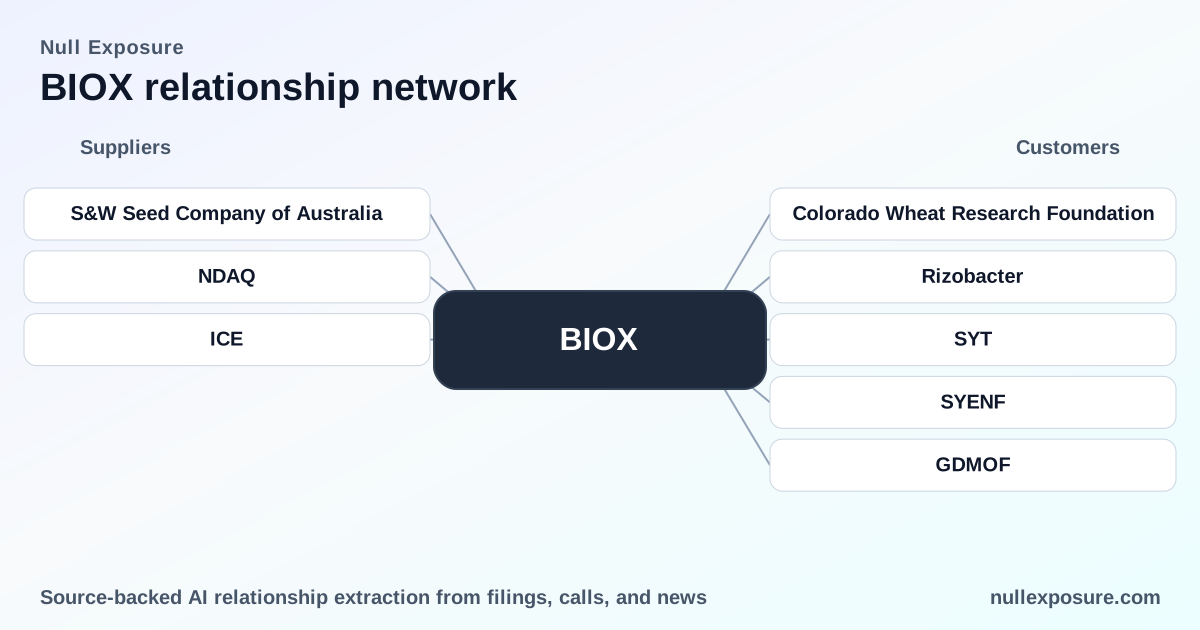
Colorado Wheat Research Foundation (CWRF)
Bioceres granted the Colorado Wheat Research Foundation exclusive, sublicensable rights to develop and commercialize HB4® wheat in the U.S., a move that positions Bioceres to use a local research and distribution partner to open a critical market for HB4. Source: Capital Press (Sept 24, 2025) and related coverage of the CWRF collaboration (AgInfo report, FY2025).
Rizobacter
Rizobacter is Bioceres’ commercial brand and channel in Brazil for bio-control solutions; Bioceres markets its bio-insecticide and bio-control products under the Rizobacter label and through other licensed brands, anchoring its Brazilian commercial footprint. Source: SeedWorld (May 2024) and Global‑Agriculture coverage (FY2024).
SYT (earnings call reference)
Bioceres’ filings and investor calls attribute part of FY2025 revenue dynamics to timing differences tied to a Syngenta agreement, which caused quarter misalignment and a year‑over‑year revenue decline in the fiscal year. Source: Bioceres 2025 Q4 earnings call (2025Q4).
Syngenta (company name)
Syngenta is a major strategic counterparty whose contractual payments and timing materially affect reported revenue; an initial downpayment and the calendar-based timing of the Syngenta arrangement created a $15.7M timing differential in 3Q25, underscoring the partner’s revenue significance. Source: StockTitan summary of fiscal 3Q25 results (FY2025) and Bioceres’ 2025 Q4 earnings call.
SYENF (tickered mention)
External press referenced Syngenta in stock‑oriented reporting under tickers such as SYENF while recounting the same revenue timing dynamics; market commentary has treated Syngenta-related receipts as a principal driver of short-term volatility in Bioceres’ reported numbers. Source: StockTitan (FY2025).
Florimond Desprez
Bioceres identified European distributors such as Florimond Desprez as intended partners to distribute HB4 in select markets, indicating a go‑to‑market strategy that leverages established seed and distribution networks for regional rollouts. Source: Dolarhoy analysis and reporting on distribution strategy (FY2025).
GDM
GDM is named as a commercial distribution partner for HB4 in several markets; Bioceres cited an agreement with GDM as “the most important effort” over the prior year, reflecting GDM’s role in regional commercialization. Source: Bioceres 2025 Q4 earnings call (2025Q4) and Dolarhoy market commentary (FY2025).
GDMOF
GDMOF is referenced in earnings commentary as the contracting vehicle/affiliate tied to the GDM arrangement; the company’s explicit mention in the earnings call highlights Bioceres’ dependency on GDM group execution for rollout milestones and revenue recognition. Source: Bioceres 2025 Q4 earnings call (2025Q4).
What the relationship map implies for investors
- Revenue sensitivity to partner timing is structural. The Syngenta agreement produced an observable accrual/downpayment timing effect and drove a meaningful chunk of the year‑over‑year revenue swing; investors should treat partner payment schedules as first‑order drivers of quarterly volatility.
- Commercial scale is partner‑driven, not self-contained. Bioceres relies on regional distributors (GDM, Florimond Desprez) and licensing partners (CWRF in the U.S., Rizobacter in Brazil) to deliver local access, which speeds market entry but concentrates execution risk.
- Regulatory and commercial milestones are cash inflection points. Approvals and successful commercialization of HB4 in the U.S. and expanded adoption of bio-control products in Brazil will determine upside and convert the company’s R&D investments into recurring royalties and product sales.
- Balance-sheet and margin context matters. The firm reports a negative EPS (Diluted EPS TTM -1.02) but positive gross profit and modest EBITDA; the path to sustained profitability runs through stable partner receipts and scale in owned product sales (Revenue TTM $318.2M; EBITDA ~$11.8M).
Explore a focused analysis of counterparty exposures and revenue timing for BIOX at https://nullexposure.com/.
Actionable indicators to watch next quarter
- Announcements regarding Syngenta payment schedules and any initial downpayment recognition.
- Progress reports on the CWRF HB4 U.S. program, including licensing milestones or sublicensing deals.
- Commercial rollouts from GDM/GDMOF and Florimond Desprez in their respective territories and any shipments under Rizobacter branding in Brazil.
- Regulatory decisions in major markets that unlock royalty streams and accelerate recurring revenue.
Conclusion: Bioceres’ customer relationships are its commercial engine. That structure provides high leverage to successful approvals and partner execution, while concentrating near-term earnings risk around a handful of large agreements. Investors should monitor partner payment timing and market-rollout milestones as primary signals for revenue trajectory and valuation re-rating.