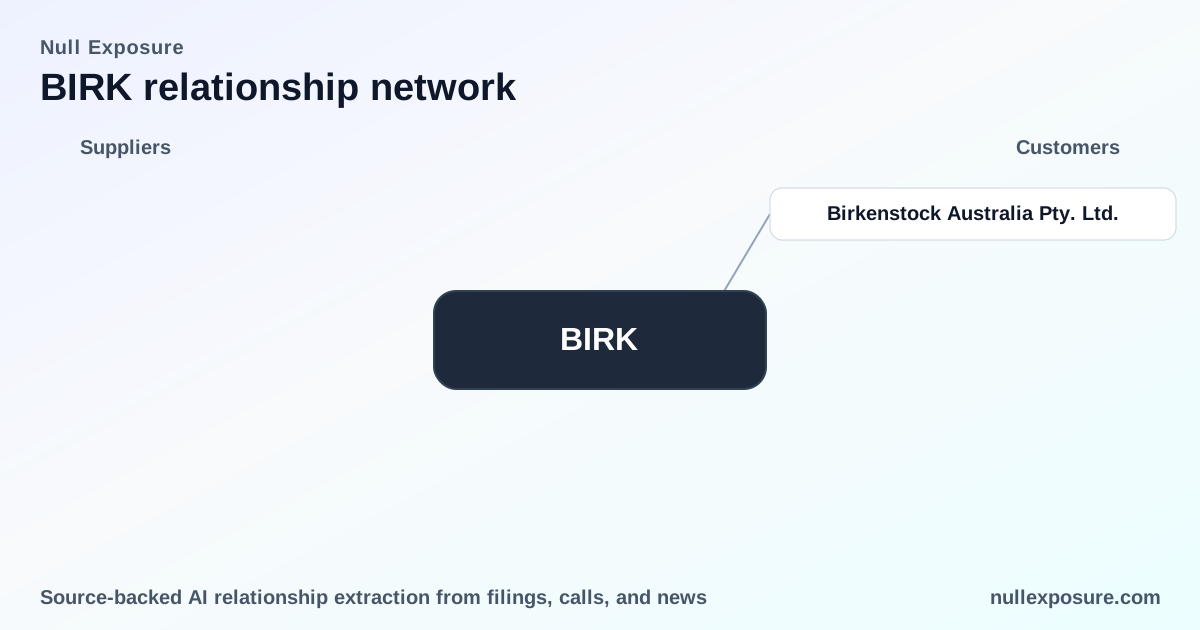
Birkenstock’s customer footprint: what investors should price in
Birkenstock monetizes a highly recognizable lifestyle footwear brand through a blended retail model: direct-to-consumer flagship and e‑commerce channels combined with selective wholesale distribution to large department and specialty retailers. The firm sustains high gross margins through brand pricing power and global scale while using selective partnerships to extend reach; recent moves to internalize distribution in key markets materially change the company’s channel risk profile. For a concise tracker of how these customer relationships affect revenue exposure and operational risk, visit https://nullexposure.com/ for the underlying monitoring and alerts.
Quick read: the commercial model that drives cash flow
Birkenstock generates revenue primarily from footwear sales with strong gross margins (reported gross profit roughly $1.25bn on $2.14bn revenue TTM) and operating margins near 19%. Revenue is diversified across DTC and wholesale, but wholesale partners remain important channels for volume and market penetration. The company’s decision to acquire a long‑standing regional distributor and continued placement with major U.S. retail chains signal a move toward greater control over distribution economics and reduced third‑party dependency.
Customer relationships at a glance — names, roles, and immediate signals
Below are every customer relationship surfaced in the review, each with a concise, plain‑English description and the source that reported the fact.
Nordstrom
Nordstrom carries conversational inventory of Birkenstock product lines, including seasonal SKUs such as the Arizona flower print slide that has been publicly noted in retailer coverage. A MarketBeat instant alert that referenced NJ.com coverage highlighted Nordstrom stock availability in May 2026. (MarketBeat / NJ.com, May 2026)
Nordstrom Rack
Nordstrom Rack is displaying deeply discounted Birkenstock sandals, with media noting markdowns to as low as $13 during spring promotions — an indicator of inventory flow from full‑price to off‑price channels. This detail was highlighted in MarketBeat’s March 2026 coverage citing NJ.com reporting from April 2026. (MarketBeat / NJ.com, Mar–Apr 2026)
Birkenstock Australia Pty. Ltd.
Birkenstock completed the acquisition of its longtime Australian distributor, with the company announcing plans to invest and scale the business following the deal; the acquisition closed on October 23, 2025. The initial intent to acquire and invest was publicized in an ACCESS Newswire release (Oct 15, 2025) and the close date was confirmed in AlphaStreet reporting. (ACCESS Newswire, Oct 2025; AlphaStreet, Mar 2026)
ASO (Academy Sports + Outdoors)
Academy Sports has recently expanded its footwear assortment to include Birkenstock as one of the “hot trending items” and has been rolling the brand deeper into store assortments in 2025–2026. This was referenced in trade coverage and an Academy earnings/transcript excerpt noting brand rollouts and assortment expansion. (SGB Online, May 2026; InsiderMonkey transcript, Q3 2025)
What the relationship map implies for operating posture and risk
Because there were no explicit constraints flagged in the relationship review, the following statements are company‑level signals about Birkenstock’s operating model rather than assertions tied to any single partner.
- Contracting posture: Birkenstock is transitioning from reliance on third‑party distributors toward greater direct control in strategic markets (exemplified by the Australia acquisition). This signals a contracting posture that favors ownership of distribution where scale and brand control matter.
- Revenue concentration: The wholesale channel includes large national retailers, so revenue concentration risk is moderate; large retailers (department and off‑price chains) can drive material volume moves in a quarter and affect promotional intensity.
- Criticality of relationships: Retail partners are important for reach and inventory turnover, but the brand’s healthy DTC business and strong gross margins reduce single‑counterparty criticality.
- Maturity and integration risk: The company is in a scaling-to-mature phase—stable margins and positive profitability metrics, but acquisitions and expanded retail placements introduce integration and inventory management complexity.
How each relationship changes the investment case
- Nordstrom: Placement in a premium department chain helps maintain full‑price presence and brand prestige; it is a positive for average selling price and brand halo. (MarketBeat / NJ.com, May 2026)
- Nordstrom Rack: Deeply discounted product flow into off‑price channels signals inventory lifecycle management and potential downward pressure on realized pricing for certain SKUs when wholesale flows accelerate. (MarketBeat / NJ.com, Apr 2026)
- Birkenstock Australia Pty. Ltd.: The acquisition converts a distributor into a company‑owned market, improving margin capture and strategic execution in one of Birkenstock’s largest markets; closing on Oct 23, 2025, makes near‑term top‑line benefit and integration risk quantifiable. (ACCESS Newswire, Oct 2025; AlphaStreet, Mar 2026)
- ASO (Academy Sports + Outdoors): Expanded in‑store placement at a large sporting‑goods chain broadens customer reach and volume potential, especially among value‑seeking, utility‑oriented shoppers. (SGB Online, May 2026; InsiderMonkey transcript, Q3 2025)
Risks to monitor closely
- Promotional leakage to off‑price channels. The Nordstrom Rack markdowns are an explicit example of how wholesale flows can undercut full‑price channels and compress short‑term margins. (MarketBeat / NJ.com, Apr 2026)
- Integration execution for acquired distribution. The Australia acquisition increases margin capture but requires operational execution; investors should monitor SG&A and working capital trends post‑close. (ACCESS Newswire / AlphaStreet, Oct 2025–Mar 2026)
- Channel mix volatility. Rapid expansion into mass or sporting channels increases volume but can lower average selling price; track mix shift between DTC, premium wholesale, and off‑price channels.
Bottom line for investors
Birkenstock’s customer relationships are a strategic mix: selective premium placements to preserve brand equity, broad wholesale to drive volume, and active moves to internalize distribution where scale justifies it. The Australia acquisition is the most material recent change to channel risk, while off‑price markdowns demonstrate the ongoing need for disciplined inventory and partner management. Investors should value Birkenstock for durable margin structure and brand strength, while pricing in integration risk and potential short‑term price pressure from wholesale promotions.
Explore ongoing monitoring and alerts for Birkenstock customer dynamics at https://nullexposure.com/ — the relationship map and news tracking can inform position sizing and event-driven risk controls.