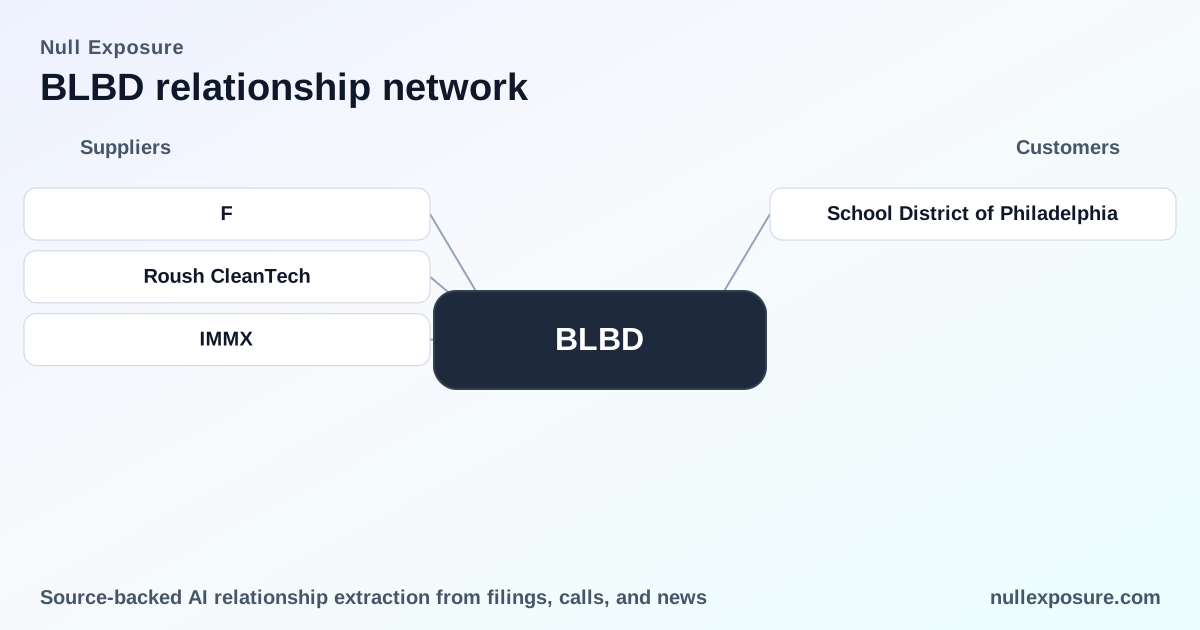
Blue Bird (BLBD): Customer relationships that drive recurring demand and policy-exposed growth
Blue Bird designs, manufactures, and sells school buses and replacement parts, monetizing through point-in-time vehicle sales, parts distribution, and multi-year extended warranties; the company sells predominantly through a mature independent dealer network into government and school-district fleets in North America. For investors focused on customer durability and policy-driven demand, Blue Bird’s business combines transactional volume (bus builds) with annuity-style warranty and parts revenues, and its customer wins increasingly reflect low‑emission fleet transitions. Learn more about how these customer ties translate into commercial exposure at https://nullexposure.com/.
Why customers matter for Blue Bird’s earnings mix
Blue Bird’s revenue mix is two-tiered: the Bus segment (vehicle design, manufacture and sale plus extended warranties) generates high-value, infrequent cash inflows, while the Parts segment supplies steady, higher-margin recurring revenue through a dedicated distribution center. Company filings show that bus and parts sales are generally recognized at a point in time, while extended warranties are recognized straight‑line over contract terms of two to five years — a structural tilt toward both spot and multi-year revenue recognition. These mechanics create lumpy capital sales with a smoothing component from warranties and parts.
Several firm-level operating characteristics shape counterparty risk and growth exposure:
- Contracting posture: sales are predominately spot transactions for buses, supplemented by long‑term warranty contracts that provide predictable service revenue.
- Channel concentration: roughly 92.6% of buses were sold through distributors and dealers in fiscal 2025, making dealer relationships a critical distribution lever.
- Customer profile and criticality: Blue Bird sells extensively to government and public school customers in the U.S. and Canada, exposing revenue to municipal budget cycles and public education spending.
- Geographic concentration: sales are highly concentrated in North America; fiscal 2025 net sales show a dominant U.S. presence with Canada as a smaller but meaningful market.
- Commercial maturity: the dealer network is long-tenured (average dealer tenure greater than 34 years), signaling stable channel partnerships but also potential concentration risk if dealer footprint shifts.
These are company-level signals drawn from public filings and segment disclosures (fiscal 2025).
Two recent customer wins — what they mean, in plain English
Blue Bird’s public-facing customer activity in 2026 highlights direct municipal and district engagements that reinforce its role in fleet electrification and low‑emission alternatives.
School District of Philadelphia — propane bus deployment
Blue Bird confirmed a sale of ultra‑low‑emission propane buses to the School District of Philadelphia, one of the nation’s largest districts, positioning the company as a supplier for low‑emission, non-diesel fleet transitions. According to LPGasMagazine (March 2026), Blue Bird’s vice president of North America bus sales described the district order as a significant deployment of propane vehicles to the district’s fleet. (source: LPGasMagazine, March 9, 2026)
Bibb County School District — a strategic public‑fleet order tied to emissions strategy
Market commentary picked up a new bus deal with Bibb County that has been framed as part of Blue Bird’s broader push into low‑emission and electric-capable offerings; a MarketBeat instant alert referencing a Yahoo Finance piece discussed whether the Bibb County transaction strengthens Blue Bird’s electric moat (April 24, 2026). The coverage signals municipal procurement that supports the company’s product transition toward cleaner powertrains. (source: MarketBeat / Yahoo Finance, April–May 2026)
How these relationships map to Blue Bird’s business model and risk profile
Both customer references are emblematic of Blue Bird’s primary go‑to market: municipal and school-district fleets bought through an established dealer and distributor network. These wins illustrate three practical investor implications:
- Policy sensitivity and optionality: winning propane and electric-capable orders ties revenue growth to school-district procurement cycles and to local and state emissions policies that subsidize or mandate low‑emission fleets.
- Revenue mix stabilization: while bus builds drive lumpier top-line swings, extended warranties and parts distribution create recurring margin support, improving cash flow predictability across municipal buying cycles.
- Concentration and counterparty exposure: heavy reliance on North American school districts and distributors concentrates execution risk; public budgets and dealer footprint decisions materially influence near-term demand.
Company-level financial context reinforces these points: Blue Bird reported roughly $1.499 billion in revenue TTM, an operating margin around 11.3%, and positive EBITDA, reflecting the profitability of its combined manufacturing and parts-distribution model (company profile, fiscal 2025/TTM).
Operational constraints that matter to customers and investors
Several constraints from Blue Bird’s filings are directly relevant to customer relationships and operational resilience:
- Spot vs. long‑term contracts: product sales are typically recognized at a point in time (spot), while extended warranties run two to five years, balancing lumpy capital sales with multi-year service revenue.
- Government counterparty focus: management explicitly sells to municipal, state and federal entities, underlining the company’s exposure to public procurement dynamics and budget timing.
- Distribution dependency and maturity: the firm’s independent dealer network handles the bulk of sales; dealers have long tenures and exclusivity in assigned territories, which stabilizes market access but concentrates channel risk.
- North American concentration: sales are overwhelmingly U.S. and Canada, so macro and political conditions in those markets disproportionately affect growth.
These constraints are company-level signals derived from filings and segment disclosures and should be treated as structural characteristics of Blue Bird’s operating model.
Investment takeaway: durable customer ties with execution and concentration risks
Blue Bird’s recent customer activity — municipal orders for low‑emission propane and electric-capable buses — confirms that public‑sector procurement remains the primary demand driver. The combination of spot vehicle sales and annuity-like warranty and parts revenue supports margins and cash flow while exposing the business to public budget cycles and dealer-channel dynamics. Fiscal 2025 results and operating disclosures show a profitable industrial manufacturer with a concentrated North American footprint and a high level of institutional ownership.
For investors focused on customer durability and transition tailwinds, the company’s wins in Philadelphia and Bibb County are evidence of demand for non‑diesel fleet solutions, but they do not remove dependence on municipal buying cycles and distributor performance. For a deeper look at customer-level exposure across a coverage universe, visit https://nullexposure.com/.
Bold takeaways:
- Customer wins reflect demand for low‑emission solutions in public fleets.
- Revenue mix blends spot vehicle sales with recurring warranty and parts revenue.
- High dealer reliance and North American concentration are key risk factors.
If you want a structured view of how these customer relationships fit into Blue Bird’s broader commercial exposure, NullExposure’s customer analytics platform provides consolidated signals and filings-backed context at https://nullexposure.com/.