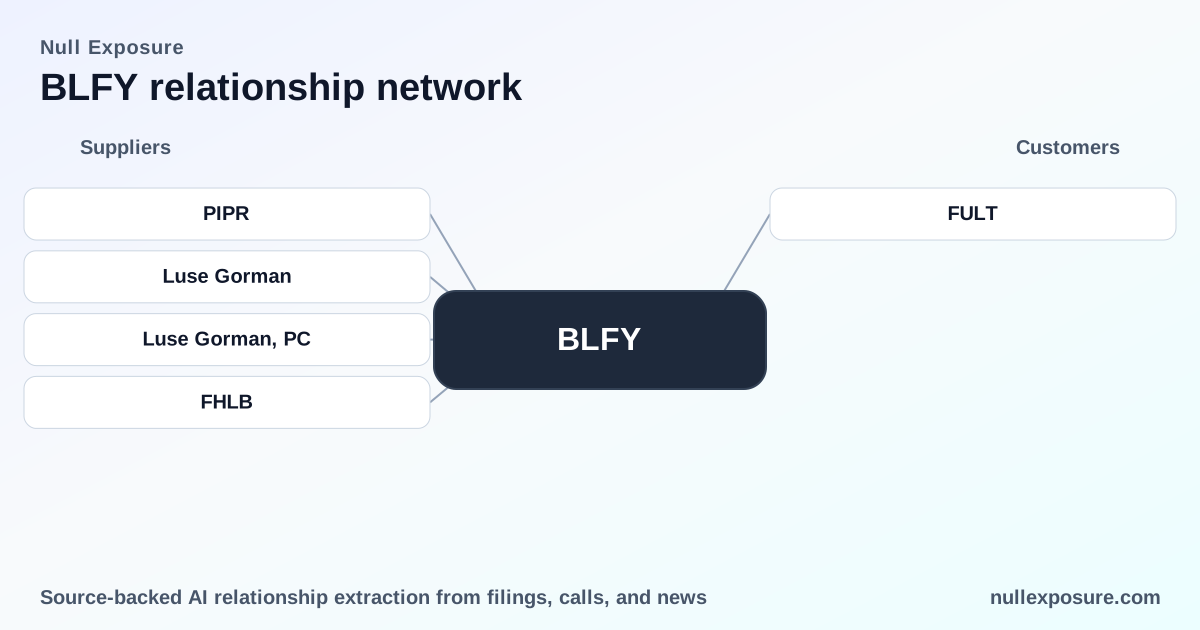
Blue Foundry Bancorp (BLFY): Customer relationships under a new strategic horizon
Blue Foundry Bancorp operates as a community-focused regional bank centered in northern New Jersey, generating revenue primarily from interest income on loans and fee income from retail and commercial banking services. The company monetizes through a traditional banking mix—residential and commercial lending (including fixed- and adjustable-rate mortgages), deposit products that generate net interest margin, and transaction-driven service fees—while positioning itself as a relationship lender to local individuals, small businesses, and mid-market customers. The strategic inflection today is not organic growth but ownership change: a definitive acquisition by Fulton Bank that alters Blue Foundry’s customer and counterparty dynamics. If you track bank M&A for portfolio allocation or credit exposure, this deal recasts BLFY from an independent regional operator into a customer asset within a larger franchise.
If you want a concise view of Blue Foundry’s customer exposures and third‑party dynamics, see the company profile on NullExposure: https://nullexposure.com/.
A single material relationship: acquisition by Fulton Bank
A NorthJersey report from March 2, 2026, confirms that Fulton Bank (FULT) will acquire Blue Foundry for $243 million following final Federal Reserve approval on February 19, 2026. This transaction is the dominant relationship event in the public record and directly changes counterparty and operational risk for Blue Foundry customers and counterparties. (NorthJersey, March 2, 2026)
FULT (ticker-style reference)
Fulton Bank is the acquirer in a transaction that transfers Blue Foundry’s customer assets, deposit base, loan book, and branch footprint into a larger Pennsylvania-based franchise for $243 million, post-regulatory sign-off. According to the NorthJersey coverage, the acquisition follows Federal Reserve approval and is the definitive exit for Blue Foundry shareholders. (NorthJersey, March 2, 2026)
Fulton Bank (name variant)
The public narrative around Blue Foundry’s customer relationships is now reframed as an integration challenge and opportunity for Fulton Bank to consolidate retail deposits, small-business lending relationships, and branch-level service offerings in northern New Jersey. The same NorthJersey article documents the acquisition terms and regulatory clearance that make this consolidation actionable. (NorthJersey, March 2, 2026)
Both entries in the record reference the same factual event; listing them separately in public feeds reflects alternate naming conventions rather than distinct counterparties.
What the relationship shift means operationally and commercially
-
Contracting posture: Blue Foundry’s product mix includes long-dated residential mortgages (up to 30-year fixed and adjustable-rate) and short-term guarantee products such as standby letters of credit typically issued for one year or less. These contract types create a blended duration profile—long-duration interest‑rate exposure in the mortgage book with recurring short-term contingent liabilities tied to lending activity. (Company filings, FY2024–FY2025 disclosures)
-
Customer concentration and counterparty profile: The bank’s commercial strategy is explicitly local and relationship-driven, targeting retail, small-business, and mid-market customers in northern New Jersey. Blue Foundry’s deposit and loan portfolios are therefore geographically concentrated and heavily reliant on local market dynamics rather than national diversification. This concentration elevates the importance of branch- and relationship-level retention post-acquisition. (Company annual disclosures)
-
Criticality of the relationship: Blue Foundry acts as a provider of essential banking services—transaction accounts, deposit-taking, payments, and credit—to individuals and businesses in its footprint. For many customers, the bank holds operationally critical functions (payroll, deposit access, loan servicing) that will transfer to Fulton Bank. That makes customer retention and migration a key integration risk. (Company service descriptions)
-
Maturity and lifecycle: The bank operates through a single business segment and describes its relationships as active: ongoing credit commitments, lines of credit, and deposit servicing remain in force and will transition under the acquirer’s platforms. The combination of active commitments and long-term mortgage book suggests integration complexity, with both balance-sheet and operational conversions required. (Company filings, Dec. 31, 2024)
Relationship-by-relationship snapshots (complete coverage)
-
FULT — The news feed labels the counterparty as FULT to denote Fulton Bank; the recorded event is the acquisition of Blue Foundry for $243 million after Federal Reserve approval on Feb. 19, 2026. This transaction transfers Blue Foundry’s customers, loan book, and branch operations to Fulton’s control. (NorthJersey, March 2, 2026)
-
Fulton Bank — Reported under the full name, Fulton Bank is the buyer that will absorb Blue Foundry’s business, creating potential scale benefits and integration risks for customers and counterparties as accounts, servicing relationships, and legacy contracts are migrated. (NorthJersey, March 2, 2026)
Investment implications: risks and levers to watch
-
Retention risk is material. Blue Foundry’s core advantage is relationship banking at the local level; consolidation into Fulton’s platform creates churn risk among retail and small-business customers who value personal service and local decision-making. Successful integration will hinge on preserving branch-level relationships and minimizing service disruption.
-
Balance-sheet composition will change. The acquiring bank will inherit a blend of long-term residential mortgages and short-term contingent liabilities (standby letters of credit and lines). Interest‑rate and credit-risk management strategies under Fulton will determine the post-close earnings impact.
-
Operational conversion is the chief near-term execution risk. Data, systems, and product migrations—particularly around deposit accounts and loan servicing—create exposure for transaction fees and service continuity; these are critical to sustaining fee income and deposit stability.
-
Concentration remains a structural feature. Even under new ownership, the customer franchise is regionally concentrated in northern New Jersey; macroeconomic or local-sector stressors will continue to disproportionately affect the combined portfolio.
-
Regulatory framing matters. The Federal Reserve’s approval completed the transaction pathway, but post-merger compliance, capital allocation, and potential branch rationalization will shape the cost and revenue outlook over the next 12–24 months.
Bottom line for investors and operators
Blue Foundry’s customer relationships are valuable, relationship-driven assets now under Fulton Bank’s stewardship. The acquisition converts idiosyncratic local franchise risk into integration execution risk under a larger corporate umbrella. For investors, that reduces independent downside but introduces merger execution variables; for service providers and counterparties, it shifts contract counterparty to a larger regional bank with broader scale but different incentives.
Explore deeper relationship and exposure analytics for BLFY at NullExposure: https://nullexposure.com/.
Sources referenced: NorthJersey reporting on March 2, 2026; Blue Foundry Bancorp public filings and year‑end disclosures (FY2024–FY2025) describing product mix, branch footprint, and contract terms.