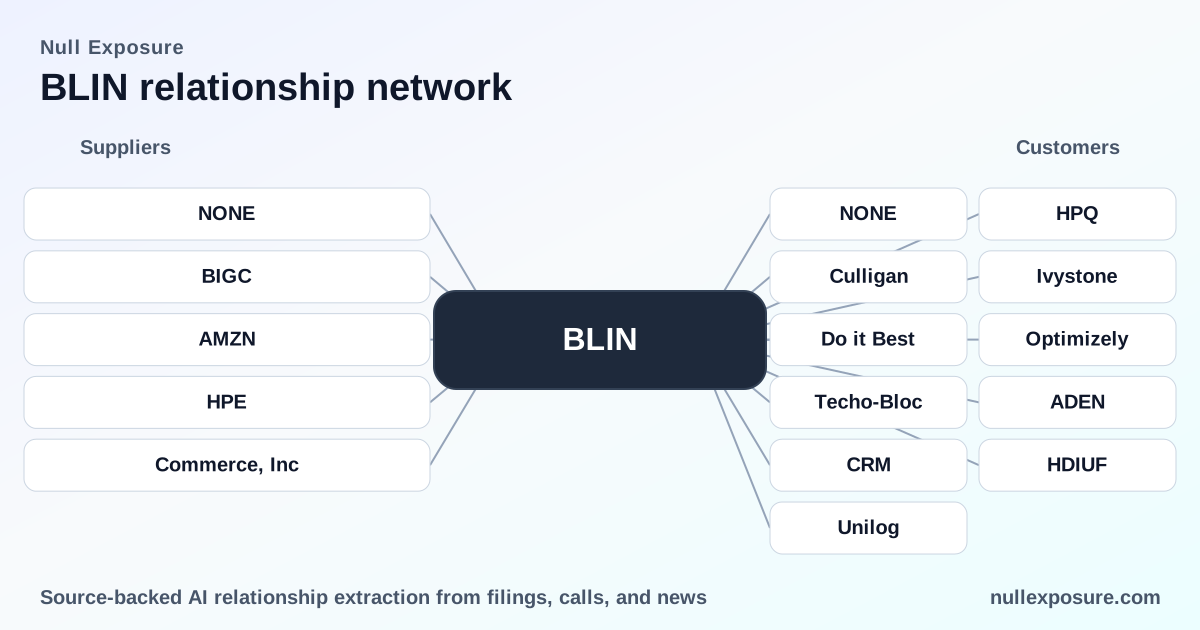
Bridgeline Digital (BLIN) — Customer Relationships That Drive HawkSearch Revenue
Bridgeline Digital monetizes primarily by selling HawkSearch, a search and merchandising platform, through SaaS subscriptions, managed-hosting, and perpetual licensing to mid-market and large-enterprise merchants and distributors. Management reports recurring software revenue with multi-year contract terms and direct-sales focus on North American customers, while strategic partner integrations (Salesforce AppExchange, Optimizely, Unilog) broaden distribution and shorter time-to-revenue. Investors should view BLIN as a small-cap, revenue-recurring software play with concentrated receivable exposure and growing channel-driven expansion.
For a consolidated view of BLIN’s customer relationships and what they imply for revenue durability and risk, see NullExposure’s coverage: https://nullexposure.com/
What management disclosed about the customer base
Bridgeline’s public remarks and filings describe a single operating segment — Software — sold via a mix of cloud SaaS and perpetual licenses and delivered through a direct sales force focused on mid-sized and large customers in North America. Management stated that most subscription contracts run three years and the median service term across software arrangements is approximately five years, which supports predictable recurring revenue. For FY2025 management also disclosed that no single customer accounted for more than 10% of total revenue, though one customer did represent more than 10% of accounts receivable, indicating receivable concentration distinct from revenue concentration (FY2025 filings and Q4 2025 earnings call).
Roster: Every customer relationship mentioned in BLIN’s recent disclosures
Below are plain-English summaries of every relationship noted across the earnings call transcript and news extracts, with source references for each item.
-
Culligan — Management announced Culligan as a new HawkSearch customer, describing the brand as a global water-softening and filtration provider reaching 140 million customers; this was disclosed on the Q4 2025 earnings call and picked up in press transcripts (Q4 2025 earnings call; Globe and Mail/Motley Fool press release, March 2026).
Source: Q4 2025 earnings call (management remarks published March 2026) and related press transcripts. -
Do It Best — Identified repeatedly as a long-standing HawkSearch customer and specifically as a major implementation partner powering over 3,000 stores with real-time inventory and AI-enhanced search; management flagged incremental investment following Do It Best’s acquisition of True Value Hardware (Q3–Q4 2025 earnings calls; AccessNewswire, InsiderMonkey, March 2026).
Source: Q3 and Q4 2025 earnings call excerpts and FY2025 press coverage (AccessNewswire; InsiderMonkey). -
Do It Best (launch entry labeled "NONE") — The Q3 2025 launch disclosure reiterated that Do It Best Hardware has gone live on HawkSearch for thousands of stores, confirming active rollouts and real-time inventory integration (Q3 2025 earnings call, March 2026).
Source: Q3 2025 earnings call transcript (reported March 2026). -
Techo‑Bloc — Cited as a satisfied customer in the hardscaping/manufacturing segment that added HawkSearch's Smart Search and Smart Response tools to analyze technical documents and accelerate purchase decisions (Q4 2025 earnings call; Globe and Mail/Motley Fool press release, March 2026).
Source: Q4 2025 earnings call and press transcripts (March 2026). -
Salesforce (referenced as CRM/AppExchange) — Management announced that Salesforce customers can access HawkSearch through the AppExchange, providing a direct route to CRM-installed customer bases and an enterprise distribution channel (Q4 2025 earnings call, March 2026).
Source: Q4 2025 earnings call transcript and related press coverage. -
Hewlett Packard / HPQ — Management noted Hewlett Packard as a B2C customer, indicating HawkSearch’s presence in larger consumer-facing channels (press transcript coverage of the Q4 2025 earnings remarks, March 2026).
Source: Press transcript coverage of Q4 2025 earnings (Globe and Mail press release, March 2026). -
Ivystone — Reported as an AI multisite launch customer, Ivystone rolled out HawkSearch AI across five e‑commerce sites, a positive commercial reference cited in news coverage (Stocktitan summary, FY2026 reporting).
Source: Stocktitan news item summarizing HawkSearch partnerships (June 2026 item referenced). -
Optimizely — A national distributor launched HawkSearch on the Optimizely Configured Commerce platform where HawkSearch is integrated as an advanced site-search and merchandising option, demonstrating partner-led distribution on third‑party commerce platforms (AccessNewswire FY2025 release).
Source: AccessNewswire press release summarizing FY2025 results and partner integrations. -
Unilog — Unilog added HawkSearch to its partner ecosystem to offer advanced search as an add-on for its CX1 eCommerce platform, reinforcing channel expansion into e-procurement and B2B commerce (AccessNewswire FY2025 release).
Source: AccessNewswire FY2025 company update. -
ADENTRA / ADEN / HDIUF — Management named ADENTRA (also referenced with tickers ADEN/HDIUF in some transcripts) as a new multibillion-dollar distributor customer operating six brands across 83 regions and serving 60,000 customers, a material commercial win for platform scale and distribution reach (Q4 2025 earnings call; Globe and Mail/InsiderMonkey press coverage March 2026).
Source: Q4 2025 earnings call and subsequent press transcripts (March 2026).
How these relationships shape BLIN’s operating model
- Contracting posture: The business sells through multi-year SaaS subscriptions and perpetual licensing, supporting recurring revenue and potential one‑time license uplift; management explicitly described three‑year subscription norms with a median service term of five years (company filings/Q4 2025 commentary).
- Concentration and receivable risk: No customer made up over 10% of revenue in FY2025, but one customer exceeded 10% of accounts receivable, signaling collection concentration that investors must monitor in future quarters (FY2025 filings).
- Counterparty mix and criticality: Customer mix skews to mid‑market and large enterprises via direct sales, with additional reach enabled by partner integrations (Salesforce AppExchange, Optimizely, Unilog) that lower sales friction and expand addressable market.
- Geography and go‑to‑market: Revenue is primarily North American, which concentrates macro and competitive risk regionally but also simplifies go‑to‑market execution.
- Maturity and stage: BLIN operates a single Software segment with ~2,000 active customers, an established product set (HawkSearch + Smart Search/Response) and active commercial references across distribution and manufacturing verticals.
Investor takeaways and near‑term watch items
- Positive: Multi-year subscriptions and platform integrations with Salesforce, Optimizely, and Unilog create durable channels and pressure-test product-market fit across B2B distribution and B2C retail. Large rollouts (Do It Best live in 3,000 stores; ADENTRA multi-brand distribution) are credible revenue catalysts.
- Risk: Receivable concentration and relatively small market cap leave BLIN sensitive to a handful of large customer balance-sheet events; monitor quarterly AR disclosures and renewal/expansion signals from named customers.
- Operational focus: Continued partner-led distribution and successful AI feature rollouts (Ivystone, Techo‑Bloc use cases) will determine scaling efficiency and gross margin expansion.
For a data-driven view of customer contracts and counterparties across small-cap SaaS vendors, NullExposure maintains ongoing tracking and analysis: https://nullexposure.com/
Conclusion: BLIN is executing a classic small‑cap SaaS growth play — recurring revenue anchored by multi‑year contracts, partner-enabled distribution, and targeted enterprise references — while investors should track accounts‑receivable concentration and execution on partner rollouts as the primary near-term risks and upside drivers.