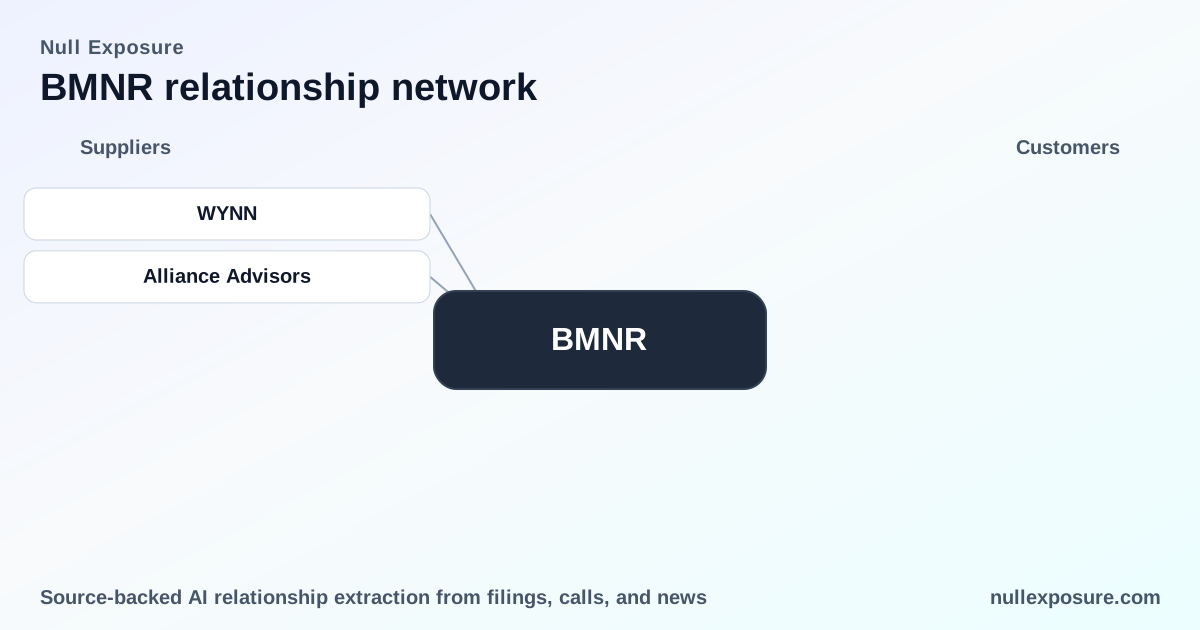
BMNR: Customer Relationships and Operational Constraints Driving Risk and Upside
Bitmine Immersion Technologies (BMNR) operates primarily as a mixed mining services and hardware business: it monetizes through short-term hosting and lease arrangements, resale of transformers and ASIC miners, and targeted equity or capital commitments into blockchain-related ventures. Revenue drivers are transaction- and contract-based rather than long-duration recurring fees, with capital deployment into strategic partners supplementary to core operations. For further context and ongoing monitoring, visit https://nullexposure.com/ for a consolidated view of customer signals and filings.
How Bitmine actually contracts and where dollars come from
Bitmine’s historic business mixed turnkey mining-as-a-service hosting with machine resale and lease economics. The company records hosting revenue when it supplies energized space, electricity, and operational support as a single performance obligation — an operating posture that positions Bitmine as a service provider for colocated customers and as a seller/licensor when it leases or resells mining equipment. According to the company’s filings for the fiscal periods through FY2025 and FY2026, many of these commercial arrangements are intentionally short-term: the company treats mining-pool agreements as continually renewed and acknowledges sub‑24‑hour accounting terms for certain contracts, and specific machine leases run in the range of months rather than years. This contracting pattern produces high revenue volatility and strong sensitivity to utilization and spot crypto economics; it also reduces long-term contractual locking but increases the company’s need to manage capacity and sell-through of hardware inventory.
Specific operating signals from filings:
- The company documents that mining-pool contracts are renewed at the start of each measurement period and are recorded with a contract term of less than 24 hours, creating a rolling short-term revenue posture (company filing, FY2025).
- Machine lease examples: a March 2025 lease covered revenues from 2,500 miners from March 8 to May 7, 2025 for a fixed payment of $850; a May 2025 lease covered 3,000 miners through December 31, 2025 for $3,200 (company filing, FY2025).
- Hosting client relationships were terminated en masse in Q4 fiscal 2024, which materially reduced recurring hosting revenues and shifted emphasis toward hardware sales and brokered transformer transactions (company filing, fiscal year ended Aug 31, 2025).
Customer relationship covered in the public signal set: ORBS
Bitmine participated in a group of financing commitments totaling $125–130 million backing Eightco’s AI- and blockchain-focused strategy, alongside institutional names ARK Invest and Payward/Kraken. This positions Bitmine as a capital backer in a strategic initiative tied to the ORBS ecosystem in FY2026 and reflects a portfolio-capital approach to industry exposure rather than purely operational customer relationships. Source: StockstoTrade news coverage, April 2026.
Implication: the ORBS-related commitment is evidence that Bitmine deploys balance-sheet capital into ecosystem plays that can augment upside exposure to blockchain infrastructure and tokenized projects, complementing the core hosting and hardware P&L.
Named counterparties and contract excerpts that drive analysis
A number of constraint excerpts from company filings name counterparties or contract formats that are material to the operating profile:
- KULR: The company’s filing explicitly states Bitmine provided KULR the right to use 3,000 mining machines and associated operational services for 228 days, indicating a licensor/lessee arrangement and temporary transfer of economic rights over machines (company filing, FY2025). This confirms the firm engages in multi-month operator-licensor relationships in addition to hosting.
- Lessee machine leases: Filings cite specific lease deals in March and May 2025 with fixed payments tied to miner revenues over multi-month windows, demonstrating the company’s use of short-term leased capacity to monetize installed rigs (company filing, FY2025).
- Mining pool contracts: Filings record that mining-pool agreements are continually renewed and are accounted for with contract terms under 24 hours, underscoring the transactional, rolling-nature of a segment of revenue (company filing, FY2025).
These named excerpts are direct evidence of Bitmine’s short-term contracting posture, mixed role as seller/licensor/service provider, and reliance on deal-level monetization rather than long-duration contracted revenue.
What these customer relationships and constraints mean for investors
- Revenue volatility is structural. Short contract terms, the termination of hosting clients in late 2024, and the concentration of sales into hardware and brokered transformer deals create quarter-to-quarter swings in reported revenue; the company's Revenue TTM ($16.7M) and negative EBITDA reflect that profile (company financials, latest quarter 2026-02-28).
- Cash and balance-sheet deployment is strategic but risky. Capital commitments such as the ORBS/Eightco funding syndicate signal an active capital allocation strategy that can deliver asymmetric returns, but those returns are tied to high‑beta blockchain and AI ventures rather than stable cash flows.
- Counterparty and concentration risk are asymmetric. The termination of all hosting clients in Q4 FY2024 removed a stock of recurring contracts and concentrated near-term cash generation into discrete lease and resale transactions; this increases execution risk on sales and lease pricing. Filings also show Bitmine continues to act as a market seller of hardware (transformers and ASICs), which shifts exposure to commodity pricing and broker channel effectiveness (company filing, fiscal year ended Aug 31, 2025).
- Operational criticality is limited but time-sensitive. Short-term renewals and short lease windows mean Bitmine’s revenue is critical to performance only at the transaction level — each renewal or resale materially affects the next reporting period.
For ongoing investor workstreams, monitor contract term disclosures and lease volumes in quarterly filings and track any additional strategic financings that replicate the ORBS participation.
Actionable takeaways for portfolio managers and operators
- Maintain conviction only with clear visibility into machine utilization and lease roll rates; short contract terms require active monitoring of utilization metrics and counterparty credit.
- Treat balance-sheet investments (for example, the ORBS/Eightco commitment) as portfolio bets distinct from operating cash generation; assess these separately in valuation work.
- Watch for shifts back toward longer-term hosting commitments or renewed co-hosting customers as a signal of structural revenue stabilization; absence of longer-term contracts preserves downside volatility.
Visit https://nullexposure.com/ to see consolidated signals and filing excerpts that support this analysis.
Bitmine’s commercial model is unambiguous: monetize hardware and hosting through short, transaction-level agreements while selectively deploying capital into adjacent blockchain ventures. That combination creates both distinct upside — via strategic investments and equipment resale — and persistent topline volatility driven by contract term structure and counterparty churn.