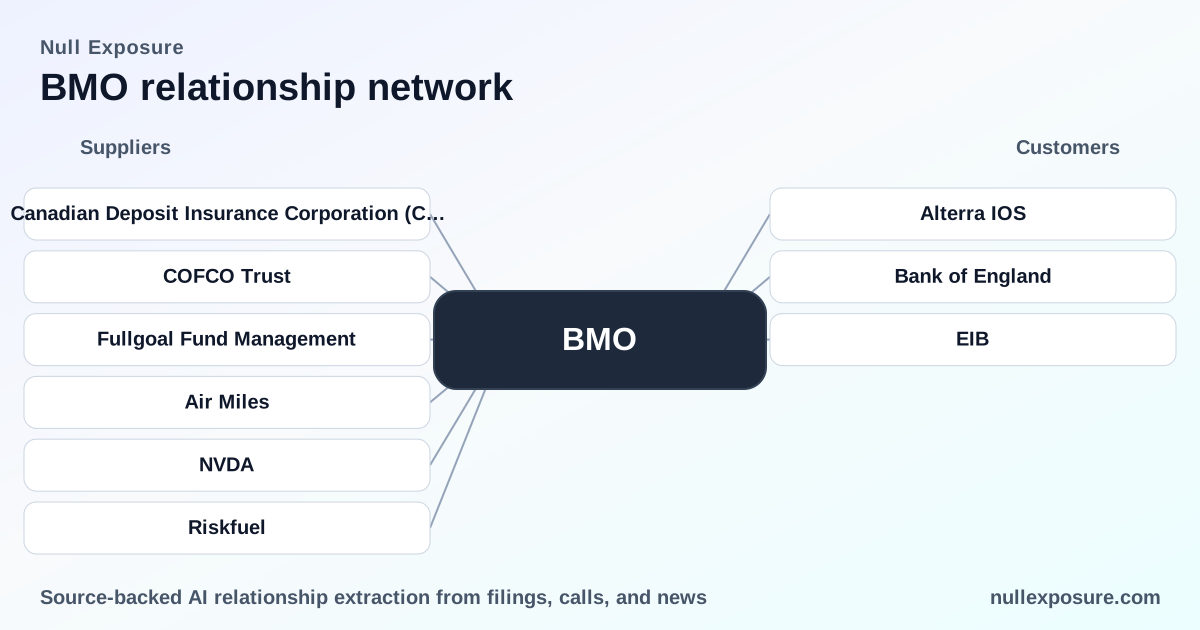
Bank of Montreal (BMO): a commercial banking hub for underwriting, lending and corporate advisory
Bank of Montreal monetizes through a diversified mix of retail and commercial banking, wholesale capital markets and capital‑markets fees: deposit spreads and interest income from lending, plus underwriting, advisory and trading fees earned by BMO Capital Markets. The bank’s customer footprint in the sample is dominated by underwriting and syndicated lending roles — BMO is repeatedly the lead or co‑manager on bought‑deals, ATM programs and credit facilities, and the lender of record on revolving facilities. For primary research or commercial diligence, this pattern signals fee‑driven capital markets revenue plus steady net interest margin from corporate lending. Learn more at https://nullexposure.com/.
How to read the relationship map: what the pattern reveals about BMO’s operating model
BMO’s relationships in the sample reveal four operating characteristics that matter for investors and operators:
- Contracting posture: BMO frequently acts as lead underwriter, book‑runner, agent or administrative agent — an active, market‑making posture that generates fee income and recurring underwriting mandates. Source citations below show consistent bookrunner roles across sectors (mining, energy, REITs, corporates).
- Concentration and sector spread: Relationships span mining, energy, REITs, industrials and consumer finance — a diversified client base reducing single‑sector exposure but increasing operational complexity.
- Criticality: For smaller issuers, BMO is a primary lender/agent (credit facilities and revolving lines); for larger issuers it is a co‑manager on multi‑bank syndicates — the bank is often critical to deal execution.
- Maturity and depth: Many engagements are standard capital‑markets mandates or facility amendments rather than one‑offs, indicating mature, repeatable relationships that support recurring fee streams.
If you want a systematic feed of these signals, visit our research hub: https://nullexposure.com/.
Relationship roster: concise summaries of every listed customer relationship
- Bank of England — BMO participated as stabiliser for a $2.5 billion bond issue. Source: The Globe and Mail press release (Mar 9, 2026).
- New Found Gold (NFGC) — BMO Capital Markets acted as financial advisor on New Found Gold’s arrangement and equity sale. Source: Newsfile / Mining press (Mar 10, 2026).
- International Tower Hill Mines (THM) — BMO Capital Markets served as lead book‑running manager on a share offering. Source: Yahoo Finance / press release (Mar 10, 2026).
- Americas Gold and Silver (USAS) — BMO Capital Markets co‑led a bought‑deal private placement as part of an underwriter syndicate. Source: Finviz summary (Dec 4, 2025 reporting).
- Alterra IOS — BMO provided a $100 million revolving credit facility to Alterra IOS. Source: Commercial Observer (reported Jan 2026).
- Gold Royalty Corp. (GROY) — BMO was part of a syndicate that amended and expanded a secured revolving credit facility by US$5M and participated in a later upsize to US$150M. Source: Investing News / company announcements (Mar 9–10, 2026).
- First Citizens BancShares (FCNCA / FCNCP) — First Citizens announced an agreement to acquire 138 BMO Bank N.A. branches in the U.S.; the deal changes BMO’s U.S. branch footprint. Source: TipRanks / press coverage (Oct 16, 2025 disclosure; reported Mar–May 2026).
- Alliance Laundry Systems (ALH) — BMO Capital Markets acted as a passive bookrunner/co‑manager on the IPO filing. Source: StockTitan / IPO filing (Mar 9, 2026).
- European Investment Bank (EIB) — BMO was named stabilising manager for a USD 4 billion bond issue. Source: The Globe and Mail press release (Mar 9, 2026).
- Platinum Group Metals (PLG) — BMO Nesbitt Burns and BMO Capital Markets are agents on an ATM equity distribution agreement. Source: Newsfile (Dec 2024 / Mar 2026 filings).
- Sonida Senior Living (SNDA) — BMO Bank acted as administrative agent in an amended and restated credit agreement; BMO Capital Markets also served as financial advisor in a merger transaction. Source: TradingView / company filings and CityBiz (Mar 2026).
- NOVAGOLD (NG) — BMO Capital Markets was bookrunner on a US$200–300M bought‑deal private placement and received customary underwriter fees. Source: GlobeNewswire / NOVAGOLD press releases (Feb–Mar 2026).
- Lightspeed (LSPD) — BMO Capital Markets was a lead underwriter and joint bookrunner on a historical IPO. Source: Betakit (IPO coverage; original transaction 2019, referenced 2026).
- GWH‑WS (GWH‑WS) — BMO Capital Markets is listed among agents on an at‑the‑market sales agreement. Source: ADVFN / SEC filing summary (May 2026).
- FNGU (MicroSectors ETN) — The issuer is Bank of Montreal; BMO filed registration and announced product changes in 2025. Source: ETFdb / BMO newsroom (2024–2025 filings).
- Honeywell (HON) — BMO led a US$1.8 billion debt deal financing the sale of Honeywell’s productivity business and supported expansion of BMO’s U.S. SMB digital banking platform. Source: Traders Union / news summary (May 2026).
- Fury Gold Mines (FURY) — BMO Capital Markets participated as an agent in a brokered financing led by Haywood. Source: McMillan legal notice (2026).
- Hycroft (HYMCW) — BMO Capital Markets and Paradigm acted as joint book‑running managers on a public offering. Source: Macau Business / PR (Mar 2026).
- Obsidian Energy (OBE) — BMO Capital Markets acted as bookrunner on a US$175M senior unsecured notes offering. Source: FinancialContent / Newsfile (Dec 2025 – Mar 2026).
- PG&E (PCG‑P‑B) — BMO Capital Markets was part of the underwriting syndicate for mortgage bond maturities. Source: Investing.com (May 2026).
- Kura Sushi USA (KRUS) — BMO Capital Markets acted as underwriter on the IPO, alongside Stephens. Source: MarketBeat (Dec 2025–Mar 2026).
- US Gold Mining (USGO) — BMO Capital Markets served as underwriter on an IPO with H.C. Wainwright. Source: MarketBeat (Mar 2026).
- Dakota Gold (DC) — BMO Capital Markets and Scotiabank acted as lead book‑running managers on a common‑share offering. Source: Newsfile / Reuters coverage (Feb–Mar 2026).
- Neptune Insurance (NP) — BMO Capital Markets was a joint bookrunner on the IPO and exercise of underwriter options. Source: Orrick / PR and Reinsurance News (Oct 2025–Mar 2026).
- Spire (SR) — BMO Capital Markets acted as exclusive financial advisor on Spire’s acquisition of Tennessee assets from Duke Energy. Source: SahmCapital report (Mar 2026).
- Tyson Foods (TSN) — BMO Capital Markets was listed among co‑managers on a senior notes offering. Source: SahmCapital / GlobeNewswire (Feb 2026).
- Regency Centers (REG) — BMO Capital Markets Corp. acted as a senior co‑manager on a US$450M senior‑notes offering. Source: QuiverQuant / GlobeNewswire (Feb–Mar 2026).
- Accelerant (ARX) — BMO Capital Markets acted as active bookrunner on the proposed IPO. Source: ReinsuranceNews / Investing.com (2025–2026).
- Brookfield Renewable (BEPC / BEP) — BMO Nesbitt Burns and BMO Capital Markets are agents on at‑the‑market equity distribution agreements. Source: Globe and Mail / press releases (Jan–Mar 2026).
- Vox Royalty (VOXR) — VOXR amended and later repaid its BMO credit facility, leaving undrawn capacity up to $75M. Source: StockTitan / company Q3 and press (Sep 2025–Mar 2026).
- Ascent Industries (ACNT) — Ascent amended its credit facilities with BMO Bank N.A. via waivers and amendments. Source: StockTitan / SEC‑style filings (Dec 2025–Mar 2026).
- Granite REIT (GRTUF) — Granite renewed an ATM program with BMO Capital Markets among the agents. Source: Globe and Mail (Feb 2026).
- Orchid Island Capital (ORC) — ORC holdings include Bank of Montreal securities on its RMBS portfolio listings. Source: Globe and Mail / QuiverQuant (2026).
- Colliers (CIGI) — BMO led a syndicated credit facility extension for Colliers. Source: StockTitan (Mar 2026).
- Trilogy Metals (TMQ) — BMO Capital Markets participated in a bought‑deal financing syndicate. Source: Trilogy Metals press release (May 2026).
- GreenPower (GP) — GreenPower used an $8M credit line from BMO in 2020 referenced as complement to a corporate acquisition. Source: SustainableBiz profile (2024 summary; reported 2026).
- Nouveau Monde / NMG (NMG) — BMO Capital Markets and National Bank Capital Markets led a bought‑deal offering. Source: NMG press (Apr–May 2026).
- Electromed (ELMD) — Electromed established a $10M senior secured revolving credit facility with BMO Bank N.A. maturing Dec 16, 2026. Source: Globe and Mail / TradingView (Dec 2025 filings).
- OptiNose (OPTN) — BMO Capital Markets acted as book‑running manager on a historic public offering. Source: GlobeNewswire (2019 filing referenced in 2026 indexing).
- Uranium Royalty Corp. (UROY) — BMO provided a C$12M margin loan commitment concurrent with a bought deal. Source: GlobeNewswire (2021 transaction noted 2026).
- HEXO (HEXO) — BMO Capital Markets acted as special advisor on convertible note financing and acquisition transactions. Source: GlobeNewswire (2021 disclosure referenced 2026).
- HAMILTON Group / HG (HG) — BMO Capital Markets acted as co‑manager on a past offering. Source: Bernews / Hamilton press (2023 offering, indexed 2026).
- TransCanada Pipelines / TCPL (TCPA) — Historic reporting identifies BMO as lead agent on older loans totaling ~US$4.3B. Source: The Ran / investigative report (2019 disclosure cited 2026).
- HASI (HASI) — BMO Capital Markets purchased a principal amount of notes as an underwriter in a multi‑bank placement. Source: SEC Form 424B5 (Mar 2026).
- Vista Gold (VGZ) — BMO Nesbitt Burns listed among agents on the prospectus for an offering. Source: StockTitan / prospectus excerpts (Mar 2026).
- Duluth Holdings (DLTH) — Company amended its credit agreement with BMO Bank N.A. in Oct 2025 (noted in market commentary). Source: FinancialContent / MarketMinute (Nov 2025).
- BHP Group (BHP) — BMO Capital Markets acted as financial advisor on a silver‑streaming transaction. Source: Research‑Tree summary (Mar 2026).
- Palisades (PLGDF) — Palisades announced a loan facility with BMO and conversion of debt into equity. Source: MarketBeat / Yahoo Finance summary (Apr 28, 2026).
- Digi International (DGII) — BMO Bank acted as administrative agent in an amended revolving credit agreement. Source: TradingView / Globe and Mail (Dec 23, 2025–Mar 2026).
- Electrovaya (ELVA) — Electrovaya drew on an EXIM facility and utilized a BMO facility to support operations and plant build‑out. Source: Newswire / company results (2026).
- Numerous other co‑manager and syndicate mentions (e.g., ING, ING Groep, CIBC, RBC, Scotiabank, Canaccord, Haywood) — Across the sample BMO appears repeatedly in syndicates as lead, co‑manager or agent, underscoring a broad capital‑markets franchise. Source: Multiple filings, Reuters and Marketscreener reports (Mar 2026).
Investment implications and risk map
- Revenue mix: BMO’s capital‑markets engagements across the roster indicate a predictable stream of underwriting and advisory fees that complement net interest margin from lending relationships. Fee income is amplified by repeat participation in bought‑deals and ATMs.
- Credit exposure: Many relationships are secured revolvers or credit facilities to junior miners and growth companies; credit loss sensitivity exists if commodity cycles weaken, but most facilities are syndicated which distributes counterparty concentration risk.
- Operational risk: Active bookrunner and agent roles require execution capacity and underwriting appetite; market volatility or balance‑sheet constraints would directly depress fee revenue.
- Strategic footprint: The U.S. branch sale to First Citizens (138 branches) signals portfolio rationalization in the U.S. retail footprint while preserving wholesale capital‑markets scale.
Bottom line for investors and operators
BMO’s customer network in this sample demonstrates a clear wholesale capital‑markets and corporate‑lending franchise: frequent lead underwriter roles, syndicated credit facilities, and recurring advisory mandates form the backbone of fee and interest income streams. For deeper, transaction‑level tracking and to monitor how these relationships evolve into revenue and credit outcomes, visit our research hub at https://nullexposure.com/.