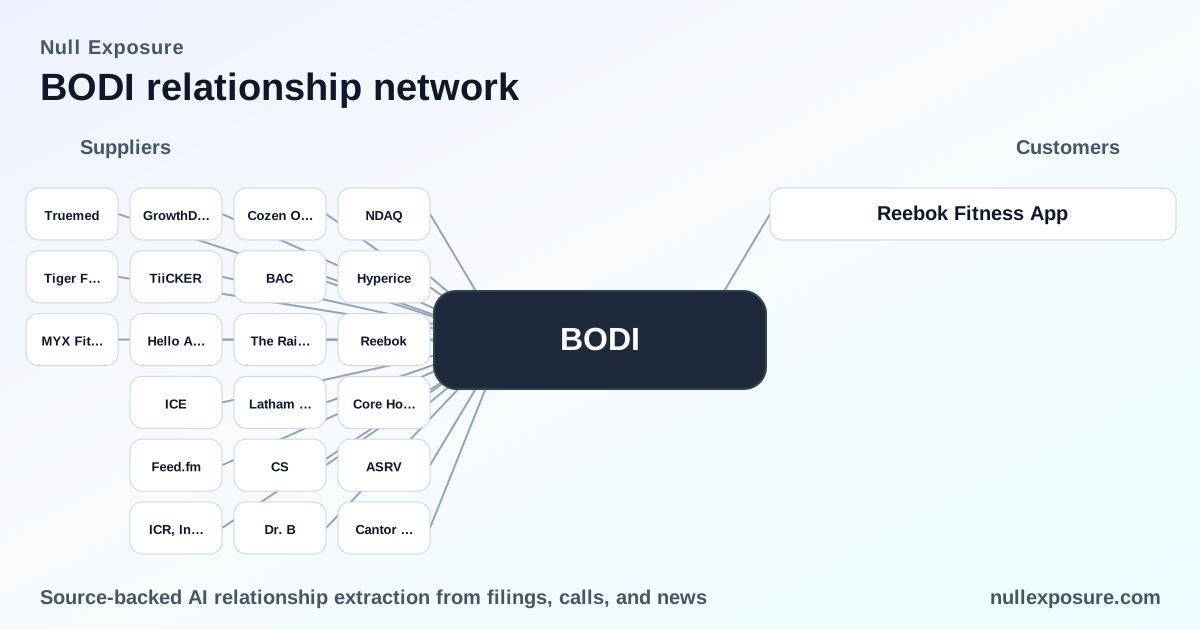
BODi’s customer footprint and what it means for investors
Beachbody (ticker: BODI) operates a subscription-first health and wellness business that monetizes through recurring digital memberships (BODi), nutrition product sales, and a smaller but strategic connected-equipment line (BODi Bikes). The company collects subscription fees across monthly to multi-year terms, sells nutrition products that contribute nearly half of revenue, and bundles hardware with long-duration subscriptions to lock customer lifetime value. For investors evaluating customer relationships, the combination of recurring revenue, product bundling, and selective partnerships is the core driver of both growth potential and concentration risk. For a quick company reference, see NullExposure’s coverage at https://nullexposure.com/.
Business model and operating posture: subscription and bundling drive economics Beachbody’s economics are led by digital subscriptions and nutrition sales. The company reported trailing twelve‑month revenue of roughly $251.7 million and gross profit of $183.8 million, with digital subscriptions accounting for about 54% of revenue for the year ended December 31, 2024 and nutrition roughly 45% in the same period. EBITDA sits at $25.6 million while diluted EPS remains negative at $-0.37, indicative of thin net margins after accounting items despite healthy gross margins.
- Revenue mix: The company runs a dual-core model—services (digital subscriptions) and core products (nutrition)—with a small but strategic hardware segment that supports subscriber acquisition and retention.
- Contracting posture: Contracts are subscription-based and often long-dated; the company recognizes subscription revenue ratably and explicitly packages multi-year subscriptions (e.g., a 3‑year bundled bike subscription). These features create predictable cash flow but increase exposure to subscription retention dynamics and consumer-lifecycle risk.
- Geography and go-to-market: Beachbody positions itself as a global platform while concentrating sales primarily in North America and select European markets (United States, Canada, the UK, and France). This geography mix balances scale with market familiarity and regulatory focus on auto‑renewal rules.
- Maturity signals: The offering set includes stand-ready digital obligations, connected-fitness hardware with warranty programs, and nutrition products with established margin characteristics—together indicating a business that has moved from early product-market fit toward recurring-revenue optimization.
Partnerships and customer relationships investors should track Beachbody’s go-to-market combines direct-to-consumer channels, a networked affiliate sales approach, and strategic partnerships that extend content reach. Below I summarize every customer/partner relationship surfaced in the available results and what it contributes to the model.
- Reebok Fitness App — Beachbody supplies sample BODi workouts to Reebok’s in-app library, placing more than 30 workouts from marquee programs (21 Day Fix, INSANITY, P90X, LIIFT4, etc.) inside the Reebok Fitness App to drive brand reach and subscription funneling. According to a StockTitan overview reported in March 2026, this integration gives Reebok users trial access to BODi content that supports customer acquisition and cross‑promotion.
Operating constraints and company-level signals investors should weigh The source material identifies clear constraints that shape how the customer model functions and how to value relationships:
- Subscription dominance and auto‑renewal mechanics: Beachbody’s revenue recognition policy treats its digital offerings as recurring subscriptions, recognized ratably over the subscription term (up to 38 months in some contracts). The company relies on auto‑renewal consent mechanisms to sustain recurring revenue, which introduces regulatory and churn monitoring risk. The firm discloses that compliance with auto‑renewal laws is an operational burden and a potential cost.
- Long-term bundling: The company explicitly bundles hardware sales with multi-year subscriptions—for example, a “BODi Bike Studio” package that includes a 3‑year subscription for a bundled price—creating long-duration commitments that boost customer lifetime value but also create potential deferred liability and warranty exposure.
- Revenue concentration by segment: Digital subscriptions represented ~54% and nutrition ~45% of revenue for the year ended December 31, 2024, a split that means macro or category shocks to either subscriptions or nutrition sales materially affect corporate top-line stability.
- Geographic footprint: Beachbody describes its addressable market as global while concentrating sales in North America and a few European markets (U.S., Canada, UK, France), which supports scale while exposing the company to region-specific subscription regulation and competitive dynamics.
- Hardware maturity and support obligations: The connected-fitness hardware line carries warranties and support commitments (minimum 12‑month limited warranty), reflecting a more mature product lifecycle and associated service costs.
What the Reebok relationship means in context The Reebok integration is primarily a distribution and trial channel rather than a direct replacement for Beachbody’s own subscription funnel. By placing sample workouts inside a third‑party fitness app, Beachbody obtains incremental visibility and a low-friction path to convert engaged users into paying subscribers—an effective acquisition lever for a subscription business that relies on scale. The March 2026 StockTitan write-up documents this content licensing/integration as evidence of Beachbody’s willingness to partner where it expands reach without diluting its subscription economics.
Investor implications — concentration, criticality and monitoring Beachbody’s customer posture yields clear investment considerations:
- High criticality of subscription retention: With over half of revenue from digital subscriptions and bundled multi-year commitments, retention trends are the single most important operating metric. Small upticks in churn directly depress recurring revenue and lifetime value.
- Revenue concentration across two large buckets: Nutrition and subscriptions together form the vast majority of revenue; investors should model shocks to either bucket explicitly rather than assuming offsetting moves.
- Regulatory and operational risk from auto‑renewals: Because many subscriptions rely on auto‑renewal consent, changes in consumer protection rules or enforcement patterns in key markets (especially the U.S. and EU/UK) are financially meaningful.
- Conversion economics from partnerships: Third‑party placements like the Reebok App are accretive acquisition channels and should be tracked as a conversion funnel metric (trial-to-paid conversion) rather than as pure revenue drivers themselves.
Monitoring checklist for investors Track these items quarterly to detect early inflection points:
- Subscription net churn and average subscription term (ARR or equivalent metrics).
- Nutrition unit trends and gross margin by product class.
- Number and performance of distribution partnerships (conversion rates from partner trials).
- Warranty and servicing expense trends for connected fitness hardware.
- Geographic revenue mix shifts and regulatory developments affecting auto‑renewals.
Conclusion and next steps Beachbody’s model is a recurring-revenue business anchored by digital subscriptions and durable nutrition sales, augmented by hardware that enhances retention via multi-year bundles. Partnerships such as the Reebok Fitness App are strategically valuable acquisition channels that complement the company’s direct channels. For investors, the most important signals are subscription retention, nutrition sales stability, and the regulatory environment around auto‑renewals.
For a concise compendium of relationships and to monitor changes in Beachbody’s customer footprint, see NullExposure’s coverage at https://nullexposure.com/.