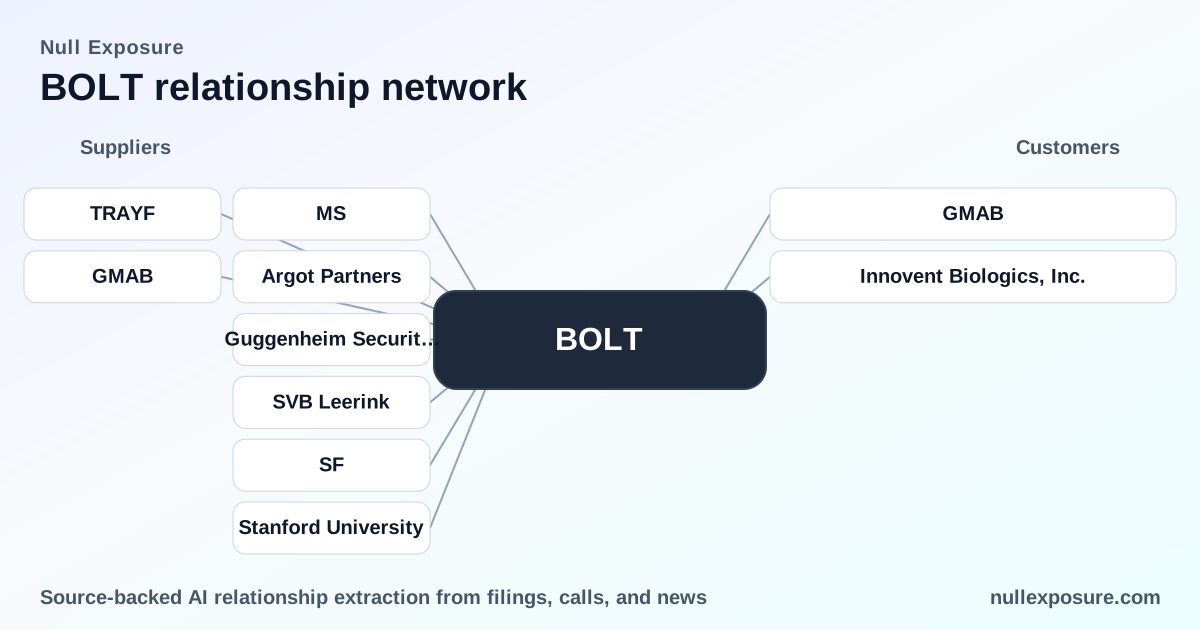
Bolt (BOLT) — Customer relationships that shape near-term runway and R&D economics
Bolt Biotherapeutics is a clinical-stage immuno-oncology company that discovers and advances tumor-targeted immune-activating therapeutics and monetizes primarily through research collaborations, milestone-based R&D agreements and licensing revenue, supplemented by modest operating receipts. Its most material commercial inflows in recent filings derive from collaboration revenue originally contracted with Genmab, Toray and Innovent; these partnerships underwrite portions of early-stage candidate development and materially influence cash runway and program selection. For investors and operators tracking counterparty exposure, the relationships below combine both revenue concentration risk and strategic de‑risking of costly early development programs.
For further context on relationship mapping and signal extraction, visit https://nullexposure.com/.
How to read this analysis
This note summarizes every third‑party relationship that shows up in our collected references to “Bolt” and ties each item back to the original reporting. Focus is on commercial and R&D counterparties that affect revenue, development funding and program continuity. Where company filings are cited, their descriptions are treated as primary evidence for contractual economics and revenue recognition.
What the press and filings say about each counterparty
REVOLVE (RVLV)
Bolt is reported to have powered a checkout integration for REVOLVE Gallery that enabled a QR-driven, pre-populated one‑click checkout experience designed to increase conversion and shorten the path to purchase. This story is described in a PR Newswire release announcing the checkout-links partnership during Fashion Week in New York (March 2026). The cited piece frames Bolt as the technology provider powering consumer checkout flows. (PR Newswire, March 10, 2026)
Genmab / Genmab A/S (GMAB)
Bolt’s filings and subsequent coverage identify ongoing collaboration revenue from arrangements originally with Genmab, which support research and development activities; Genmab is also described as funding up to three ISAC (immune-stimulating antibody conjugate) candidates through early‑stage development. These collaborations are a direct source of recognized revenue and represent both program funding and strategic validation by a larger antibody player. (TradingView summary of Bolt 10‑K, May 2026; BioPharmaDive reporting, May 2026)
Innovent Biologics / Innovent (ticker variants)
Bolt has generated revenue from services performed under research‑and‑development collaborations with Innovent Biologics, noted in company statements and press coverage discussing expense and revenue recognition related to R&D services. Innovent is listed among the collaborators that have supported Bolt’s ISAC research through contractual work that produces service income. (BioSpace, March 2026; TradingView summary of Bolt 10‑K, May 2026)
Toray (TRAYF)
Toray is identified as a collaborator that is funding one ISAC candidate through Phase 1 testing, in contrast to Genmab’s funding of multiple early candidates. That structure places Toray in a role underwriting later-stage costs for at least one program—impacting Bolt’s capital needs for Phase 1 activities and the sequencing of its pipeline. (BioPharmaDive, May 2026; TradingView summary of Bolt 10‑K, May 2026)
Key commercial and operational constraints that affect counterparty risk
Several company-level signals extracted from filings and press coverage illuminate Bolt’s operational posture:
-
Short-term contracting posture: The company disclosed a sublease with a term of 36 months, with renewal optional, signaling that certain real estate and fixed-cost commitments are deliberately short-dated. This is consistent with a cash-conservative operating stance focused on preserving runway. (Company disclosure excerpt, March 10, 2025)
-
Geographic footprint: The sublease referenced was executed in Redwood City, California—an explicit North American facility decision that anchors a portion of operations domestically. This is a company-level geographic signal rather than a counterparty attribution. (Company disclosure excerpt, March 10, 2025)
-
Service-provider role and cost allocation: Filings note a fixed monthly rent obligation under the sublease and that subtenants carry certain operating expenses and taxes, which indicates Bolt is managing fixed-cost exposure and allocating operating expense responsibilities as part of its cost-reduction strategy. Treat this as a corporate cash-management signal. (Company disclosure excerpt, March 10, 2025)
-
Active, near-term commitments: The sublease is active as of the disclosed date, demonstrating an ongoing effort to compress fixed obligations into manageable, short-duration contracts. (Company disclosure excerpt, March 10, 2025)
These constraints are presented as company-level characteristics that shape counterparty risk and operational flexibility; they are not attributed to any single external collaborator unless the underlying excerpt names that entity.
How these relationships translate to investor considerations
-
Revenue concentration and volatility: A material share of Bolt’s reported revenue has been driven by collaboration payments from Genmab, Innovent and Toray. That structure reduces near-term cash burn but concentrates counterparties that can influence program continuity through funding decisions. (Bolt 10‑K/TradingView coverage, May 2026)
-
De-risking versus dependency tradeoff: Collaborations that fund multiple candidates (Genmab) or single candidates into Phase 1 (Toray) are strategic de‑risking moves—they shift development cost but create dependency on partners’ commitments for later-stage advancement. (BioPharmaDive and BioSpace coverage, March–May 2026)
-
Non-core media mentions: The Revolve checkout press item reflects media noise where the name “Bolt” is used in non‑biotech contexts; investors should separate brand/name collisions from substantive, revenue-driving biotech collaborations. The Revolve piece documents a checkout‑technology announcement reported on March 10, 2026. (PR Newswire, March 10, 2026)
For a consolidated view of partner exposures and to model downside scenarios where collaboration funding is curtailed, prioritize sensitivity analysis on Genmab and Toray funding profiles and treat Innovent service revenue as transactional and more variable.
Bottom line and recommended actions
-
Primary takeaway: Bolt’s near-term commercial profile is defined by collaboration-funded R&D revenue from Genmab, Toray and Innovent—these relationships materially extend runway but concentrate program risk around third‑party funding decisions. (Company filings and press coverage, March–May 2026)
-
Operational posture: Management has intentionally kept certain commitments short-term (e.g., a 36‑month sublease) and allocated operating expenses to reduce fixed-cost leverage; this increases financial flexibility while development outcomes remain binary.
-
Investor action: Reforecast cash runway under scenarios where Genmab or Toray funding changes, and monitor public announcements from those partners for explicit milestone funding triggers or program terminations. For more structured counterparty maps and alerting on partner actions, consult our relationship dashboards at https://nullexposure.com/.
This note captures every relationship referenced in the collected material and ties each back to source reporting and company disclosures so that investors and operators can base their modeling and risk assessments on concrete, attributable signals.